Ripping up old flooring is one of those jobs that looks quick until you are stood in a room full of heavy, dusty roll ends wondering what goes where. If you are asking can carpet go in skip hire, the short answer is often yes – but not always in every skip, and not without a few checks first.
That matters because carpet is bulky, awkward to load, and in some cases treated differently from general household waste. If you are clearing one bedroom, refitting a rental, or stripping out flooring on a larger renovation job, knowing the rules before the skip arrives saves time, avoids extra charges, and helps keep the job moving.
Can carpet go in skip hire?
In many cases, carpet can go into a skip, but it depends on the type of carpet, what else is mixed in with it, and the waste rules your skip provider is working under. Old carpet from a house clearance or refurbishment is usually accepted as part of mixed waste, especially if it is dry and free from hazardous materials.
Where people come unstuck is assuming all flooring is treated the same. Carpet itself may be allowed, but underlay, gripper rods, adhesives, laminate offcuts, and floor tiles can all fall into slightly different waste categories. That is why it is always worth checking in advance rather than filling the skip and sorting it out later.
For most domestic jobs, carpet is not the problem on its own. The real issue is volume. Rolled carpet takes up a surprising amount of space, and if it is thrown in loose, it can fill a skip far quicker than expected.
Why carpet is sometimes restricted
Carpet is not usually classed as hazardous waste, but it is not as straightforward as garden waste, hardcore, or clean timber either. Some carpets contain synthetic fibres, backing materials, adhesives, and built-in contaminants from years of use. That affects how they are processed once collected.
There is also the practical side at the waste facility. Carpet does not compact neatly, can wrap around sorting equipment, and often arrives mixed with underlay, nails, and dust. From a disposal point of view, it needs handling properly, especially if the aim is to recycle as much material as possible.
This is one reason reputable local firms are careful about what goes into each skip. If a provider runs its own sorting facility and works to high recycling standards, they will want clear information on what you are throwing away so the load can be managed correctly.
When putting carpet in a skip makes sense
If you are clearing out fitted carpet from one or two rooms, a skip is often the simplest option. It saves multiple runs to the tip, especially when the carpet is damp, dirty, or full of old underlay and fixings. For landlords between tenancies, builders on refurbishment jobs, and homeowners doing a full rip-out, it is usually far more practical than trying to bag it up for smaller collections.
It also makes sense when carpet is only part of the waste. If you are already hiring a skip for old units, timber, plasterboard, packaging, and general renovation waste, adding rolled carpet can be convenient as long as it has been agreed in advance.
The key is matching the skip size to the job. A small amount of carpet from a box room is one thing. Flooring from a whole house can take up a large chunk of the container before you have added anything else.
How to load carpet into a skip properly
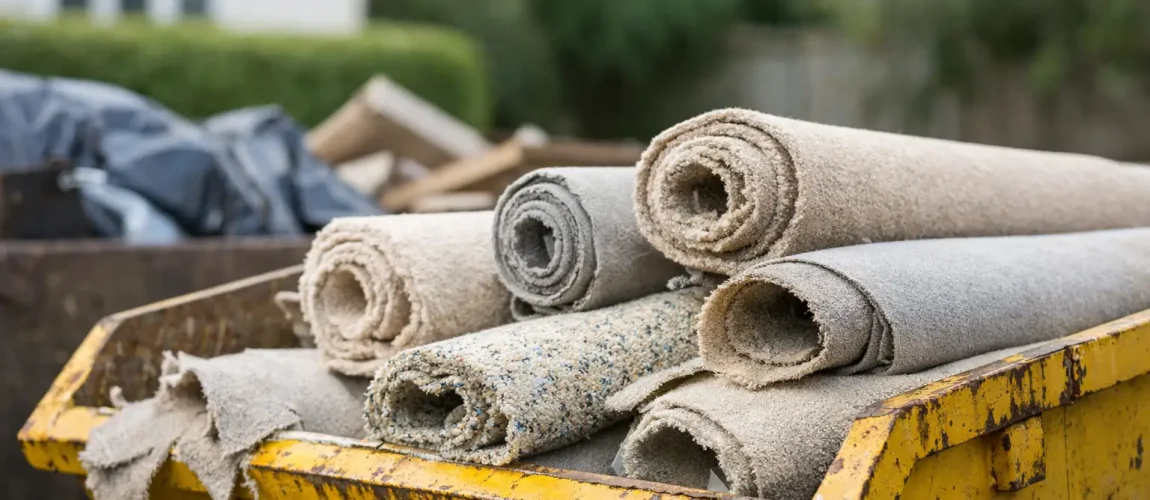
The best way to load carpet is to cut it into manageable strips and roll it tightly. Long, loose sections waste space and can spring back, making it harder to use the skip efficiently. Shorter rolls stack more neatly and are safer to handle.
If the carpet is soaked, muddy, or mixed with rubble, say so when booking. Wet carpet is heavier and messier, which can affect both handling and the type of waste load being collected. The same goes for underlay. Foam underlay is light but bulky, while rubber-backed material can be much heavier than people expect.
You should also remove obvious metal where possible. Gripper rods, tacks, and threshold strips do not always need separate disposal, but keeping them apart where you can makes loading safer and sorting easier later on.
Carpet, underlay and flooring waste are not always the same thing
This is where a lot of confusion comes in. People often say carpet when they really mean all the flooring waste from a room. In practice, that can include carpet, underlay, laminate boards, vinyl, tiles, adhesive residue, and timber edging.
Some of those materials can go in the same skip, and some need extra care. Vinyl flooring, for example, may need checking depending on its age and type. Old floor tiles or adhesive products can raise different disposal issues. If you are removing flooring from an older property, especially on a commercial site or full strip-out, it is worth flagging that early.
A straightforward rule is this: if the waste is mixed flooring from a renovation, describe it clearly when you book. That avoids assumptions and helps the skip company tell you the right container and any restrictions before delivery.
Can carpet go in skip hire for domestic jobs?
For most household projects, yes, carpet can go in skip hire as long as the load has been discussed and the carpet is ordinary non-hazardous household flooring. Typical examples include bedroom carpets, stair runners, lounge flooring, and old underlay from a refit.
This is common on house clearances, renovation work, and end-of-tenancy clean-ups. If the carpet has been lifted from a smoke-damaged property, flood-damaged room, or contaminated environment, mention that first. The disposal route may be different.
If you are only getting rid of carpet and nothing else, it is still worth checking whether a skip is the best-value option. For some small jobs, another collection method may work better. For larger clear-outs, though, a skip is usually the easiest way to get everything gone in one go.
What about builders, landlords and commercial sites?
Trade customers usually deal with carpet waste as part of bigger strip-out work. In those cases, speed matters just as much as compliance. You do not want a team on site waiting around because the wrong container has been booked.
For refurbishments, rental property upgrades, shopfitting removals, and office clearances, be specific about the materials involved. Carpet tiles, commercial backing, glued flooring systems, and mixed demolition waste can all affect how the load is handled. A reliable local skip hire firm will tell you what is fine, what needs separating, and what should not go in at all.
That kind of clarity is especially useful if access is tight, the waste needs to be moved quickly, or the site is producing a mix of heavy and bulky materials at the same time.
Common mistakes to avoid
The biggest mistake is assuming carpet is general waste in every situation. Sometimes it is accepted without issue. Sometimes there are limits based on quantity, contamination, or what it is mixed with.
Another common problem is overfilling the skip. Carpet rolls can sit above the fill line before you realise how much space they are taking up. Skips cannot be legally collected if waste is heaped too high, so compact loading matters.
People also forget about moisture. Carpet left outside in the rain gets heavier fast. If you are lifting flooring over a few days, keep it covered where possible and load it as you go rather than leaving a pile to soak through.
The simplest way to get it right
If you need to dispose of carpet, the easiest approach is to treat it as something worth mentioning upfront, not as a small detail. Tell your skip provider how much carpet you have, whether underlay is included, and what other waste is going in. That gives you a clear answer from the start and helps avoid wasted space, collection delays, or charges you were not expecting.
For customers in and around Wolverhampton, that straightforward advice matters. You want a skip that turns up on time, fits the job, and takes the waste you actually have – not a vague promise and a problem later. Bushbury Skip Hire handles these sorts of everyday clearance jobs with a practical, local approach, which is exactly what most people need when a flooring job turns into a bigger mess than planned.
Old carpet is never the tidiest waste to deal with, but it does not have to hold the rest of the job up. Ask the question early, load it properly, and you will make the whole clear-out easier from the first strip you lift.