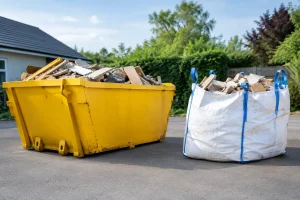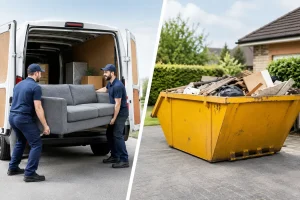
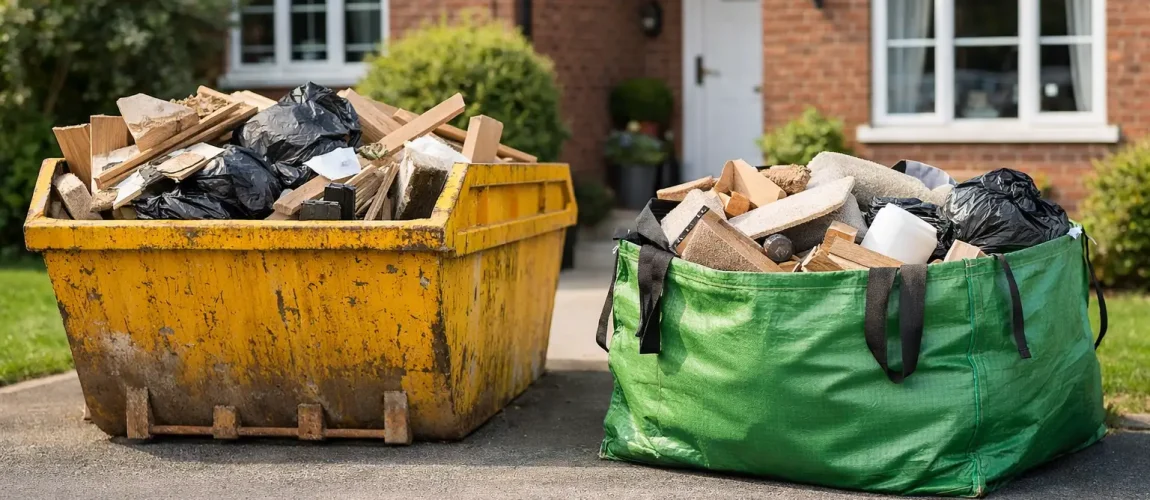
A bathroom refit can fill more bags than most people expect. The old suite, broken tiles, plasterboard, packaging and timber soon turn a tidy driveway into a problem. When deciding between skip hire or hippo bag, the right choice usually comes down to one thing: how much waste you really have, and how quickly you need it gone.
Both options can suit a domestic clear-out, garden job or small renovation. But they work in very different ways. A bag may look cheaper at first for a small amount of waste, while a skip often becomes better value once the job produces bulky, heavy or mixed materials.
Skip hire or Hippo Bag: the main difference
A Hippo Bag is a heavy-duty collection bag bought in advance, filled by you and then booked for collection. It is usually best suited to smaller projects where waste can be stored neatly until you are ready for it to go.
A skip is delivered to your property or site, filled as the job progresses and collected when arranged. It gives you a fixed container with far more room for awkward items, rubble and larger volumes of waste.
The practical difference is not just capacity. With a skip, you normally know the disposal cost and collection arrangement before work starts. With a bag, you need to allow for the price of the bag itself and the collection charge. Collection availability, access requirements and what can go inside also need checking before you buy.
When a Hippo Bag can make sense
A bag can be a sensible option for a genuinely small, slow-moving project. If you are clearing a cupboard, pruning a garden over a few weekends or getting rid of a limited amount of light household waste, it can be convenient to keep a bag on your own property until it is full.
It may also suit homes with a narrow frontage where there is no practical space for a skip lorry to deliver a container. Provided the collection vehicle can safely reach and lift the bag, it can offer a straightforward alternative.
The key word is limited. Bags have weight limits and fill lines, and collection can be refused if a bag is overloaded, damaged or blocked by parked cars, gates or low branches. Heavy materials such as soil, hardcore, paving slabs and bricks can use up the permitted weight surprisingly quickly.
A bag is therefore less forgiving than it first appears. You need to load it carefully, keep it accessible and make sure the waste type is accepted. It is not the best choice for a job that may grow once you start pulling up flooring or opening cupboards.
When skip hire is the better option
Skip hire is usually the practical choice for renovations, landlord clearances, garden landscaping, builders’ waste and bulky household items. You can load waste directly into the skip rather than trying to break it down to fit into a bag.
For Wolverhampton households, a 2-yard mini skip can suit a small clear-out or modest garden tidy. A 4-yard skip is often a useful size for bathroom or kitchen work, while 6-yard and 8-yard skips are popular for larger refurbishment jobs, house clearances and building waste. The best size depends on the material as well as the amount.
A skip is particularly useful when you have mixed waste arriving day after day. Old units, timber, green waste, cardboard, carpets and general household rubbish can all take up space quickly. Making repeated trips to the tip costs time, fuel and effort, and some sites have rules on commercial-style loads or certain materials.
There is also a safety benefit. Keeping waste contained in one proper container helps keep your driveway, garden or work area clear. For tradespeople, that means less time managing waste piles and more time getting on with the job.
Compare the real cost, not just the starting price
It is easy to compare the price of an empty bag with the price of a skip and assume the bag is the cheaper option. That is not always the full picture. A bag needs a paid collection, and larger or extra bags can quickly add to the total. If you underestimate your waste, you may end up buying another bag or arranging a separate disposal service.
A skip can offer clearer value where there is enough waste to justify it. One container, one delivery and one collection can be simpler than trying to manage piles of bagged rubbish or multiple tip runs. It is especially worth considering if you expect heavy waste, bulky furniture or a mixture of materials.
That said, hiring too large a skip is unnecessary if you only have a few bin bags and light garden cuttings. The most affordable option is the one that matches the job. Be honest about what you are throwing away and allow some room for the waste you have not uncovered yet.
Access, placement and permits
Where the container will sit matters just as much as its size. A skip placed on a private driveway is usually the simplest arrangement, as long as there is enough access for the delivery lorry and no overhead obstructions such as cables or low branches.
If the skip needs to go on a public road, pavement or verge, a council permit may be required. This needs arranging before delivery, so do not leave it until the day your project begins. Restrictions can vary by location, and the skip may need lights, cones or other safety measures.
Hippo Bags also need clear access at collection time. A bag hidden behind a car, tucked under a tree or placed too far from where the collection vehicle can operate may cause delays. Before choosing either option, measure the available space and think about how waste will travel from the house or garden to the container.
What should not go in either option
Waste disposal rules still apply whether you choose a skip or a bag. Hazardous materials need separate handling and should never be hidden among general waste. Common examples include asbestos, paint, chemicals, gas bottles, batteries, tyres, oils, fridges and freezers.
Plasterboard is another material that often needs to be kept separate because of how it must be processed. Soil and hardcore may also need their own skip if you have a substantial quantity. Telling your waste provider what you are disposing of before booking avoids problems at collection and helps make sure materials are handled correctly.
At Bushbury Skip Hire Ltd, collected waste is taken to our own licenced sorting facility in Wolverhampton, where we recycle at least 90% of materials. That gives customers a practical local disposal service without treating waste as an afterthought.
Choose based on the job in front of you
For a few light bags of rubbish, a small bag collection or a trip to the household recycling centre may be enough. For a gradual small clear-out with suitable access, a Hippo Bag can be convenient.
But if you are removing a bathroom, clearing a property, landscaping a garden or working on a building project, a skip is normally the more dependable choice. It handles volume better, copes with awkward waste and lets you keep the job moving without wondering where the next load will go.
Before booking, walk around the job and count the obvious waste: furniture, timber, soil, rubble, packaging and old fittings. Then allow for the hidden extras. Choosing enough capacity at the start is usually far easier than trying to solve an overflowing waste pile halfway through the work.