
An old carpet is awkward waste. It is bulky, dusty, often full of gripper rods and staples, and rarely fits in a wheelie bin. If you are wondering how to recycle old carpets after a refit, house clearance or renovation, the first job is separating what may have another use from what needs proper disposal.
Carpet recycling is not as straightforward as recycling cardboard or garden waste. Some materials can be recovered, but the route depends on the carpet’s condition, its backing and what facilities are available locally. Planning this before the fitter arrives or the clearance starts can save several trips to the tip and keep the job moving.
Can old carpet be recycled?
Sometimes, but not always. Most fitted carpet is made from a mix of fibres, backing, adhesive and fillers. That combination makes it harder to process than a single-material item. Clean offcuts and certain types of carpet may be accepted by specialist recyclers, while worn, wet or heavily soiled carpet may need to be treated as general bulky waste.
The key point is not to assume that every recycling centre or waste contractor accepts carpet for recycling. Policies vary, and sites can change what they take. Check with the facility before loading up the car or booking a collection.
Underlay is a separate material and should be treated separately where possible. Foam underlay, felt underlay, rubber crumb underlay and fibreboard products all have different recovery options. Keeping them apart gives the best chance of recycling rather than sending everything away as mixed waste.
First decide whether the carpet can be reused
Not every old carpet belongs in a skip. If it is clean, dry and has plenty of life left, reuse can be the most sensible option. A carpet taken from a bedroom may be suitable for a shed, garage, workshop, playroom or rental property, even if it is no longer right for the main room.
Measure it before cutting it up. Larger, usable pieces are more useful than small strips, and a clear note of the size, condition and whether it comes from a pet-free or smoke-free home helps someone else decide if they can use it. Local community groups, charities and reuse projects may take good-quality carpet, but always ask first. Many cannot accept fitted carpet due to hygiene rules, storage limits or fire-safety requirements.
If the carpet is stained, smells damp, has mould, has been contaminated by pests or has been lifted after a flood, reuse is unlikely to be suitable. Bag or roll it carefully to avoid spreading dust through the property, then arrange lawful disposal.
How to recycle old carpets: prepare them properly
A little preparation makes carpet easier and safer to handle. Carpet can be surprisingly heavy, especially when it has thick underlay attached or has absorbed moisture. Wear gloves, sturdy footwear and long sleeves when lifting it, as gripper rods, staples and sharp offcuts are common.
Start by rolling the carpet tightly with the pile facing inwards. Secure each roll with tape or twine so it can be lifted safely. If possible, remove the underlay and set it aside. Metal door bars, nails and gripper rods should also be separated from the carpet, as these may be accepted as scrap metal at an appropriate facility.
Avoid cutting carpet into lots of tiny pieces unless a particular site requires it. Smaller pieces are difficult to contain, create more dust and can take longer to load. For a domestic room, two manageable rolls are often easier to move than one large, heavy roll.
Do not burn old carpet. Synthetic fibres, foam backing and treatments can release harmful fumes. It is not a safe or legal disposal method, and it creates a much bigger problem than it solves.
Your disposal options in Wolverhampton
For one small roll of carpet, a household recycling centre may be practical if you have suitable transport and the site accepts it. This works best when you are already taking other household waste and can load everything safely. Check opening times, vehicle restrictions and whether the site has a specific area for carpet and textiles before setting off.
A man-and-van or licensed waste collection service can suit smaller clearances where there is no other heavy waste. Ask where the material will be taken and make sure the collector is registered to carry waste. If someone offers to take carpet away cheaply but cannot show that they are licensed, it is not worth the risk. Fly-tipped waste can be traced back to the householder or business that produced it.
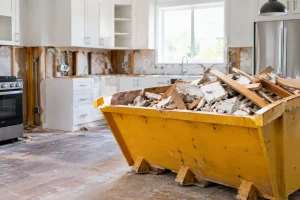
For a refit, full house clearance, landlord turnaround or building project, a skip is usually the more efficient option. Carpet takes up space quickly, but it can be loaded alongside suitable general waste from the same job, such as old furniture, timber, packaging and non-hazardous renovation waste. This saves repeated journeys and leaves the site clearer for the next stage of work.
Bushbury Skip Hire can advise local customers on a suitable skip size for mixed household, renovation or commercial waste. It is best to mention the carpet when booking, particularly if you have several rooms’ worth, so the collection can be planned properly.
Choose a skip size based on the whole job
It is easy to book a skip based on the carpet alone and then run out of room once the old underlay, furniture, doors, packaging and other clearance waste are added. Think about the full project, not just the floor covering.
A 2-yard mini skip can work for a small clearance with limited bulky waste, while a 4-yard or 6-yard skip is often a better fit for a room refit, kitchen update or landlord clean-out. An 8-yard skip may be more practical for larger renovations and commercial jobs where carpet is only one part of the waste stream.
There are trade-offs. A larger skip costs more than a smaller one, but hiring a second skip or arranging extra collections can cost more in time and money. On the other hand, do not overfill a skip. Waste must stay below the rim so it can be transported safely on the lorry.
If the skip needs to go on a public road rather than a private drive, a permit may be needed. Allow time for this before the work begins. A clear driveway location is normally the simplest option, provided there is enough access for delivery and collection.
What not to put in with old carpet
Carpet itself is generally non-hazardous, but a normal mixed-waste skip is not suitable for every item that may be uncovered during a refit. Keep paint, solvents, gas bottles, batteries, tyres, electrical items and asbestos-containing materials out unless your waste provider has specifically agreed to take them.
Asbestos deserves particular care. Some old floor tiles, adhesive residues, insulation products and textured coatings may contain asbestos, especially in older properties. Carpet is not asbestos, but lifting flooring can expose materials beneath it. If you are unsure, stop work and seek professional advice before disturbing the area further.
Wet carpet should also be declared. Water damage makes rolls much heavier and may point to mould or contamination. A reputable provider can explain the right route rather than allowing unsuitable waste into a standard load.
Make the job easier for fitters, landlords and tradespeople
If new flooring is being fitted, agree in advance who is removing the old carpet. Some fitters include uplift in their price, while others expect the customer to have cleared the room and arranged disposal. A quick conversation avoids a pile of rolled carpet being left outside at the end of the day.
For landlords and property managers, build carpet disposal into the turnaround plan. Check rooms early, take photographs of the condition and arrange the skip or collection before decorators, cleaners and new flooring contractors all need access. For tradespeople, separating carpet and underlay as you work keeps the site safer and makes loading quicker.
Old carpet does not have to become a drawn-out disposal problem. Keep reusable material in circulation where you can, check local acceptance rules for recycling, and use a properly licensed collection or skip when the volume calls for it. With the waste sorted before the job starts, you can get the room cleared and ready for its next floor much sooner.