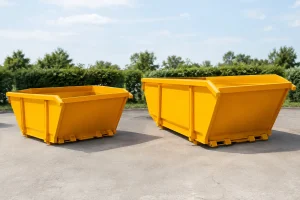

A skip or grab lorry can both take the hard work out of clearing waste, but they suit very different jobs. Choose the wrong one and you could be paying for space you do not need, struggling with access, or facing a rushed clear-up on collection day. For household projects, building work and commercial clearances across Wolverhampton, the best option comes down to how much waste you have, how long the job will take and where that waste is sitting.
Skip or Grab Lorry: The Main Difference
A skip is delivered to your property or site and stays there for an agreed hire period. You fill it as work progresses, then it is collected when you are ready. This makes it a practical choice for renovations, garden projects, landlord clearances and building jobs where waste is produced over several days.
A grab lorry arrives with a hydraulic arm and loading bucket. It collects waste from a pile, usually in one visit, and takes it away straight away. The lorry can reach over walls, fences and some obstructions, so the waste does not always need to be positioned directly at the kerbside.
Neither option is automatically better. A skip gives you time and a fixed place to put rubbish. A grab lorry is built for speed and volume when everything is already ready to load.
When a Skip Is the Better Choice
If you are clearing a house room by room, fitting a kitchen, replacing a bathroom or tackling a garden at weekends, a skip is usually the sensible answer. You can dispose of materials as you go instead of creating a growing pile on the drive or lawn.
This is especially useful when the amount of waste is hard to judge at the start. A small garden clearance may begin with a few bags and old fence panels, then uncover broken paving, soil, timber or an unwanted shed. With a skip on site, there is somewhere safe and convenient to put it all.
For many domestic jobs, a 2-yard mini skip handles lighter clearances, while larger skips are better for renovation and builders’ waste. An 8-yard skip is a common choice for substantial household or trade jobs, but the right size depends on the material as much as the volume. Heavy waste such as soil, hardcore, bricks and rubble can quickly add weight, so it is worth discussing the load before booking.
A skip also suits work with several people involved. Builders, decorators, landlords and homeowners can all use the same waste point throughout the job. It helps keep the site tidier, reduces repeated trips to the tip and avoids bags and loose materials being left around for days.
Think about placement and permits
A skip needs enough room for delivery and collection. A drive is often simplest, provided access is clear and the surface can take the weight. If it must sit on a public road, you may need a permit from the local authority. This can take time to arrange, so do not leave the booking until the last minute.
You should also consider where the delivery lorry will need to stop. Low branches, parked cars, narrow streets and overhead cables can all affect access. Giving clear details when requesting a quote avoids wasted time and helps make sure the right arrangement is made first time.
When a Grab Lorry Makes More Sense
A grab lorry is often the better choice when waste is already in one pile and needs moving quickly. It is particularly useful for larger amounts of loose material, including soil, rubble, hardcore, green waste and mixed construction waste.
For example, a landscaper may have dug out a garden and left several tonnes of soil at the front of the property. Hiring a skip could mean filling it by hand, waiting for it to be collected, then arranging more skips if the job is larger than expected. A grab lorry can often load the pile in a short visit, provided it can park close enough and has a clear reach.
The hydraulic arm is the key advantage. It can reach over a wall or fence, which is helpful where there is no room to place a skip inside the property. It can also save a lot of manual lifting. That said, the lorry still needs suitable road access and a safe place to operate. Narrow streets, low cables and vehicles parked near the waste can make a collection difficult.
A grab service works best when the pile is ready before the lorry arrives. If waste is spread across the garden, mixed with items that cannot be taken, or still being produced during ongoing works, a skip may be more practical.
Cost: Look Beyond the Headline Price
It is tempting to compare a skip price with a grab lorry price and pick the cheaper figure. The real value is in matching the service to the job.
A skip can offer better value for a project that runs over several days because the hire includes time to load it at your own pace. It may also prevent the extra cost and hassle of separate waste collections. For a small but steady stream of rubbish, this is often the most economical approach.
A grab lorry can be better value for a large, ready-made pile. You are paying for a quick collection rather than days of container hire. It can also reduce labour if you would otherwise need to wheelbarrow heavy waste into a skip.
Costs vary according to skip size, waste type, weight, access, permit requirements and collection location. Be clear about what you need removed. A straightforward quote should account for the likely waste material rather than leave surprises until collection day.
Waste Types and What Cannot Go In
Both services are intended for genuine waste removal, but some materials need separate handling. General household waste, wood, metal, garden waste, soil, rubble and many non-hazardous building materials can usually be dealt with through normal skip or grab arrangements.
Items such as asbestos, chemicals, gas bottles, tyres, paint, batteries, fridges and other electrical goods may be restricted or require specialist disposal. Do not bury these items in a skip or add them to a pile for a grab lorry without checking first. This can create safety issues, delay collection and lead to additional charges.
The same applies to overloaded skips. Waste should not be stacked above the sides, as it becomes unsafe to transport. A skip that looks full before the job is finished may need exchanging or replacing with a larger size. It is better to plan for this than risk an unsafe load.
Access Can Decide the Job Before Price Does
Access is one of the biggest practical differences between a skip and a grab lorry. A skip needs a suitable drop-off point. A grab lorry needs room to park and operate its arm. In some locations, neither is straightforward without a little planning.
If you have a driveway, measure the available space and keep it clear for delivery. If you are on a busy residential road, think about where vehicles normally park. For a grab collection, place the waste as close as possible to the collection point without blocking the pavement, road or access to neighbouring properties.
Do not assume a grab lorry can reach anything from anywhere. Its arm has a useful reach, but it is not a solution for waste hidden behind buildings, under trees or around tight corners. A quick conversation about your site can save the wrong vehicle turning up.
A Straightforward Way to Choose
Choose a skip if your waste will build up over time, you want to load at your own pace, or you need a tidy disposal point on site. It is the dependable option for most home improvements, clearances and ongoing trade work.
Choose a grab lorry if your waste is already piled up, it is mainly loose or heavy material, and you need it removed quickly. It is often ideal after excavation, landscaping, demolition or a major one-day clear-out.
For mixed projects, timing can make the decision. You may use a skip while renovation work is underway, then arrange a grab collection later for a large pile of soil or hardcore. The best approach is the one that keeps your site clear, safe and within budget.
Bushbury Skip Hire Ltd provides practical skip hire across Wolverhampton, with sizes for everyday domestic and commercial jobs and responsible sorting through its licensed local facility. If you are unsure whether a skip will suit your waste, describe the job, the material and the access before booking. A few clear details at the start can make the whole clearance far easier.