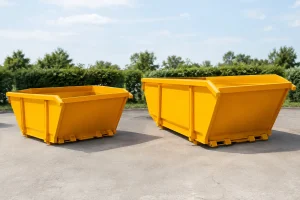

A pile of old kitchen units, broken slabs or garden cuttings can grow much faster than expected. Choosing a skip that is too small may mean arranging a second collection, while hiring one that is far too large can leave you paying for unused space. This guide to skip size measurements explains what the sizes mean in practical terms, so you can book with confidence.
Skip capacity is normally shown in cubic yards. That describes the volume of waste a skip can hold, rather than its exact length or the weight you can put inside it. Physical dimensions vary slightly between skip models, so think of them as useful working measurements, not a reason to measure every bag to the inch.
How to read skip size measurements
A cubic yard is a space measuring three feet by three feet by three feet. In day-to-day terms, the larger the number of cubic yards, the more room you have for bulky items, bagged waste and renovation debris. The important point is that volume and weight are different things.
For example, a skip full of cardboard, timber and old furniture may be light for its size. The same skip filled with soil, concrete, bricks or rubble can become very heavy quickly. A smaller skip is often the sensible choice for dense, heavy materials, even if a larger one looks tempting.
Skip measurements are usually quoted as length, width and height. The height matters when loading bulky items, but the length and width are equally useful when deciding whether the skip will fit on a drive, forecourt or site. Leave enough room for the delivery lorry to manoeuvre safely as well as space to load the skip.
A guide to skip size measurements for common jobs
Bushbury Skip Hire offers sizes from 2-yard mini skips to 8-yard skips, covering the jobs most households, landlords and local trades need to get finished. Here is how those sizes tend to work in real life.
2-yard mini skip
A 2-yard skip is a compact choice for small clearances where a few trips to the tip would be inconvenient. It is well suited to light garden waste, a shed tidy-up, a small bathroom refresh or clearing a cupboard, loft or single room.
Typical external measurements are around 4 feet long, 3 feet wide and 2.5 feet high. It will not take the contents of a full house or a major renovation, but it is a practical answer when space is tight and the waste volume is modest. If the job involves lots of soil, bricks or paving, ask about the best option before booking.
4-yard midi skip
The 4-yard skip is a popular middle ground for domestic work. It can suit kitchen or bathroom refits, garden landscaping, a room-by-room declutter or waste left after replacing flooring and fittings.
It is commonly around 6 feet long, 4 feet wide and 3 feet high. This size gives useful capacity without taking up as much room as a builder’s skip. It is often a good fit for homeowners who have more than a few bin bags but do not need a large skip sitting outside the property.
6-yard builder’s skip
A 6-yard skip is one of the most practical choices for substantial home improvements and trade waste. It is often used for renovation debris, old kitchens, timber, plasterboard, packaging, general builders’ waste and larger garden projects.
Allow roughly 10 feet in length, 5 feet in width and 4 feet in height, although exact dimensions can differ. This is a useful size when a 4-yard skip may be a gamble but an 8-yard skip would be more capacity than the job needs. For many extension, refurbishment and landlord clearance jobs, it offers a sensible balance of space and cost.
8-yard skip
An 8-yard skip is suited to larger clearances, commercial waste, bulky household items and ongoing building work. It gives you room for substantial volumes of mixed general waste, which can make it more efficient than repeatedly booking smaller skips.
A typical 8-yard skip is about 12 feet long, 6 feet wide and 4 feet high. That larger footprint needs planning, particularly on a narrow driveway or a busy site. It is ideal when waste is bulky rather than especially dense. If you are disposing of heavy rubble, soil or hardcore, always check the loading limits first.
Estimate your waste before you book
The most reliable way to choose a size is to look at the waste as it will actually be loaded. Do not base the estimate only on the room you are clearing. Flat-packed furniture, broken-up units and bagged rubbish take less room than complete wardrobes, cupboards and branches piled loosely.
Start by separating heavy waste from general mixed waste. Bricks, concrete, soil, tiles and paving slabs add weight quickly. Timber, green waste, cardboard, old furniture and household items usually take up more volume for their weight. If your load is mainly one material, say so when requesting a quote. It helps the team recommend the appropriate skip and prevents problems at collection.
It also pays to consider what may be added later. A bathroom refit may begin with old sanitaryware and tiles, then create packaging, timber offcuts and plasterboard as the work continues. If you are already close to filling a smaller skip before the job starts, stepping up one size can be better value than ordering a second skip halfway through.
Do not load above the fill line
Every skip has a fill line. Waste must stay level with, or below, that line so it can be transported safely. A sofa arm, timber length or bag balanced above the top may seem harmless on your drive, but it cannot be carried on the road that way.
This is one reason not to choose the smallest size simply because it is cheaper at first glance. Bulky waste does not compress neatly, and overfilled skips can delay collection while the excess is removed. Choosing enough capacity from the start keeps the job moving and avoids unnecessary hassle.
Break down suitable items before loading where you can. Dismantling wardrobes, cutting cardboard boxes flat and stacking timber carefully makes better use of the available space. Put flat, heavy items at the bottom and use gaps around them for smaller waste. Do not force waste down or climb into the skip to compact it.
Check access and placement, not just capacity
A skip that holds the right amount still needs a suitable place to sit. Measure the available length and width of your driveway, and check for cars, gates, low branches, overhead cables and tight turns. Remember that the delivery lorry needs room to approach, place the skip and leave safely.
If the skip needs to go on a public road, pavement or verge, a permit may be required from the local authority. Requirements and timings can vary, so raise this when arranging the hire rather than leaving it until delivery day. Placement should never block access, create a hazard or cause avoidable problems for neighbours.
For commercial sites, think about the loading route as well. A skip placed at the far end of a site may look out of the way, but repeated wheelbarrow runs cost time. Put it where the waste is produced where possible, while keeping site traffic and safe access in mind.
Know what cannot go in a standard skip
Size is only one part of responsible waste disposal. Some items need separate handling because of safety or environmental rules. Hazardous materials, chemicals, gas bottles, paint, batteries, tyres, electrical items and asbestos should not be placed in a standard mixed-waste skip without prior agreement.
If you are unsure about an item, ask before loading it. The same goes for large quantities of plasterboard, soil or other restricted materials. Clear information at the start means the waste can be handled legally and sent to the correct route, rather than causing a problem when the skip is collected.
Choose for the job, not the guesswork
The right skip is the one that matches your waste type, the likely volume and the space available at your property or site. A quick description of the project, along with whether the waste is mainly heavy, bulky or mixed, is usually enough for an experienced local team to point you in the right direction.
When the waste has been loaded, it should not become somebody else’s problem. Choosing a licenced local operator gives you the reassurance that it will be sorted responsibly, with as much material as possible diverted from landfill. If your estimate sits between two sizes, a short conversation before booking is often the cheapest way to avoid a costly second skip.