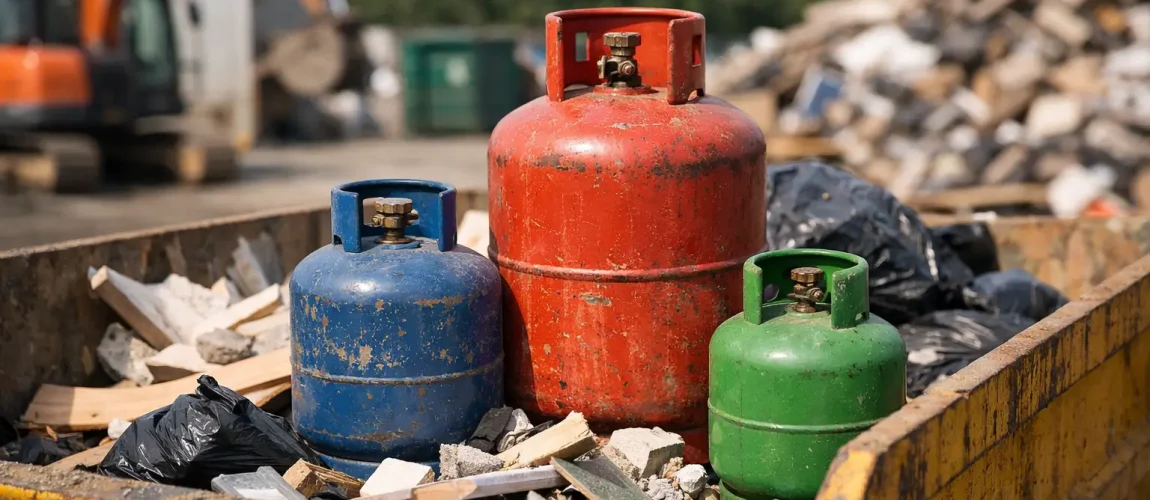
A gas bottle left at the bottom of a skip can look harmless, especially when it feels empty. It is not. If you are asking, can gas bottles go in skips, the straightforward answer is no. Gas bottles, cylinders and canisters must not be placed in a hired skip, whether they are full, partly used or apparently empty.
This is not a rule for the sake of paperwork. Cylinders can still contain flammable gas and pressure long after they stop powering a barbecue, patio heater, cooker or camping stove. They create a real fire and explosion risk when waste is loaded, compacted, moved or processed.
Can gas bottles go in skips?
No. Gas bottles are prohibited from skips because they are pressurised containers and may contain residual LPG, propane, butane or another flammable gas. A skip can be lifted, tipped, shaken and sorted by machinery. If a cylinder is damaged in the process, gas can escape and ignite.
Even an empty cylinder can be unsafe. The word “empty” often means it will no longer run an appliance, not that every trace of gas has gone. There may also be vapour inside the bottle, and the cylinder remains a sealed pressure vessel.
The same applies to small camping gas canisters, disposable butane cartridges and larger Calor-style bottles. Do not hide them underneath general rubbish, garden waste or builders’ waste. They can be spotted at the sorting facility, but by then they have already put drivers, yard staff and recycling workers at risk.
Why a gas bottle in a skip causes problems
Skip waste does not stay still. Once collected, it may be compacted, transferred, sorted and separated using heavy plant. Gas cylinders are not designed to go through that process.
A damaged valve or punctured cylinder may release a highly flammable gas cloud. All it takes is a spark from machinery, friction, electrical equipment or another ignition source for that gas to catch fire. In a busy waste yard, that risk affects far more than one load of rubbish.
There are legal and financial issues too. Skip hire companies have a duty to transport and manage waste safely. If prohibited waste is found in a skip, the customer may be charged for its removal and specialist disposal. In serious cases, a collection may need to be delayed until the item can be dealt with safely.
For a home clearance or renovation, it is tempting to put everything in one place and get the job finished. But taking a few minutes to separate a gas bottle is safer, cheaper and far less trouble than dealing with a rejected load.
What to do with unwanted gas bottles
The right disposal route depends on the type of cylinder, who supplied it and whether it is refillable or disposable. Start by checking the bottle itself. Many refillable cylinders are owned by the gas supplier and carry a brand name or identification label.
Return refillable cylinders to the supplier or stockist
For most larger LPG bottles used for barbecues, heaters, caravans and catering equipment, the best option is to return them to the supplier, an authorised stockist or a local bottle exchange point. These cylinders are often refilled and reused, which is better than treating them as scrap.
Take the bottle upright and secure it properly during transport so it cannot roll around in the vehicle. Keep it away from heat sources and do not leave it in a hot car for longer than necessary. If the valve cap is available, fit it before travelling.
If you do not know who supplied the bottle, look for a name, logo, collar marking or stamped information around the cylinder. A local gas bottle retailer may still be able to advise on the correct return route.
Check your household waste recycling centre
Some household waste recycling centres accept certain small gas canisters or gas bottles, but policies vary from site to site. Check before setting off, as a site may only accept particular sizes, quantities or types of cylinder.
Do not assume a gas bottle can go in the metal recycling container at the tip. Staff need to know exactly what it is so it can be stored and handled safely. Tell them if it is full, partly full, empty or damaged.
Arrange specialist collection for commercial quantities
Tradespeople, landlords, caterers and businesses may have several cylinders to clear from a property, site or storage area. In that situation, a specialist gas-cylinder collection or the original supplier is usually the sensible route.
This is particularly relevant after commercial kitchen refits, pub renovations, caravan park work or a property clearance where bottles have been left behind. Keep cylinders separate from the main waste stream while arrangements are made. They should never be added to a builders’ skip to save a separate journey.
Do not try to make a gas bottle safe yourself
It can be tempting to empty a bottle by releasing the gas, removing the valve or puncturing a small canister. Do not do any of these things. Releasing gas into the air creates a fire risk and may be dangerous in an enclosed area, garden, shed or garage. Tampering with a valve can also cause sudden uncontrolled release.
Never burn a cylinder, flatten it, drill holes in it or put it near a bonfire. A bottle that appears empty can still become hazardous when heated. If a cylinder is badly corroded, dented, leaking or has been involved in a fire, keep people away from it and contact the supplier or emergency services where there is an immediate danger.
If you can smell gas, avoid flames, cigarettes, electrical switches and vehicle engines nearby. Move away from the area and seek urgent advice from the cylinder supplier or the relevant emergency service. Do not try to solve a leak by placing the bottle in a skip or moving it into an enclosed space.
Other items that cannot go in a skip
Gas bottles are one of several items that need a separate disposal route. A standard domestic or builders’ skip is designed for common non-hazardous waste such as wood, soil, bricks, household items, garden cuttings and renovation debris. It is not suitable for materials that can ignite, leak, contaminate other waste or require specialist treatment.
The items most often caught out in household clearances include:
- gas cylinders, camping gas canisters and fuel containers
- paint, solvents, oils, chemicals and other liquids
- batteries, electrical items and fluorescent tubes
- asbestos, clinical waste and hazardous materials
There can be further restrictions depending on the waste type and local disposal rules. If you are unsure about an item, ask before loading the skip. It is always easier to get a clear answer before collection than to remove something once it is buried under a load.
Planning a safe house or garden clearance
Before filling your skip, set aside a small area for items that need separate handling. This is useful during a garage clear-out, shed demolition, house move or garden tidy-up, when old fuel containers, paint tins and cylinders often turn up unexpectedly.
Check cupboards, sheds, greenhouses, caravans and outbuildings carefully. Gas bottles are often left behind by previous owners or tenants, particularly at rental properties and older homes. Keep them upright in a well-ventilated outdoor spot, away from drains, ignition sources and direct heat, until they can be returned or taken to an approved facility.
For the rest of the job, choosing the right skip size helps keep waste contained and makes collection straightforward. Bushbury Skip Hire can provide practical skip hire across Wolverhampton for household clearances, garden waste, renovation debris and builders’ waste, with waste taken to a licensed sorting facility for responsible handling.
A gas bottle does not belong in the skip, but it should not hold up your project either. Set it aside, use the right return or recycling route, and fill your skip with the waste it is designed to carry.