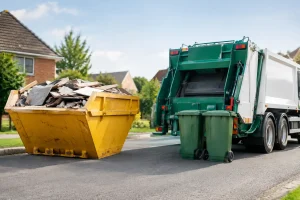
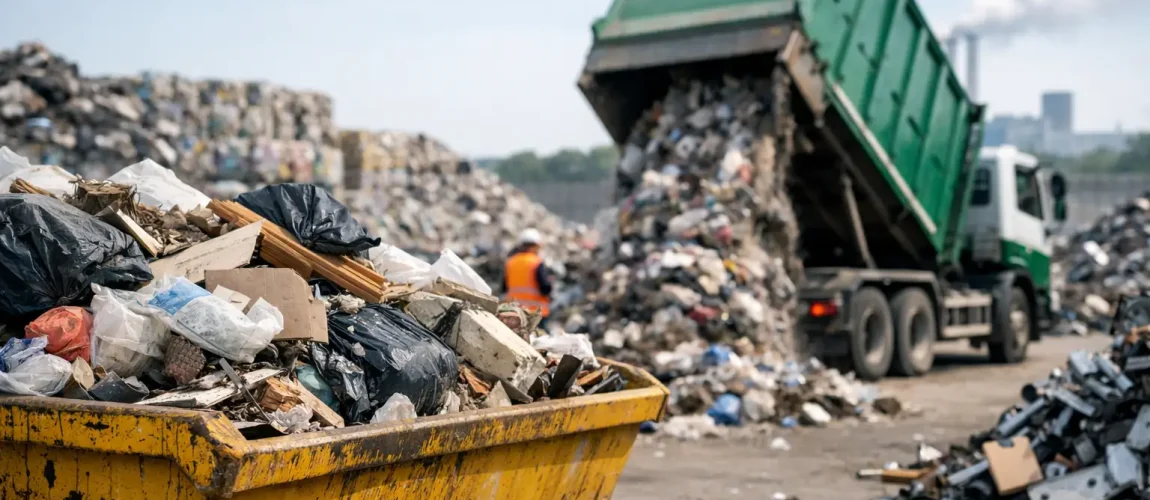
A full skip may look like one mixed load when the lorry collects it, but that is not where the job ends. So, what happens to skip waste once it leaves your driveway, garden project or building site? It is taken to a licensed waste facility, where the load is weighed, checked, separated and sent on for recycling, recovery or safe disposal.
For householders and tradespeople, this matters. Using a reputable local skip firm means your waste is dealt with legally and responsibly, rather than being at risk of fly-tipping or poor handling further down the line.
What happens to skip waste at the sorting facility?
After collection, the skip is transported to a licensed waste transfer and sorting facility. The lorry is weighed on arrival so the operator has an accurate record of the material received. This is part of proper waste management and helps ensure loads are handled through the correct route.
The waste is then tipped into a designated area for sorting. Although skips often contain a mixture of materials, much of it can be recovered. Workers and machinery separate materials into streams that can be recycled or processed separately. The exact process depends on what is in the skip, how cleanly it has been loaded and whether any restricted items have been included.
At Bushbury Skip Hire, collected waste is handled through our own licensed sorting facility in Wolverhampton. Our aim is to recycle at least 90% of the materials we collect, reducing the amount that needs final disposal.
First checks: safety and unsuitable items
Before materials are processed, the load may be checked for items that should not have gone into the skip. Some waste needs specialist treatment because it can be hazardous, difficult to recycle or unsafe to handle with general mixed waste.
Common examples include asbestos, gas bottles, tyres, paint, oils, batteries, electrical items, fluorescent tubes, chemicals and clinical waste. These should never be hidden at the bottom of a skip. They can create a safety risk for staff, contaminate recyclable material and lead to extra charges or a rejected load.
Plasterboard is another item that often needs to be kept separate. When it breaks down in landfill alongside biodegradable waste, it can produce harmful gases. If your project involves a lot of plasterboard, it is best to mention this when booking so the right disposal arrangement can be made.
How skip materials are separated for recycling
Waste sorting is not simply a case of putting everything on one pile. Materials have different values, recycling routes and handling requirements. A combination of manual picking and mechanical separation is used to recover as much as practical.
Metal is one of the easiest materials to identify and recycle. Steel, iron, aluminium and other scrap metals can be removed from mixed loads using magnets or by hand, then sent to specialist recycling processors. Metal can be recycled repeatedly and is often recovered from renovation, demolition and commercial waste.
Clean wood can be separated for processing into products such as biomass fuel, animal bedding or recycled wood materials, depending on its condition and treatment. Timber that has been heavily painted, treated or contaminated may need a different route.
Hardcore, bricks, concrete and soil are also valuable recovery materials when they are reasonably clean. They can be crushed and graded for use as recycled aggregate in construction and landscaping work. Keeping soil and rubble separate from general household waste is often worthwhile on larger building jobs because it improves the quality of the recovered material.
Cardboard, paper and suitable plastics may be sorted for recycling too. Their recovery rate depends heavily on contamination. A stack of dry cardboard is far easier to recycle than cardboard soaked with paint, food waste or plaster dust.
Green waste such as branches, hedge cuttings, grass and plants can usually be composted or processed into soil improvers where it is kept free from rubbish, plastic and rubble. For garden clearances, loading green waste separately where possible gives it the best chance of being recovered.
Not everything can be recycled – and that is why loading matters
A good skip company will work to divert waste away from landfill, but no operator can promise that every single item in a mixed skip will be recycled. Some materials are too contaminated, too mixed together or have no viable recycling route. Mattresses, upholstered furniture, mixed plastics and heavily soiled materials can be more difficult and costly to process.
The remaining waste may be sent for energy recovery, where suitable material is used to generate energy, or to an authorised disposal site. The best route depends on the material, local processing capacity and environmental rules at the time.
This is why a few simple choices before collection make a real difference. Do not use the skip as a place for unknown chemicals or hazardous items. Avoid bagging every item in black sacks if you can, as this makes sorting harder. Keep obvious recyclables such as metal, timber, green waste and clean rubble together where your project allows it.
You do not need to turn a home clear-out into a waste sorting operation. Simply loading the skip sensibly and asking for advice about unusual materials can help reduce contamination and avoid unnecessary costs.
Why licensed skip waste handling protects you
When you hire a skip, you remain responsible for making sure your waste is passed to a legitimate carrier. Choosing a licensed local operator provides a clear chain of responsibility from collection through to sorting and disposal.
This is particularly relevant for landlords, builders and businesses. Fly-tipped waste can result in investigation, clear-up costs and reputational damage, even where someone else physically dumped it. A very cheap offer with no paperwork, no clear business details or no proper collection arrangements can be a false economy.
A professional skip hire service should be clear about what can go in the skip, where it will be taken and whether a permit is needed if it is placed on a public road. If you are unsure about an item, ask before it goes in. It is quicker to check than to unload a skip later.
Getting better value from your skip
The right skip size and a sensible loading plan can reduce waste handling issues from the start. For a small garden tidy-up or a few bulky household items, a 2-yard mini skip may be enough. Larger house clearances, renovation work and builders’ waste often need a 4-yard, 6-yard or 8-yard skip, depending on the volume and weight of material.
Do not overfill the skip above its sides. Loads must be safely sheeted for transport, and protruding waste may mean the lorry cannot collect it until it has been levelled. Heavy materials such as soil, bricks and concrete also need care. A skip that looks only half full can still be very heavy, so tell the supplier if your load is mainly rubble or soil.
For ongoing trade work, consistency helps. Keeping hazardous items out, separating clean hardcore where possible and booking a suitable size for the job makes collections quicker and keeps disposal costs predictable.
The practical point is simple: a skip is not a shortcut to making waste disappear. It is the first stage in a managed process that can recover useful materials and deal properly with what cannot be reused. Load it safely, be upfront about what is going in, and your waste has the best possible chance of being handled responsibly after the lorry leaves.