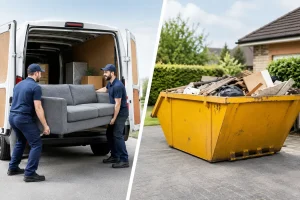

A single bathroom refit can leave you with broken tiles, plasterboard, old units and rubble piled higher than most people expect. That is usually the point where the question changes from “how do I get rid of this?” to “skip hire vs tip run – which actually makes more sense?”
For some jobs, a few runs to the local tip will do the job. For others, it quickly turns into repeated loading, queuing, unloading and cleaning out the car or van afterwards. The right choice usually comes down to volume, weight, time and how tidy you need the job to stay while the work is going on.
Skip hire vs tip run: the main difference
The basic difference is simple. A tip run means you load the waste yourself, drive it to a household waste site or transfer station, unload it, then repeat as needed. Skip hire means the container is delivered to you, you fill it as the job progresses, and it is collected when you are finished.
On paper, a tip run can look cheaper for small amounts of rubbish. If you have a few bags of green waste, some cardboard and a couple of unwanted household items, using your own vehicle may be enough. But once waste is bulky, messy or heavy, the cost is not just fuel. It is also your time, access rules at the site, wear on the vehicle and the hassle of making several journeys.
A skip costs more upfront, but it gives you one place to keep waste contained from start to finish. That matters more than people think on renovation jobs, garden clearances and site work where waste appears over several days rather than all at once.
When a tip run makes sense
A tip run is usually the better option when the load is genuinely small and easy to handle. If you are clearing a shed and have a few black sacks, some timber offcuts and bits of old packaging, it may not justify paying for a skip.
It can also work well if you already have a suitable vehicle and the waste site is close by. For households doing a quick declutter, one trip can be the cheapest route if the site accepts the waste type and you can unload it without much effort.
That said, small jobs have a habit of growing. What starts as a few bags can turn into fencing panels, broken slabs, old shelving and general mixed waste. If you are not certain how much is coming out, the tip run option often looks better before the work starts than it does halfway through.
When skip hire is the better option
Skip hire usually wins when the waste is heavy, ongoing or too awkward for a normal car. Hardcore, soil, bricks, plasterboard, timber, kitchen units, bathroom suites and garden waste all take up space quickly. Even if they fit in the vehicle, repeated loading and unloading is slow and hard work.
A skip is also more practical when several people are working on the job. Builders, landlords between tenancies, and homeowners doing a full clear-out generally need somewhere to put waste straight away. Without that, piles build up on the drive, in the garden or on site, and the area becomes harder to manage safely.
If you need the job kept moving, skip hire removes a lot of stop-start disruption. You load as you go, keep the waste contained, and arrange collection once it is full. For many customers, that convenience is the biggest saving of all.
Cost is not just the headline price
This is where skip hire vs tip run needs a more honest comparison. A tip run may appear cheaper because there is no delivery charge, but that only tells part of the story.
With tip runs, you need to factor in fuel, your own time, possible queue times, site restrictions and whether the vehicle will need cleaning or even repairing after carrying rubble and sharp waste. If you need a van for the day, the cost changes again. For trade jobs, there is another issue: every run to the tip is time not spent on the actual work.
With skip hire, the price is clearer from the start. You choose the size, tell the provider what type of waste you have, and the skip is delivered and collected. That makes budgeting easier, especially for customers trying to keep a project on schedule.
The cheapest option depends on volume. For one light load, a tip run can be sensible. For anything larger or heavier, a skip often works out better value than people expect.
Time, access and effort
Most people underestimate the time involved in a tip run. Loading the vehicle is one part of it. You then drive to the site, queue if it is busy, sort the waste if required, unload it, and come back to start again. If the project runs over a few days, you either live with the waste on site or keep making trips.
Skip hire turns that into one delivery and one collection. That is why it suits renovations, landscaping jobs and trade work where the waste is being created throughout the day. It keeps the work area clearer and saves repeated interruptions.
Access matters too. If your property has room on a drive, placing a skip is usually straightforward. If it needs to go on the road, permits may be required, so it is worth checking this early. A good local skip provider will explain what is needed rather than leaving you to guess.
Think about the type of waste
Not all waste is equal. A few bin bags are very different from broken concrete, clay soil or old fencing. Heavy materials fill both weight and space limits fast, and they are the loads that make tip runs least practical.
Mixed waste can also complicate matters if you are doing runs yourself. Household waste sites may have rules around plasterboard, soil, hardcore, trade waste or certain bulky items. Turning up with the wrong load can mean wasted time and another plan needed.
With skip hire, the key is choosing the right size and declaring the waste type properly. A local operator with its own licensed sorting facility can give clearer advice on what can go in and what needs separate handling. That reduces the risk of delays and helps make sure the waste is processed responsibly.
Choosing the right skip size
One reason some people hesitate over hiring a skip is fear of getting the size wrong. In practice, this is easier to sort out when you describe the job clearly.
For small domestic clear-outs or garden tidy-ups, a 2 or 3-yard skip may be enough. A 4 or 5-yard skip often suits bathroom refits, kitchen rip-outs and medium clearances. For larger renovation work, bulky mixed waste or site clearances, 6 or 8-yard skips are more realistic.
If the waste is dense, such as bricks, concrete or soil, size is only part of the calculation. Weight matters as well. It is always better to ask based on the actual material than to guess by eye.
Reliability and compliance matter
This part is often overlooked until something goes wrong. If you are using a skip, you want to know the waste is being handled by a properly licensed operator and processed through a legitimate facility. That is not just a box-ticking exercise. It protects you from waste being mishandled further down the line.
For commercial customers especially, compliance and dependable collections are a practical issue, not a marketing extra. Missed collections can hold up work. Unclear paperwork creates problems. Reliable local operators tend to be easier to deal with because they control the service directly rather than passing the job between third parties.
That is one reason many customers in Wolverhampton choose a local firm such as Bushbury Skip Hire Ltd. Clear sizing, straightforward booking, competitive pricing and responsible processing make the decision simpler when the job needs to stay on track.
So which should you choose?
If you have one light load, easy site access and time to spare, a tip run may be enough. If the waste is building up over days, involves heavy materials, or would take multiple journeys, skip hire is usually the smarter choice.
The real test is this: if you are already thinking about how many runs it will take, a skip is probably the better option. It keeps the job cleaner, saves time and gives you a proper waste solution from the start.
If you are unsure, estimate the waste honestly rather than optimistically. Most people regret booking too small or trying to squeeze a bigger job into car-load after car-load. A quick check on the likely volume and material type can save a lot of effort later.
A tidy job is easier to finish well, and waste removal is part of that – not something to sort out at the end when the driveway is already full.