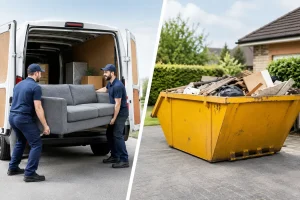

A half-finished extension can create more mess than most people expect. One day it is a few rubble bags by the wall, and the next it is broken bricks, timber offcuts, old plasterboard and packaging spread across the job. This builders waste removal guide is here to make that side of the work simpler, whether you are a tradesperson, landlord or homeowner trying to keep a project moving.
Good waste removal is not just about tidiness. It affects safety, access, labour time and cost. If waste piles up, people lose space to work, materials get mixed together, and you can end up paying more than necessary because the wrong skip was ordered or the waste was not separated properly.
What counts as builders waste?
Builders waste covers the usual materials that come off renovation, repair and construction jobs. That often includes bricks, hardcore, soil, concrete, tiles, timber, metal, plaster, old kitchen units, bathroom suites, doors, windows and general site packaging. On some jobs, it also includes bulky mixed waste from strip-outs and clearances.
What matters is that not all waste should be treated the same way. Clean rubble is different from mixed building waste. Heavy materials behave differently in a skip than lighter rubbish, and some items may need separate handling. That is why a bit of planning at the start can save hassle later.
Builders waste removal guide: start with the job, not the skip
A common mistake is ordering a skip based on guesswork. It is better to think about the job in stages. A bathroom refit creates a very different waste stream from a full house renovation. Likewise, a garden wall demolition may produce mostly heavy hardcore, while a shop fit-out may create lighter mixed waste with timber, boards and packaging.
If your project is producing dense material such as soil, bricks or concrete, you may need a smaller skip than you first think. Weight adds up quickly. For mixed renovation waste, you may need more volume but not necessarily the biggest option available. Choosing the right size is partly about space and partly about weight.
For smaller domestic jobs, a mini skip can often do the work if you are clearing a small amount of rubble or waste from one room. Medium sizes tend to suit kitchen refits, bathroom replacements and modest building work. Larger skips are more practical for wider renovations, landlord clearances and trade jobs where waste builds up across several days.
If you are unsure, it is usually cheaper to get proper advice than to order the wrong size and pay twice.
Picking the right skip size
The right skip depends on three things: the type of material, the amount of it, and how quickly it will be generated.
A 2-yard mini skip suits compact jobs with heavier waste, such as a small wall removal or a bathroom strip-out with limited space outside the property. A 4-yard skip is often a sensible middle ground for household renovation waste and smaller trade jobs. A 6-yard skip is popular for builders waste because it gives enough room for mixed materials without taking up more space than necessary. An 8-yard skip can work well for larger projects with plenty of lighter mixed waste, but it is not always the best choice for very heavy loads.
That last point matters. Bigger is not always better. If a skip is filled with dense rubble, it may reach weight limits long before it looks full. For straightforward waste removal, practical advice beats guesswork every time.
Where the skip will go
Before booking, think about access. Can a lorry get close enough to drop the skip safely? Is there enough room on a drive, yard or site frontage? Are there low branches, parked cars or tight turns that could cause delays?
Placing a skip on private land is usually the easiest option because it avoids extra steps. If it needs to go on the road, a permit may be required. That is not something to leave until the last minute. Delays with permits can hold up the start of a job or leave waste sitting on site longer than planned.
It is also worth thinking about the working day. Put the skip where labourers and trades can reach it easily without blocking access for deliveries or making extra carrying distance. A badly placed skip wastes time every day it is on site.
What you can and cannot put in a builders skip
Most general builders waste can go in a suitable skip, but there are limits. Mixed construction waste, timber, metals, old fittings, rubble and non-hazardous site waste are usually fine. The problem comes with restricted items.
Things like asbestos, paint, chemicals, solvents, gas bottles, tyres, fridges and certain electricals should not be thrown in as standard builders waste. Plasterboard may also need to be kept separate depending on the load and disposal route. Mattresses and upholstered items can carry additional charges too.
If you are dealing with anything unusual, ask before the skip arrives. It is far easier to clarify it early than to sort out contaminated waste after collection has been booked.
Keeping costs under control
A proper builders waste removal guide should be honest about cost. Price is not only about skip size. It is affected by material type, hire length, permits if needed, and whether the waste is straightforward to process.
The cheapest option on paper is not always the best value. If a skip is too small, or if it is the wrong type for the waste, you may end up paying more through delays, overloading problems or extra collections. Reliable service matters because a missed delivery or late collection can slow the whole job down.
You can keep costs sensible by being clear about the waste type from the start, choosing the right size, loading the skip properly and avoiding restricted items. If you are running an active site, regular collections or swap-outs may also work better than letting waste build up.
Loading a skip properly
There is a right way and a wrong way to fill a skip. Start with flatter, heavier items at the bottom so the load stays stable. Break down bulky items where possible to avoid wasting space. Spread material evenly rather than piling it high at one end.
Do not overfill. If waste is sticking up above the sides, the skip may not be safe to transport. A driver cannot legally take away an overloaded skip, and that means delays while the excess is removed. It is a simple issue that catches people out surprisingly often.
Keeping materials reasonably organised also helps. If clean hardcore is mixed with everything else, disposal can become less efficient. On larger jobs, some separation of waste streams can save money and reduce complications.
Legal and environmental responsibility
Waste removal is not just a practical issue. It is a legal one too. If you are producing construction waste, you need confidence that it is being handled properly by a licensed operator. Fly-tipping or careless disposal can lead to serious problems, even if you were not the one physically dumping it.
That is why using a local, licensed company matters. You want clear paperwork, a reliable collection service and responsible handling after the skip leaves site. For customers in and around Wolverhampton, that local knowledge also makes bookings easier, especially when time is tight and the job cannot wait around.
Recycling matters here as well. A good waste operation does not just collect and tip everything in one place. Waste should be sorted and processed properly so recyclable material is kept out of landfill wherever possible. That is better for the environment and better for responsible site management.
When skip hire makes more sense than tip runs
Some people try to manage builders waste with a van and repeated trips to the tip. For very small amounts, that can work. On most real renovation or construction jobs, it becomes false economy quite quickly.
Tip runs cost time, fuel and labour. They interrupt the work and create avoidable mess in vehicles. They also depend on site staff having the time to leave the job, queue, unload and come back. A skip on site keeps waste moving in one direction and frees up the day for actual building work.
For homeowners, it also removes the strain of trying to clear heavy or awkward materials bit by bit. For trades, it helps present a more organised and professional site.
Builders waste removal guide for smoother jobs
The best approach is simple. Think ahead, match the skip to the waste, check access early, and be clear about restricted items before booking. That avoids most of the usual problems.
If you are working on a domestic renovation, landlord clearance or building project in the Wolverhampton area, a local provider with straightforward advice can make the whole process easier. Bushbury Skip Hire Ltd supports both one-off and ongoing jobs with practical skip options and responsible waste handling.
A clear site keeps a job safer, faster and less stressful, and that tends to pay for itself long before the last load is collected.