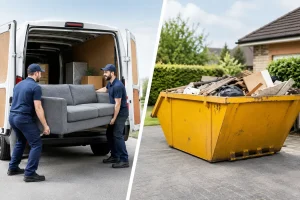

If you are clearing a garden, stripping out a small bathroom, or finally getting rid of the junk in the garage, a mini skip review is usually less about the skip itself and more about one question – will it actually be big enough for the job?
That is the point where people either save money or end up ordering twice. A mini skip can be the most cost-effective option for smaller projects, but only if the waste type and volume match the size. For many homes and small trade jobs around Wolverhampton, it does. For others, it is a false economy. The trick is knowing the difference before the skip arrives.
Mini skip review: what a mini skip is really for
A mini skip is usually the smallest standard option in skip hire, often around 2 cubic yards. In practical terms, that makes it suited to compact jobs where the waste builds up quickly but does not amount to a full house clearance or major building project.
It is a good fit for garden tidy-ups, shed clear-outs, small DIY jobs, light refurbishment waste and general household rubbish. If you are changing kitchen units in a flat, clearing old fencing panels, or dealing with bags of green waste and loose clutter, a mini skip often covers it without paying for space you do not need.
Where people get caught out is assuming that “small job” automatically means “small skip”. Waste is bulky in ways most people do not expect. Broken wardrobes, old carpet underlay, timber offcuts and rubble all take up space faster than a few black bags suggest. That is why any honest mini skip review has to include the limits, not just the benefits.
When a mini skip makes sense
The biggest advantage is value. If your waste volume is genuinely modest, a mini skip keeps costs under control and avoids the hassle of repeated tip runs. That matters whether you are a householder with a weekend clear-out or a tradesperson trying to keep a small job moving without wasting time loading the van again and again.
It also works well where space is tight. On shorter drives, smaller frontages and sites with limited access, a mini skip is easier to place than a larger unit. That can make a real difference in built-up residential areas where every bit of room counts.
For straightforward domestic jobs, the convenience is often the selling point. You can work at your own pace, load as you go, and keep the waste in one place rather than piling it in the garden or blocking the path. That is a lot easier than trying to squeeze everything into a car boot and spending half the day queueing at the tip.
Where a mini skip can fall short
A mini skip is not the best answer for every job, even when the price looks attractive. Heavy waste is the main issue. Soil, hardcore, bricks and plaster can fill a 2-yard skip very quickly. In those cases, the skip may technically be full after only a small section of work is done.
The other common problem is mixed renovation waste. A bathroom refit, for example, sounds like a small project. But once you factor in old tiles, plasterboard, timber, packaging, a bath panel, fittings and general debris, the volume can go beyond mini skip territory quite easily.
The same applies to house clearances. One spare room may be manageable. A full property clearance is not. If you already know there are bulky items involved, or the job is likely to grow once you get started, moving up a size is usually the safer call.
A realistic mini skip review on capacity
The best way to judge a mini skip is not by the yardage figure alone, because most customers do not naturally think in cubic yards. It is better to think by job type.
A mini skip is usually right for around a small pile of DIY waste, a modest garden clearance, or a compact household clear-out. It is not designed for full rip-outs, major landscaping, or trade jobs producing dense material day after day.
If the waste includes lots of air gaps, such as branches, awkward furniture pieces or broken units, the skip can look full before the actual weight is high. If the waste is dense, such as rubble or soil, you may hit practical limits quickly even though the skip still seems physically manageable. That balance between volume and weight matters more than many people realise.
This is where speaking to a local skip hire firm helps. A quick conversation about the type of waste often gives a better answer than guessing from photos online or trying to compare sizes in your head.
Cost versus convenience
A mini skip is usually the cheapest hired skip option, which is exactly why it is popular. But cheap only works if it is enough. If you need a second skip because the first one was too small, the saving disappears straight away.
That is why the best value is not always the lowest starting price. It is the size that clears the waste in one go without paying for too much unused capacity. For smaller domestic jobs, a mini skip often wins on that balance. For medium jobs, it can end up being the expensive choice in disguise.
There is also the time factor. A skip that fits the job properly keeps work moving. Builders, landlords and business users usually care about that as much as the hire price. Delays caused by under-ordering cost money, especially if labour is on site waiting for waste to be removed.
Mini skip review for domestic customers
For household use, mini skips are often at their best when the job has a clear limit. A garage clear-out, a small patio tidy-up, replacing old garden timber, or getting rid of mixed rubbish after a room refresh are all sensible examples.
They are less suitable when the project is open-ended. Once you start sorting a loft, clearing a shed, or decluttering before a move, extra waste tends to appear. That is not unusual. People find old paint tins, damaged furniture, broken tools and years of stored junk they had forgotten about. In that situation, choosing purely on the lowest price can backfire.
If you are somewhere between sizes, it is usually worth being realistic rather than optimistic. Most people underestimate waste, especially on first-time hires.
Mini skip review for trades and small businesses
For tradespeople, a mini skip can be a smart option on short, light jobs where space is limited and waste volumes are predictable. Joinery offcuts, packaging, old fittings and general site rubbish from a minor refurb can often be handled neatly in a mini skip.
It is less useful for ongoing building work or jobs with heavy demolition material. If the skip is likely to be filled in a day, or if you need room for mixed site waste across several stages of the job, going larger usually makes more operational sense.
Commercial customers also need reliability. A good skip service is not just about dropping off a container. It is about getting the right advice, turning up when promised, and handling the waste properly. That is especially important if you need to keep a site tidy, safe and compliant.
A few points people often miss
Permits can matter if the skip needs to go on the road rather than private land. Access matters too, because even a mini skip still needs enough room for safe delivery and collection. And waste type matters more than people think, because not everything can go into a general skip.
That is another reason a proper local provider is worth using. Clear guidance upfront avoids problems later, whether that is a permit issue, restricted items, or simply ordering the wrong size.
A family-run operator with its own licensed waste handling facility can also offer more reassurance on where the waste ends up. That matters to customers who want a straightforward service but also want to know materials are being sorted responsibly rather than simply tipped.
So, is a mini skip worth it?
Yes – if your job is genuinely small, your waste is fairly light or limited, and you want the most affordable skip option without wasting money on empty space. For garden clearances, minor DIY, and compact household jobs, a mini skip is often the right call.
No – if you are dealing with bulky furniture, dense rubble, a full room strip-out, or the kind of project that always seems to create more waste than planned. In those cases, going up a size is usually the more sensible and cheaper decision overall.
For customers across Wolverhampton, the best approach is simple: match the skip to the waste, not the budget you hoped for at the start. If the job is small, a mini skip can be excellent value. If there is any doubt, ask before booking. A quick bit of honest advice at the beginning usually saves time, money and hassle by the end.