
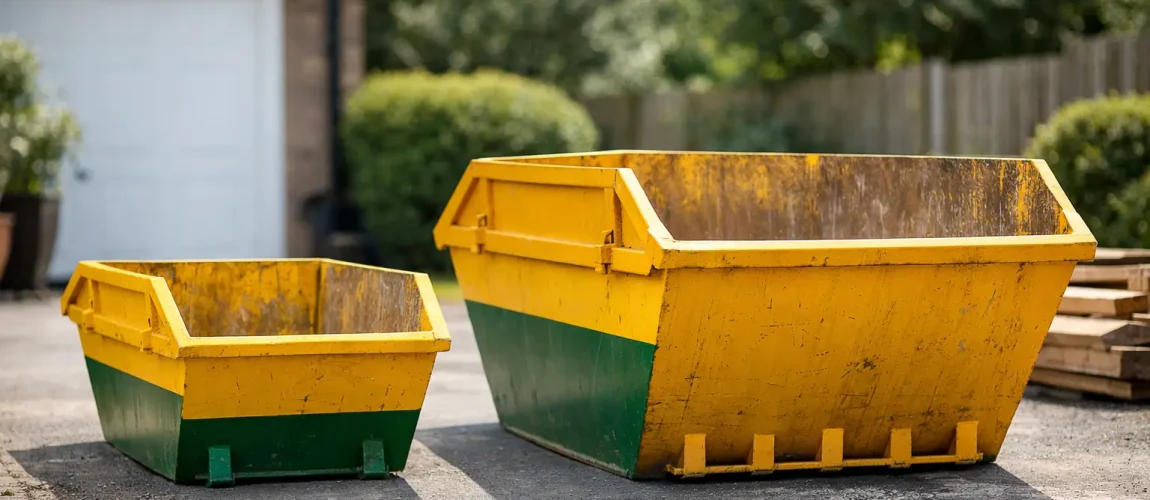
When you are staring at a pile of waste and trying to book the right skip first time, the question usually comes down to this: mini skip or midi skip? Get it wrong and you either pay for space you do not use or end up wishing you had gone a size up halfway through the job.
For most people, it is not really about skip jargon. It is about fitting the waste from a garden tidy-up, bathroom refit, house clearance or small building job into one container without making life harder than it needs to be. That is why choosing the right size matters.
Mini skip or midi skip – what is the difference?
The main difference is capacity. A mini skip is the smaller option, usually around 2 to 3 cubic yards. A midi skip is the next step up, commonly around 4 to 5 cubic yards. Both are useful for everyday domestic and light trade waste, but they suit different amounts and types of rubbish.
A mini skip is often enough for smaller clear-outs where waste builds up faster than you expect but still stays within a modest volume. Think garden waste, old kitchen units from a very small refit, a shed clear-out, or a few bulky items that will not fit in the car.
A midi skip gives you more breathing room. It is a better fit when the job involves heavier waste, awkward materials or more than one room. If you are ripping out a bathroom, clearing a flat, replacing flooring across several areas, or managing waste from a small building project, the extra space can make a real difference.
That sounds straightforward, but the choice is not only about size. Weight, type of waste, access and budget all come into it.
When a mini skip makes more sense
A mini skip suits jobs where waste is limited but still too much for a few runs to the tip. It is a popular choice because it keeps costs down and takes up less room on the drive.
If you are cutting back the garden, clearing branches, bagged green waste and old fencing panels, a mini skip is often enough. The same goes for a basic declutter where you are getting rid of unwanted household items, broken furniture and general non-hazardous waste.
It also works well for smaller renovation jobs. If you are changing a cloakroom suite, pulling out a few fitted cupboards or replacing a handful of internal doors, a mini skip can be the practical option.
The trade-off is that it fills quickly. People often underestimate how much space bulky waste takes up. A few black sacks, some timber, an old armchair and a broken chest of drawers can use more room than expected. If the job might grow once you start, a mini skip can end up feeling tight.
When a midi skip is the better call
A midi skip is often the safer choice when you know the work will create a steady stream of waste over several days. It gives you more capacity without jumping straight to a much larger builders skip.
For home improvements, a midi skip is commonly used for bathroom rip-outs, medium-sized kitchen refits, flooring removal, plasterboard, timber, packaging and general builders waste. It is also a sensible choice for landlords between tenancies, especially when a property needs clearing and tidying before the next occupants move in.
Small commercial jobs can also suit a midi skip well. Shop fittings, office clearances and regular site waste from local trades often sit in that middle ground where a mini is too small but a larger skip would be unnecessary.
The obvious downside is price. A midi skip usually costs more than a mini skip, so if your waste volume is genuinely low, you may be paying extra for space you never use. But there is another side to that. Ordering too small a skip and then needing a second one is rarely the cheaper option.
Think about the type of waste, not just the pile size
One of the biggest mistakes people make is judging skip size by what the waste looks like before loading begins. Loose waste on the ground can be deceptive.
Light but bulky rubbish, such as old furniture, cardboard, plastic and branches, can fill a skip very quickly. Dense waste such as soil, bricks, rubble and hardcore takes up less visible space, but weight becomes the issue. In those cases, it is not always as simple as choosing the biggest skip possible. Some materials are better suited to smaller skips because of weight limits and safe transport.
That is why the right answer to mini skip or midi skip depends on what you are throwing away. A mini skip may be enough for heavy inert waste from a very small job. A midi skip may be better for mixed renovation waste that is lighter but bulkier. If the load is mixed, the balance between volume and weight matters.
Access can decide it for you
Skip size is not just about the waste. It is also about where the skip needs to go.
If space is tight on your driveway, outside a terrace, or near a shared access point, a mini skip can be easier to place. For customers in built-up parts of Wolverhampton, that can be the deciding factor. A smaller skip is often less disruptive and simpler to work around during the hire period.
A midi skip still suits many domestic properties, but if access is restricted, you need to think ahead. There is no point booking the ideal capacity on paper if the lorry cannot position it safely or if it blocks more space than expected.
Where a skip needs to go on the road rather than private land, permits and placement also need to be considered. That does not necessarily rule out either option, but it is another reason why local advice helps.
Cost matters, but so does getting it right first time
Everyone wants a fair price, and rightly so. But the cheapest skip is not always the best value.
A mini skip is usually the lower-cost option upfront. If your job is genuinely small and contained, it can be the smart choice. You avoid overpaying and still get a proper, legal way to dispose of waste without endless car trips.
A midi skip often works out better value on medium jobs because it reduces the risk of overflow or needing another collection. If the project includes the usual surprises – more rubble behind old units, more rubbish in the loft, more broken timber once demolition starts – that extra capacity quickly earns its keep.
In practice, people often regret going too small more than they regret having a bit of spare space.
A simple way to choose between mini and midi
If the job is a one-area clear-out, a garden tidy-up, or a small domestic project, start by considering a mini skip. If the waste covers multiple rooms, includes renovation debris, or will build up over several days, a midi skip is usually the safer bet.
It also helps to ask yourself one straightforward question: will the waste pile get bigger once the job starts? If the answer might be yes, sizing up can save hassle.
For local customers, this is where a straightforward skip hire company makes life easier. Bushbury Skip Hire Ltd deals with these questions every day, so you are not left guessing based on online dimensions alone.
Mini skip or midi skip for common jobs
A mini skip is often right for garden waste, a small shed clearance, a single-room declutter or a minor DIY job. A midi skip is more suitable for bathroom refits, larger clearances, flooring projects, landlord work and small building jobs.
There are grey areas, of course. A light garden job with lots of branches could need more room than a heavy bathroom rip-out. A careful declutter may fit comfortably into a mini, while a rushed one can easily spill into midi territory. That is why the best choice depends on the real contents, not only the job title.
The aim is simple: enough space for the waste you actually have, at a price that still makes sense.
If you are torn between the two, it usually means your project sits near the line. In that case, think less about the ideal version of the job and more about the messiest version. That is usually the better guide.