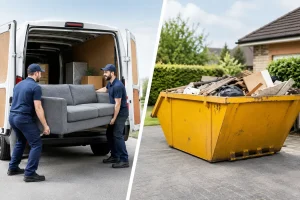
When a job starts producing more waste than expected, a small skip stops being good value very quickly. That is usually the point where large skip hire in Wolverhampton makes more sense – fewer collections, less mess building up on site, and far less time spent wondering where the next load is going to go.
For householders, that might mean a full renovation, a major garden clearance or finally emptying a property before sale or let. For builders, landlords and business users, it often means keeping a job moving without piles of rubble, timber, packaging or mixed waste getting in the way. The right skip size is not just about capacity. It affects cost, access, timing and how smoothly the whole project runs.
When large skip hire in Wolverhampton is the right choice
A larger skip is usually the better option when waste will build steadily over several days, or when the material is bulky enough to fill a smaller skip long before it is actually heavy. Old kitchen units, bathroom suites, fencing, plasterboard, timber, soil, hardcore and general clearance waste all take up room quickly.
This is where people often get caught out. They try to save money by booking too small a skip, then end up needing a second one or arranging an exchange part way through the job. That can cost more overall and create delays, especially if the waste is already spilling into the driveway or work area.
If you are clearing a house, stripping out a rental property, renovating several rooms at once or dealing with builders’ waste from an active site, a larger skip gives you more breathing room. It is also more practical when several people are working on the same project and waste is being produced at pace.
What counts as a large skip?
In practical terms, most people asking for a large skip mean the bigger end of standard enclosed or open skip sizes used for substantial domestic and commercial jobs. For many projects in Wolverhampton, that means looking at 6-yard or 8-yard skips rather than mini or midi options.
A 6-yard skip is often a sensible middle ground. It suits heavier waste from renovation work, garden landscaping or bulky household clearance without taking up as much room as larger specialist containers. An 8-yard skip is a common choice for bigger clear-outs, trade waste and jobs where volume matters just as much as weight.
There is no perfect size in the abstract. It depends on what is going in, how much access you have, and whether the waste is dense, bulky or mixed. Soil and hardcore are very different from old furniture, cardboard or timber offcuts. A larger skip can hold more, but certain waste streams still need to be loaded with weight limits in mind.
Choosing the right large skip for the job
The easiest way to choose is to think about the job in real terms rather than trying to guess cubic yards. If you are replacing a kitchen and bathroom at the same time, clearing out a garage and shed, or dealing with a full house clearance, a larger skip is usually the safer option. If you are a builder working on extensions, refits or repeated site clearances, going larger reduces interruption.
Access matters just as much as volume. A narrow drive, parked cars, low walls or limited roadside space can affect what can be delivered safely. There is no point booking the biggest skip available if the lorry cannot place it where you need it.
That is why a straightforward local service matters. A proper conversation about the waste type, likely volume and where the skip will sit can save a lot of hassle later. Bushbury Skip Hire Ltd works with customers across Wolverhampton on exactly these day-to-day questions, keeping the process clear rather than overcomplicated.
Domestic jobs that often need a larger skip
Larger skips are commonly used for full-room refurbishments, multi-room decorating projects, large garden clearances, loft and garage emptying, and end-of-tenancy clear-outs. They are also useful when a family is preparing for a house move and needs to get rid of years of accumulated waste in one go.
In these situations, convenience is a big part of the value. Instead of making repeated trips to the tip, loading and unloading the car, and trying to fit disposal around work and family life, the waste stays in one place until collection.
Commercial and trade use
For commercial customers, the priorities are usually speed and reliability. A skip that arrives on time and is collected as arranged helps keep sites tidy and work areas safe. Builders, shopfitters, landlords and maintenance teams often need a larger skip because waste builds up steadily rather than all at once.
That is especially true on jobs where several trades are involved. Packaging, broken materials, old fixtures and general site waste can pile up quickly. Having enough capacity from the start keeps the job cleaner and more efficient.
Cost, value and avoiding false economy
Most customers want the best price, but the cheapest-looking option is not always the best value. A skip that is too small can lead to overfilling, extra collection charges or the need for another skip altogether. That is where the real cost starts climbing.
A larger skip often works out better when you know the waste volume will be high. It gives you more flexibility, lowers the risk of disruption and cuts out the time and fuel costs of doing extra tip runs yourself. For trade users, it also helps avoid downtime. For domestic customers, it can make a stressful project feel much more manageable.
Good value also means knowing your waste is being handled properly. A licensed operator with its own sorting facility can give customers more confidence that waste is dealt with legally and responsibly, not simply tipped elsewhere. That matters whether you are a homeowner clearing one property or a business needing dependable waste disposal as part of day-to-day operations.
What you can put in a large skip
For most general jobs, large skips are used for mixed waste such as wood, metal, plastics, old fittings, garden waste, brick, rubble and general household or trade clearance material. The exact contents always depend on the type of skip and the nature of the waste.
There are some limits, and that is where being clear at the start helps. Certain items may need separate disposal or special handling. Heavy materials also need sensible loading, especially in larger skips, because a skip can run out of weight allowance before it looks full.
If you are unsure, ask before booking. It is much easier to get the right advice at the start than to sort problems out when the skip is already on site and half loaded.
Permits, placement and practical details
If the skip is going on private land, such as a driveway, the process is usually simpler. If it needs to be placed on a public road, a permit may be required. That is another reason to use a local firm that understands Wolverhampton requirements and can explain what needs to happen.
It is also worth thinking ahead about where the skip will go. The area should be clear, accessible and suitable for the weight of the skip once loaded. If access is tight, mention it early. A few details about the property or site can prevent wasted journeys and delays.
Timing matters too. On busy jobs, waiting too long to order a skip can slow everything down. Booking in good time helps, but so does using a provider that offers a quick, straightforward service when the need is more urgent.
Why local service makes a difference
With skip hire, local knowledge is not a sales line. It makes the service easier. A Wolverhampton-based operator understands the area, the access issues that come with different streets and property types, and the need for prompt turnaround when customers are trying to keep a project on schedule.
It also means clearer communication. If you need advice on size, timing or placement, you want to speak to someone who deals with these jobs every day, not a call centre reading from a script. That no-nonsense approach is often what customers value most – fair pricing, direct answers and a service that does what it says it will do.
A reliable local company should also back that up with responsible waste handling. Strong recycling rates and proper sorting are not just good practice. They are part of giving customers peace of mind that their waste is being managed properly after it leaves the site.
If your project is likely to create more waste than a small skip can handle, it is worth getting the size right from the start. A larger skip can save time, reduce stress and keep the job moving, which is usually what matters most when there is work to get done.