
That first wheelbarrow load always looks easy enough, then the skip starts filling faster than expected and awkward items begin piling up at the side. If you want to load a skip safely at home, the job is not just about getting everything in. It is about keeping the area safe, avoiding overfilling, and making sure the waste can be collected without problems.
A skip is there to make clear-outs, renovations and garden jobs easier, but it still needs using properly. Poor loading can leave sharp edges exposed, create an unstable pile, or mean you have to pull half the contents back out before collection. A little planning saves time, effort and hassle.
Why safe loading matters
Most people think of skip loading as simple common sense, and in many ways it is. Still, there are a few common mistakes that cause real problems. The biggest ones are overloading, putting heavy materials on top, and leaving waste sticking out above the rim.
A skip lorry needs to lift and transport the container safely. If the contents are uneven, too heavy in one corner, or stacked above the top, collection may be delayed until the load is made safe. That can be frustrating if you are trying to keep a job moving or clear a driveway quickly.
Safe loading also matters at home while the skip is in use. Children, neighbours, tradespeople and anyone coming and going around the property can be put at risk by loose boards, broken glass or unstable heaps of rubbish. The safer the skip is loaded, the safer the whole job stays.
Before you start loading
The best time to think about safety is before the first item goes in. Have a quick look at what you are actually throwing away and separate it into rough groups. Heavy waste such as soil, rubble or bricks should be kept apart from lighter bulky items like cardboard, timber offcuts or old household junk.
This matters because different waste types behave differently in a skip. Dense materials fill weight limits quickly, while light materials take up space. If you mix everything without thinking, you often end up with a skip that looks half full but is already too heavy, or one that is full of air gaps and wasted space.
It also helps to keep prohibited items out from the start. Paint tins, tyres, plasterboard, fridges, batteries, gas bottles and electrical items often need separate handling. If you are unsure, ask before loading rather than after. It is far easier to keep restricted waste to one side than sort through a full skip later.
How to load a skip safely at home
Start with the heaviest and flattest items at the bottom. That creates a stable base and stops lighter waste being crushed awkwardly underneath. Bags of hardcore, broken paving, slabs and bricks should go in first if they are allowed in that skip type.
Once the base is in place, spread the weight as evenly as you can from end to end. Do not dump everything in one corner. A balanced load is safer on site and safer when the skip is lifted onto the lorry.
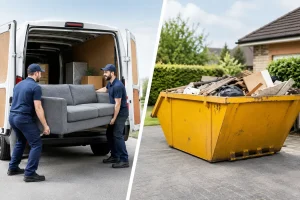
After that, place bulkier lighter items on top and use them to fill the shape of the skip properly. Break down furniture where possible. Flatten cardboard. Cut long branches or timber into shorter lengths if it can be done safely. You are not trying to pack it tight like a removal van, but you do want to reduce wasted space.
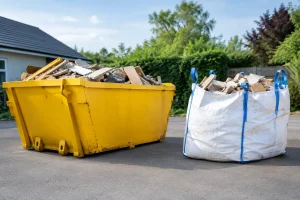
The main rule is simple – keep everything level with the top edge. Not above it, not balanced on it, and not wedged in with the hope it will stay put. If material sticks out, it can fall during lifting or transport. A skip that is filled flat to the rim is usually collectable. A skip with a mound on top often is not.
Safe lifting and handling while loading
A lot of skip-related injuries happen before the waste even reaches the container. It is usually strain from lifting too much, carrying awkward objects, or twisting while throwing items in. If something is heavy, break the load down or use a second person.
Keep your footing clear around the skip. Loose rubble, muddy ground and torn waste bags are easy ways to slip. Gloves are a good idea for most jobs, especially if you are handling timber, broken materials or garden waste with thorns.
If you are loading from a height, take extra care. Do not climb onto unstable piles of rubbish to stamp things down. Do not lean dangerously over the side with heavy items. If waste is too bulky to place safely, it probably needs breaking up first.
There is also a practical point here. Safer loading is usually quicker loading. A steady pace with properly placed waste nearly always beats rushing and having to rearrange everything afterwards.
Common mistakes that cause problems
One of the most common issues is trying to save money by squeezing too much into one skip. That sounds sensible at first, but an overloaded skip can mean collection delays, extra labour and sometimes an additional charge if the contents need reducing.
Another mistake is dropping loose sharp waste in on top. Broken tiles, metal strips, shattered glass and splintered timber should be placed carefully, not thrown in blindly. That reduces the chance of injuries when more waste is added later.
People also underestimate how heavy certain materials are. Soil and rubble are the usual culprits. A small amount can weigh far more than expected, especially in wet weather. If your job is mainly heavy waste, choosing the right skip from the start matters more than trying to force it into the cheapest option.
Then there is the temptation to use the skip as a catch-all for anything in the garage or shed. That is where prohibited items often sneak in. It is always worth checking first rather than assuming everything can go together.
Loading heavy waste and mixed waste
If your project is mainly bricks, concrete, paving or soil, the safest approach is to keep the load low and even. Heavy waste should never be heaped high. It can make the skip too heavy to move safely, even if it is not full to the top.
Mixed waste gives you more flexibility, but it still needs a bit of order. A good approach is to build from solid materials at the bottom to lighter, squashable items above. Think of it like stacking for stability rather than just filling a box.
For home renovations, timber, old kitchen units, plaster, packaging and general rubbish often come off the job in stages. That is normal. Just resist the urge to throw each new load wherever it lands. Take an extra few seconds to place it properly and you will fit more in while keeping it safer.
How to load a skip safely at home with children and neighbours around
A domestic skip often sits in a live space, not a closed building site. That means people may be walking past it, parking near it or simply being curious about it. If you have children at home, keep them away from the skip area while loading is going on.
Do not leave doors, drawers or sharp scrap balanced on the edge. If the skip is accessible from the street or a shared drive, be aware that other people sometimes try to add their own rubbish. That can create safety issues as well as collection problems if restricted waste is added.
If possible, keep the area around the skip tidy and well lit in the evening. A clear path reduces trips and helps everyone see where they are stepping.
When to stop filling
The honest answer is earlier than most people think. Once the load reaches the fill line at the top edge, that is the point to stop. Pressing down soft materials slightly is one thing, but building upward is where trouble starts.
If you still have waste left, the best option depends on the job. Sometimes it makes sense to book a second skip. Sometimes you may need a larger size from the start. For ongoing work, speaking to a local firm such as Bushbury Skip Hire Ltd can help you match the skip to the amount and type of waste before it becomes an issue.
It is also worth stopping if you notice the load becoming uneven or unstable. A few minutes spent rearranging safely is better than leaving a dangerous pile for later.
The simplest way to get it right
To load a skip safely at home, think flat, balanced and level. Put heavy waste at the bottom, spread the weight, break bulky items down, and never fill above the rim. Keep prohibited waste separate, protect yourself while lifting, and treat the area around the skip as part of the job rather than an afterthought.
A skip should make clearing waste simpler, not create more work. If you load it with a bit of care from the start, collection is smoother, the site stays safer, and the whole job feels easier from day one to the final lift away.