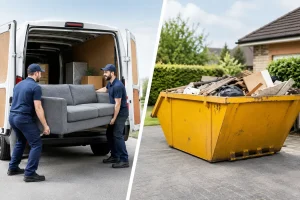
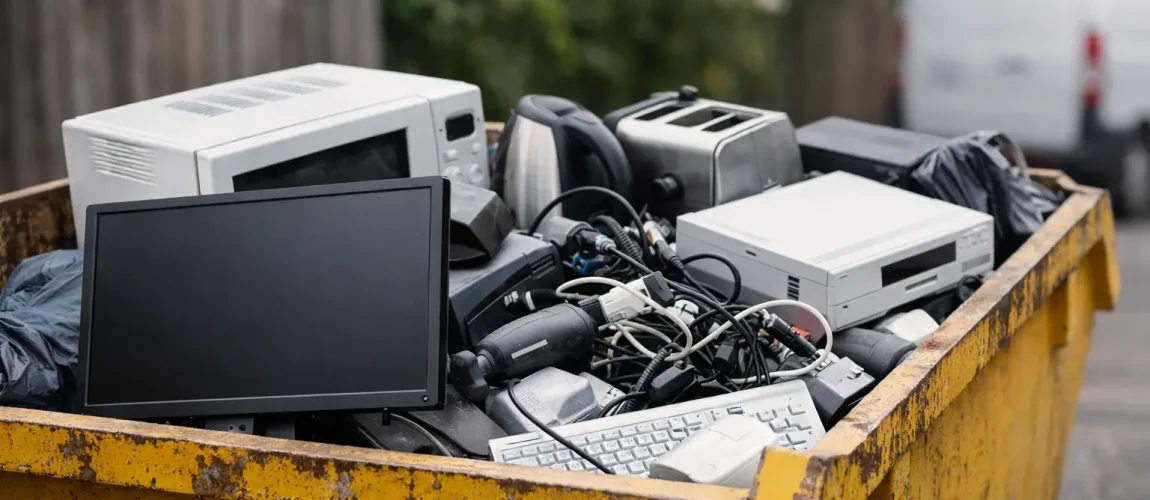
A garage clear-out often starts the same way – an old toaster, a broken vacuum, a dead microwave and a tangle of cables all end up by the skip. It seems straightforward, but if you’re asking can you put electrical items in skips, the short answer is usually no. Most electricals need to be kept separate from general skip waste so they can be handled through the correct waste stream.
That catches out plenty of homeowners, landlords and tradespeople. The problem is not that the items are bulky or awkward. It is that electrical waste is regulated differently from mixed household or building waste, and putting the wrong item in a skip can lead to rejected loads, delays or extra charges.
Can you put electrical items in skips for general waste?
In most cases, electrical items should not go into a standard mixed waste skip. That includes anything with a plug, cable, battery or circuit board. Even if the item no longer works, it still counts as electrical waste and needs separate disposal.
This applies to common household items such as kettles, printers, televisions, monitors, fridges, freezers, washing machines, tumble dryers, lawnmowers and power tools. Some are simply classed as WEEE – waste electrical and electronic equipment. Others, especially cooling appliances, can contain hazardous components that need specialist treatment.
For skip users, the practical point is simple. A standard skip for a renovation, clear-out or site job is generally intended for approved mixed waste. Electrical items often fall outside that category.
Why electrical items are treated differently
Electrical waste is not just scrap metal with a plug on it. Many items contain materials that need controlled handling, including wiring, circuit boards, glass, plastics, compressors and in some cases oils or gases. If those materials are mixed into general skip waste, they are harder to sort safely and may not be accepted at the transfer or recycling stage.
There is also a compliance issue. Licensed operators have to process waste in line with the right rules, and electricals are one of the waste streams that cannot simply be buried under rubble, timber and general rubbish. If a skip contains prohibited items, it can affect the whole load.
That matters whether you are clearing a house in Wolverhampton or managing waste on a building job. The easiest route is always to declare what you need to throw away before booking.
Which electrical items are most commonly not allowed?
Small electricals are the ones people most often assume are fine because they do not take up much space. In reality, size is not the issue. A hairdryer and a fridge can both be unsuitable for the same skip, even though one is tiny and the other is large.
Items that commonly need separate disposal include kitchen appliances, white goods, televisions, computer monitors, desktop towers, printers, vacuum cleaners, electric heaters, lamps, power tools and garden equipment with motors. Anything battery-powered can also be an issue, especially if the battery is still fitted.
Fridges, freezers and air conditioning units need particular care because of the gases and components inside them. These should never be dropped into a general skip without prior agreement.
What about small household electricals?
This is where there is often confusion. Customers clearing a loft or spare room may think a few old chargers, lamps or radios will not matter if they are hidden among black bags and loose waste. But they still count as electrical waste.
If you have just one or two small items, the best option is often to take them to a dedicated recycling point rather than hiring a skip for them. If you already have a skip on site for other waste, ask in advance whether those items can be collected separately. That is far better than guessing.
Can builders and trades put electrical items in skips?
The same rule broadly applies on commercial jobs. Builders, electricians, kitchen fitters and landlords often remove old appliances or electrical fittings as part of a project, but that does not mean they can go into the mixed skip with plasterboard, timber and hardcore.
For example, an electrician stripping out old consumer units, light fittings and cabling may be dealing with more than one waste type. A kitchen refit might involve cabinets in one stream, rubble in another and appliances in a separate electrical waste stream. Keeping those materials apart from the start saves time later and reduces the risk of contamination charges.
On trade jobs, it is especially worth being clear because larger volumes of prohibited waste can cause bigger collection problems.
What happens if electrical items are put in a skip anyway?
If electrical items are found in a skip that was booked for general waste, there are a few possible outcomes. The load may need hand-sorting, which adds cost. Collection may be delayed while the issue is dealt with. In some cases, prohibited items may need to be removed before the skip can be taken away.
None of that is ideal if you are working to a deadline. A house clearance can stall, a renovation can lose time and a site can end up with waste sitting longer than planned. That is why clear waste guidance matters just as much as choosing the right skip size.
The best way to dispose of electrical waste
The right option depends on the type and amount of waste. If you have a couple of broken household appliances, a local recycling site may be the simplest answer. If you are clearing multiple electrical items from a property, it is usually better to mention that when requesting a quote so the waste can be assessed properly.
For larger jobs, separate collection is often the cleanest route. That keeps the skip available for the waste it is meant to carry while making sure electricals go through the correct channel. A local operator with its own licensed sorting facility, such as Bushbury Skip Hire, can advise on what can and cannot be accepted before delivery, which avoids guesswork on the day.
When it depends
There are cases where customers hear different advice from different firms, and that is because acceptance can depend on the item, the site and the disposal route available to the operator. Some companies may accept certain electrical items only by prior arrangement. Others will not accept any at all in a standard skip.
That does not mean the rules are unclear. It means the waste stream needs to be agreed in advance. If an item has a plug, battery, screen, motor or cooling unit, treat it as something to check first rather than something to throw in and hope for the best.
This is especially important with mixed clear-outs, where people are dealing with furniture, general rubbish, timber, old tools and unwanted appliances all at once. The load might look like one job, but the waste may need separating.
How to avoid problems when booking a skip
The simplest approach is to be specific about what you are throwing away. Saying you have a house clearance or renovation skip is helpful, but adding that there are old appliances or electrical fittings is what prevents issues later.
If you are unsure, describe the items clearly. A broken microwave, two televisions and a washing machine is much more useful than saying general junk. That allows the skip provider to tell you what can go in the skip, what needs separate collection and whether a different arrangement would be better value.
It is also worth checking for hidden electricals. People remember the fridge, but forget the extension leads, lamps, cordless tools, speakers and old monitors tucked in a shed or cupboard. Those smaller items are often the ones that end up in the skip by mistake.
A practical rule to follow
If it plugs in, powers up, charges, contains a battery or has electrical components, do not assume it can go in a skip. Ask first. That one step can save you from extra cost and wasted time.
For most customers, skip hire works best when the waste is straightforward and correctly separated from the start. General rubbish, renovation debris, garden waste and hardcore each have their place. Electrical waste usually needs its own route.
If you are clearing a property or site and are not sure what belongs in the skip, get that checked before delivery rather than during collection. It keeps the job moving and makes sure your waste is handled the right way the first time.