If you are ripping out a ceiling, knocking down a stud wall or clearing up after a refurbishment, one question comes up quickly – can plasterboard go in skips? The short answer is not usually in a standard mixed waste skip, and that catches plenty of people out. Plasterboard has to be handled separately in most cases, so getting it wrong can lead to delays, extra charges or the need to reload waste.
Can plasterboard go in skips legally?
Plasterboard is not general rubbish. In the UK, it is classed as a material that should be kept separate from mixed waste because of the way it breaks down in landfill. When plasterboard is buried with biodegradable waste, it can produce hydrogen sulphide gas. That is why waste sites and skip operators have strict rules around it.
So, can plasterboard go in skips at all? Yes, but only in the right type of skip arrangement. In many cases it needs to go into a dedicated plasterboard or gypsum waste skip, or it must be bagged and agreed in advance with the skip provider. You should never assume it can be thrown in with bricks, timber, packaging, household junk and everything else from the job.
For householders doing DIY, this often feels awkward because plasterboard looks harmless enough. For builders and tradespeople, it is usually part of the job already. Either way, the key point is simple – plasterboard disposal needs planning before the skip arrives, not after it is half full.
Why plasterboard is treated differently
The issue is not that plasterboard is especially dangerous to handle in normal conditions. The problem is what happens further down the line once waste is tipped, sorted and sent on for treatment or landfill. Gypsum-based materials need separate handling to stay compliant with waste rules.
That is why skip companies ask what is going into the container. It is not just paperwork or box-ticking. If prohibited materials are mixed into a general skip, the whole load can become more difficult and expensive to process.
For customers, that usually means one of three outcomes. The waste may be rejected at the site, there may be an additional sorting charge, or the operator may need to arrange a different disposal route. None of those options is ideal when you are trying to keep a project moving.
What counts as plasterboard waste?
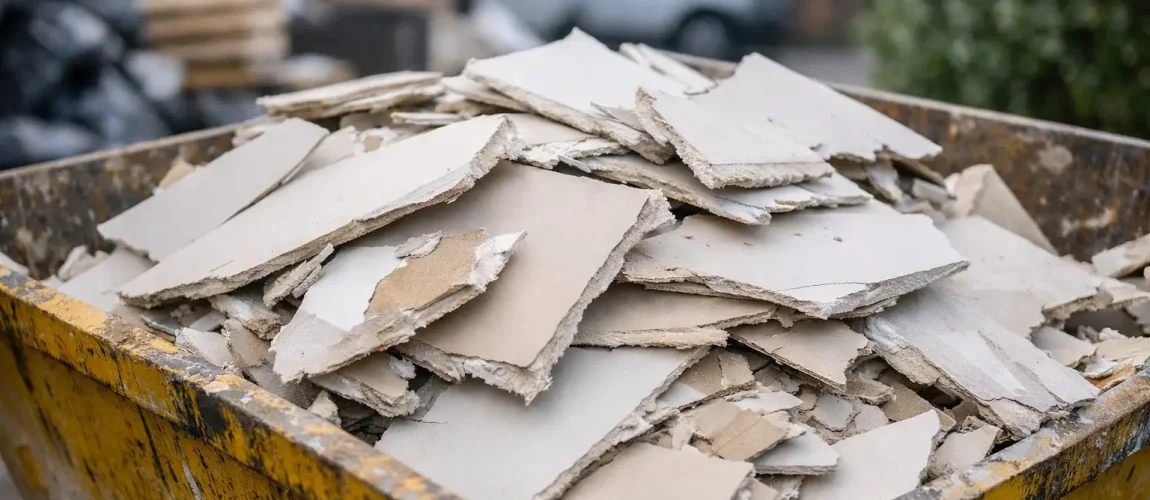
Most people think of standard wall and ceiling boards, but plasterboard waste can include more than just clean offcuts. It often covers broken sheets from strip-outs, plasterboard bonded to insulation, and gypsum-based construction boards from refurbishment work.
This is where things can get slightly more complicated. Clean, unused offcuts are easier to separate and recycle. Demolition material covered in dust, screws, tiles, plaster skim or other debris may still be accepted as plasterboard waste, but it depends on the site and how contaminated it is.
If the boards have asbestos content, that is a completely different category and must never go into a standard skip. Older materials should always be checked if there is any doubt.
Common jobs that create plasterboard waste
Home renovations are the usual culprit. A new kitchen, loft conversion, garage alteration or bathroom refit can all produce more plasterboard than people expect. The same goes for office refits, shop refurbishments and light commercial building work.
Even a small room can generate a surprising pile once sheets are broken up. That matters because plasterboard is bulky, and if it has to be removed from a mixed skip later, it creates unnecessary time and cost.
Can plasterboard go in skips with other waste?
In most cases, no. That is the safest answer for customers because mixed loading is where problems start. If you are hiring a general skip for household waste, garden waste or builders’ rubble, you should assume plasterboard needs to be kept out unless your skip company has agreed a specific arrangement beforehand.
Some operators can allow a limited amount if it is clearly separated, bagged or placed in a designated area of the skip, but that depends on the waste transfer process at their facility. Others will insist on a dedicated collection or separate skip altogether.
This is one of those areas where a quick phone call saves a lot of hassle. A reputable local company will tell you clearly what is accepted and what is not, based on the type of waste and the volume involved.
The best way to dispose of plasterboard
The right option depends on how much waste you have. If you only have a few small offcuts from a DIY job, a local household waste site may accept them in a separate bay, subject to their rules. If you are producing larger volumes, especially on a renovation or trade job, a dedicated skip or arranged plasterboard collection is usually the better route.
For mixed renovation work, it often makes sense to keep plasterboard stacked separately from the start. That way, timber, metal, packaging and rubble can go into the main skip, while the plasterboard is dealt with properly. It keeps the site tidier and reduces the chance of contamination.
For builders and landlords working to a schedule, this matters even more. The cheapest skip is not always the cheapest job overall if you end up paying for re-sorting or a wasted collection.
Separate it early and keep it dry if you can
Plasterboard is easier to handle and recycle when it is reasonably clean and separate. If possible, stack it away from wet waste, loose soil and food or garden material. That is not always realistic on a busy site, but the cleaner it stays, the smoother disposal tends to be.
There is no need to overthink it. The main goal is simply not to bury it under mixed rubbish and hope for the best.
What happens if you put plasterboard in the wrong skip?
Usually, nothing dramatic happens on your driveway. The issue appears later when the skip is tipped and inspected. At that stage, the load may be flagged by the waste site, and the material has to be removed or treated differently.
That can mean extra charges, delays to exchange skips, or problems if you were expecting a quick turnaround on a live job. For commercial customers, it can also create avoidable compliance issues, especially where waste streams need to be documented properly.
For household customers, the biggest frustration is often cost. People hire a skip to make life easier, not to be told afterwards that a few sheets of plasterboard have changed the disposal price. Clear advice at the start avoids that.
How much plasterboard justifies a separate skip?
There is no single rule because it depends on the size of the project and what other waste is being produced. A few small pieces from patch repairs may be manageable through a local recycling site or a minor arranged collection. A full room strip-out, ceiling replacement or partition removal is another matter.
Once plasterboard becomes a noticeable part of the waste stream, it is worth separating. If you are filling bags with it, stacking multiple sheets or generating repeated loads across several days, mention it when booking. That gives the skip company a chance to recommend the right container and disposal method.
This is especially useful on jobs where waste builds up in stages. You may need one skip for rubble and general builders’ waste, and a separate plan for gypsum materials. It is more organised and usually more cost-effective than sorting out a problem later.
A straightforward approach for domestic and trade jobs
Whether you are clearing one room at home or managing waste from a busy site, the practical answer stays the same. Tell the skip provider if plasterboard is involved, be honest about the quantity, and keep it separate unless you have been told otherwise.
A reliable local firm should be able to explain what is allowed without jargon. That is what most customers want – not a lecture on waste regulations, just clear guidance on what can go in the skip and what needs a different route. Bushbury Skip Hire Ltd handles this sort of query every day, which is why asking before you load is always the sensible move.
If you are unsure, treat plasterboard as a separate waste stream from the start. It is easier to keep a job moving when the waste is sorted properly than to unpick a full skip after the fact.
The best skip hire service is not just about dropping off a container quickly. It is about making sure the waste goes the right way first time, so your project stays simple, legal and on budget.