
A loft clearance often starts with one box and ends with years of forgotten belongings spread across the landing. If you are working out how to clear loft waste, the quickest approach is not to start throwing everything down the stairs. Plan the job first, protect yourself from dust and awkward lifting, then choose a disposal option that matches the amount and type of waste.
A clear loft gives you usable storage, makes inspections and insulation work easier, and can make a property more appealing before a sale or move. It can also uncover items worth keeping, donating or selling. The key is separating those from genuine rubbish before the skip arrives or the car is loaded.
Start safely before clearing loft waste
Lofts are not designed as general living spaces. They can be hot, poorly lit, dusty and difficult to move around in, particularly in older homes. Set aside enough time to work steadily rather than rushing the job in one afternoon.
Make sure there is a safe route from the loft hatch to the outside of the property. Clear the landing, stairs and hallway first, and protect flooring if you are moving dusty boxes or bulky items through the house. A decent work light, gloves, a dust mask and sturdy footwear are sensible basics. Long sleeves are useful where old insulation may irritate your skin.
Only stand on proper loft boarding or the joists. Plasterboard ceilings will not support your weight, and one missed step can cause expensive damage or a serious injury. If the loft is heavily packed, work from the hatch outwards so you do not have to climb over unstable piles.
Stop and get specialist advice if you find material that could contain asbestos. This may include old insulation, boarding, cement sheets, pipe lagging or textured coatings in some properties. Do not bag it up with ordinary rubbish, break it apart or put it in a skip without confirmation that it can be accepted. The same caution applies to unknown chemicals, leaking containers and old fuel products.
Sort before you dispose
The biggest money-saving decision in a loft clearance is made before waste leaves the property. Put items into separate areas as you go: keep, sell or donate, recycle, and dispose of. It sounds simple, but it stops useful possessions being thrown away and prevents recyclable materials being mixed into general waste.
Open boxes rather than assuming their contents are rubbish. Lofts commonly hold paperwork, photographs, family keepsakes, tools, seasonal decorations and spare household items. Check old files for personal documents before disposal. If you no longer need them, shred anything containing names, addresses, bank details or other sensitive information.
Furniture, clean clothing, books, toys and working household items may be suitable for donation or resale. Be realistic, though. If an item is damp, mouldy, broken beyond repair or has been untouched for years, it is usually better to dispose of it responsibly than to move it from one storage space to another.
Cardboard is one of the most common loft wastes and can take up far more room than expected. Flatten it as you work. Separate clean cardboard, metal and suitable plastics where practical, but do not spend hours trying to strip every item into tiny parts. For a larger clearance, a mixed-waste skip is often the practical choice, with the contents sorted at a licensed facility afterwards.
Choose the right way to remove loft waste
For a few bags and manageable items, a household recycling centre may be enough. This works best if you have the time, a suitable vehicle and you know the site accepts everything you are taking. Several trips quickly become inconvenient, especially when clearing bulky furniture, old carpets, broken boards and dozens of boxes.
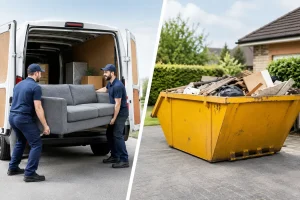
A skip is usually the easier option for a full loft clearance, a house move or a renovation where other waste is being created at the same time. You can carry items down as you sort them and load them straight away, rather than filling the driveway, garage or spare room with rubbish waiting for a tip run.
As a rough guide, a 2-yard mini skip can suit a small amount of bagged rubbish and light household waste. A 4-yard skip is often a sensible choice for a typical declutter involving boxes, timber and unwanted items. If the loft is full, or you are clearing more of the property at the same time, a 6-yard or 8-yard skip may avoid the cost and delay of ordering a second container.
It depends on how bulky the waste is. A loft full of flattened boxes may look like a lot but compresses well. Old wardrobes, mattresses, chipboard, carpet and damaged furniture use space quickly. Describe the job honestly when requesting a quote, including any larger items, so you can choose a skip size with enough room.
What should not go in a loft clearance skip?
Most general household and non-hazardous loft waste can be placed in a skip, but some materials need separate arrangements. These restrictions exist for safety, legal compliance and recycling reasons. Before loading, check what your provider can accept.
Common items that may be restricted or prohibited include:
- asbestos and suspected asbestos-containing materials
- gas bottles, fuel cans and other pressurised containers
- paint, solvents, chemicals and oils
- electrical items such as televisions, fridges and computers
- tyres, batteries and fluorescent tubes
Do not hide restricted waste underneath general rubbish. It can make the load unsafe to transport and may lead to extra charges or rejected waste. If you find something unusual during the clearance, set it aside and ask before disposing of it.
Keep the skip level loaded. Waste sticking above the sides cannot be safely covered for transport, and the lorry driver may be unable to collect it until the excess has been removed. Break down suitable furniture and cardboard to make better use of the available space, but avoid smashing items that could create sharp edges or dust.
Plan skip access and timing
Think about where a skip can be placed before booking. A private drive is normally the simplest location, provided there is enough width and the surface can take the weight. Keep access clear for the delivery lorry and avoid parking vehicles where they will block the drop-off or collection.
If the skip needs to sit on a public road, pavement or verge, a permit may be required from the local authority. This takes time to arrange, so do not leave it until the day before your clearance. A local skip hire company can explain the process and help establish whether a permit is needed for your location.
For most domestic jobs, it is best to book the skip for the period when you can actually clear the loft. Avoid having it delivered too early if it will tempt neighbours or passers-by to add waste. If access is tight, let the provider know about narrow roads, low branches, overhead cables, gates and parked cars when you book.
Bushbury Skip Hire provides straightforward local skip hire for Wolverhampton household clearances, with skip sizes suited to anything from a modest loft tidy-up to a larger property clear-out. Using a licensed operator also gives you confidence that waste is handled properly, rather than passed to an unregistered collector.
How to make the clearance quicker
Work in sections rather than emptying the whole loft into the house. Start with the area nearest the hatch, finish each box or pile before moving on, and take regular breaks. This keeps the job controlled and makes it easier to spot items that need a different disposal route.
For larger or heavier pieces, use two people and communicate before lifting. Never carry awkward loads down a ladder. If access is through a loft hatch, break down furniture where possible and use strong bags or small boxes rather than overfilling large ones. A bag that is too heavy to lift safely is not saving time.
Once the waste is removed, vacuum or sweep the boarded areas carefully and check for signs of leaks, pests, damaged wiring or compressed insulation. This is also a good opportunity to label the items you are keeping and store them in sealed boxes, leaving a clear route to the hatch for future access.
A loft should be useful storage, not a place where unwanted waste disappears for another decade. Clear it in stages, choose a legal disposal route and leave enough room to inspect the space properly. The result is a safer, tidier home and one less job hanging over you.