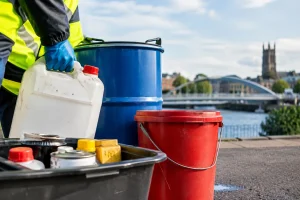
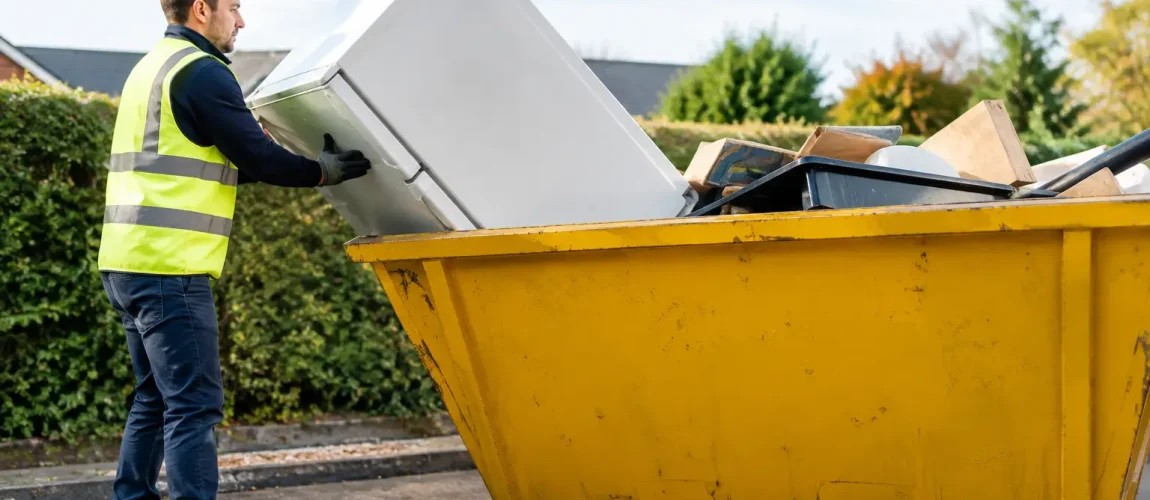
A fridge can look like just another bulky item when you are clearing a kitchen, rental property or building site. But are fridges allowed in skips? In almost every case, no. Domestic fridges, freezers, fridge-freezers and commercial refrigerated units must be kept out of a general waste skip because they need specialist treatment before they can be recycled.
That is not a way of making a straightforward clearance job harder. It is a legal and environmental requirement designed to stop harmful refrigerant gases and oils escaping into the atmosphere or soil. The good news is that there are simple, legal ways to get an old fridge removed while still using a skip for the rest of the waste.
Why fridges are not allowed in skips
Fridges are classed as Waste Electrical and Electronic Equipment, often shortened to WEEE. They contain components that cannot be handled in the same way as wood, rubble, garden waste, metal or ordinary household items.
Older appliances may contain gases that damage the ozone layer or contribute to climate change. Newer models use different refrigerants, but still need controlled recovery and treatment. Fridges can also contain compressor oil, electrical parts, insulation foam and materials that must be separated at an authorised facility.
A mixed skip is taken away for sorting after collection. If a fridge is hidden beneath other waste, it can be damaged when the skip is loaded, moved or processed. This creates a safety issue for workers and makes it much harder to recover the gases correctly.
For that reason, licensed skip operators will normally refuse a skip containing a fridge or freezer. If one is found during collection or sorting, you may be charged for its removal and specialist disposal. In some cases, the skip cannot be collected until the appliance has been taken out.
Are fridges allowed in skips if they are empty or broken?
No. Emptying the shelves, removing food or unplugging the appliance does not make it suitable for a skip. The restricted materials are inside the sealed cooling system and insulation, not in the fridge compartment.
The same applies if the appliance no longer works. A broken fridge still needs a WEEE treatment route, and it should never be dismantled at home or on site to make it fit. Cutting pipes or trying to remove a compressor can release refrigerant and expose you to sharp metal, oil and electrical hazards.
Small electrical items can sometimes be accepted in specialist waste collections, but refrigeration equipment is treated differently. Always tell the collection company exactly what you have, particularly with an under-counter fridge, chest freezer, wine cooler, display cabinet or commercial chiller.
What can you do with an old fridge instead?
The right option depends on the appliance condition, how quickly you need it gone and whether you can transport it safely. There are several sensible routes.
If the fridge still works and is clean, consider passing it on to someone who can use it. A neighbour, community group or local reuse organisation may be able to take it, provided it is safe and the door seals properly. Do not give away an appliance that is damaged, leaking or electrically unsafe.
For a replacement appliance, check whether the retailer offers a take-back service. Many retailers can remove your old fridge when delivering the new one, usually for an additional fee. This can be the easiest choice when timings line up, as you avoid storing two large appliances at home.
You may also be able to book a bulky waste collection through your local council. Availability, charges and collection rules vary, so check the current arrangements before booking. Most services will ask for the appliance to be left in an accessible place on the agreed day.
A licensed WEEE or appliance collection service is often the most flexible option for landlords, tradespeople, shops and householders clearing several items. They can collect refrigeration equipment separately and make sure it reaches an approved treatment facility.
Using a skip for the rest of your clearance
Not being able to put the fridge in the skip does not mean a skip is not worthwhile. For many clearances, it remains the quickest and most cost-effective way to remove the bulk of the waste in one go.
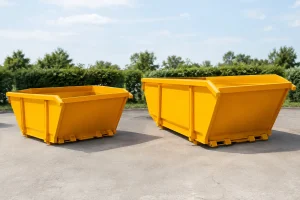
A 2-yard mini skip can suit a small shed or garden tidy-up, while larger skips are useful for kitchen rip-outs, refurbishment work, house clearances and builders’ waste. Old units, timber, plasterboard where agreed, packaging, general household items, soil and green waste may all need different handling, so it is best to discuss the contents before booking.
Keep the fridge somewhere safe and accessible for its separate collection. If possible, place it upright and protect it from being knocked over. Do not block pavements, shared accessways or fire exits, especially at a rented property or commercial premises.
For a kitchen renovation, arrange the appliance collection close to the date the replacement is delivered or the old kitchen is removed. That prevents one awkward item being left in the garden, garage or on site for weeks.
How to prepare a fridge for collection
A little preparation makes collection safer and avoids unpleasant smells or leaks. Switch the appliance off in good time and allow it to defrost completely. Put towels or a shallow tray beneath it while it defrosts, then dry the inside and outside thoroughly.
Remove all food, loose shelves and drawers if the collector asks you to. Clean the interior, particularly if it has been unplugged for a while. Leave the door slightly open until collection if it is stored in a secure area, as this helps prevent mould and odours.
Do not tape the cable around the appliance in a way that could create a trip hazard. Instead, secure it neatly to the side if needed. If you need to move the fridge, use two people or suitable moving equipment. Refrigeration appliances are heavy, awkward and easy to damage when carried alone.
If it has been laid on its side during transport, tell the person collecting it. This does not stop it being recycled, but it is useful information for safe handling.
Avoid unlicensed collectors and fly-tipping
An offer to take a fridge away cheaply can be tempting when you are in the middle of a clearance. However, you remain responsible for checking that anyone carrying your waste is properly authorised. If an unlicensed collector dumps it in a lane, on a verge or beside communal bins, it can be traced back to you.
Ask what will happen to the appliance and keep a receipt or booking confirmation. A legitimate collector should be clear that the fridge is going for appropriate WEEE treatment, not into general waste.
Never leave a fridge outside for an unknown scrap collector, even if it is clearly unwanted. Apart from the risk of fly-tipping, the unit may be damaged or stripped unsafely before anyone takes it away.
Tell your skip provider before collection
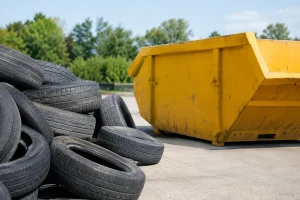
When booking a skip, be upfront about the full range of materials you plan to dispose of. It saves delays, extra charges and the inconvenience of unloading restricted items later. As well as fridges and freezers, items such as gas bottles, tyres, paint, batteries, asbestos and some electrical equipment often need separate disposal arrangements.
Bushbury Skip Hire can provide practical advice on what belongs in the skip for projects across Wolverhampton and the surrounding area. If you are clearing a property, separating restricted items before the skip arrives keeps the job moving and helps ensure the rest of your waste can be recycled responsibly.
A fridge may be only one item in a larger job, but handling it correctly makes the whole clearance easier. Book the skip for the waste it is designed to carry, arrange a proper WEEE collection for the appliance, and you can get the space cleared without risking a refused load or an unnecessary disposal problem.