A tin of old paint, a leaking car battery or a few suspect garage sheets can turn an otherwise simple clear-out into a disposal problem. This guide to hazardous waste disposal explains what counts as hazardous, why it cannot simply be put in a skip, and how households, landlords and tradespeople in Wolverhampton can deal with it safely.
Hazardous waste needs a separate route because it may harm people, contaminate soil or water, or create a fire risk during collection and sorting. Getting it right is not about making a job harder. It protects you, the people handling the waste and the local environment.
What is hazardous waste?
Hazardous waste is any material with properties that make it harmful or potentially harmful to health or the environment. Some items are clearly marked with warning symbols, such as flammable, toxic, corrosive or environmentally dangerous. Others can be less obvious, particularly older DIY materials and electrical equipment.
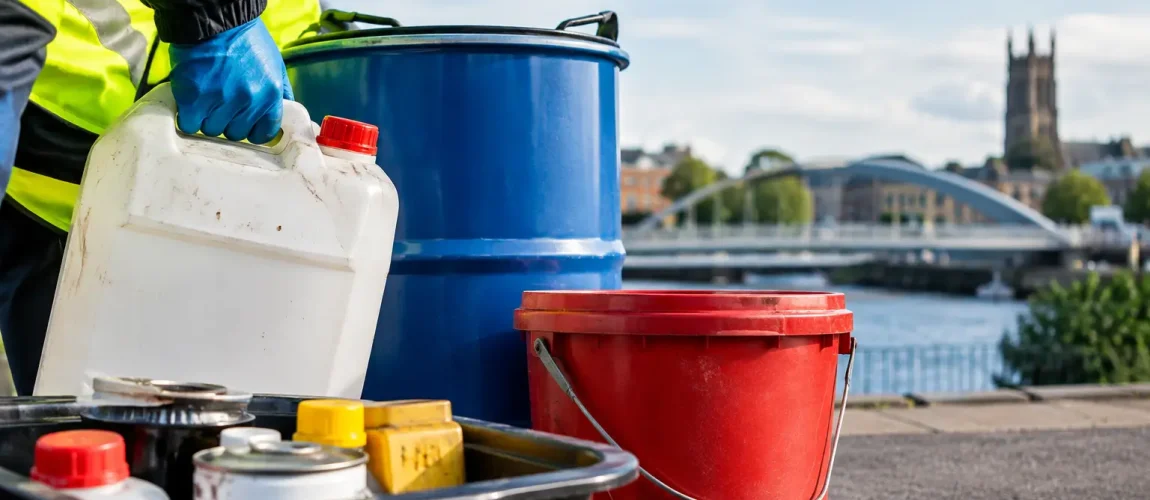
For a home clear-out, the most common examples include leftover chemicals, oils, batteries, electrical items and certain building materials. A product does not need to be large or dramatic to need special treatment. Even a small container of weedkiller, solvent or engine oil should never be tipped into a drain, poured onto the ground or mixed into general rubbish.
The rules can also depend on where the waste came from. Household waste may be accepted through a council facility or collection scheme, while the same material from a business, landlord or contractor may need to be handled through a licensed commercial waste route. If in doubt, treat the item as hazardous until you have checked its label and disposal options.
Hazardous items that must stay out of a skip
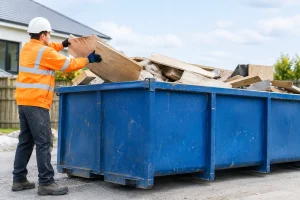
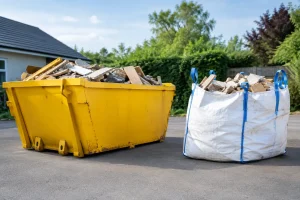
A skip is ideal for many everyday materials, including general household waste, garden waste, wood, bricks, rubble and non-hazardous builders’ waste. It is not a catch-all container. Hazardous materials can create serious risks in a skip, on the collection lorry and at the sorting facility.
Do not put the following into a general skip:
- Asbestos, including suspected asbestos cement sheets, insulation boards, lagging and old textured coatings
- Paint, paint thinners, varnish, solvents, adhesives, resins, acids, pesticides and other chemicals
- Petrol, diesel, engine oil, lubricants, brake fluid, gas bottles, fire extinguishers and pressurised cylinders
- Car batteries, household batteries, fluorescent tubes, electrical equipment, fridges and freezers
This is not a complete list. Items such as clinical waste, needles, contaminated soil, chemical containers and some aerosols can also require specialist disposal. Tell the waste provider what you have before arranging collection. A clear description, and a photo where requested, is far safer than hoping an item will be accepted.
Why asbestos needs particular care
Asbestos deserves special attention. It was widely used in older buildings and can be found in garage roofs, shed panels, pipe insulation, floor tiles, soffits and some ceiling finishes. When asbestos-containing materials are cut, broken or disturbed, fibres can become airborne. Breathing in those fibres can cause severe illness years later.
Do not break up suspected asbestos to make it fit in a skip. Do not sweep, drill or pressure-wash it. Leave it in place where possible, keep people away from the area and arrange advice from a competent specialist or the relevant local authority service. Disposal arrangements vary by material type and condition, so a quick check before work begins can prevent an expensive mistake.
How to identify waste before your clear-out
The easiest time to deal with hazardous waste is before the skip arrives. Sort through garages, sheds, cupboards, cellars and work areas first. Look for warning symbols on labels, partly used containers and anything that is leaking, corroded, unlabelled or stored separately from ordinary waste.
Keep products in their original containers wherever possible. The label provides the information a disposal point needs to handle it safely. Never decant chemicals into a drinks bottle or food container, even temporarily. If a container is damaged, place it carefully inside a larger secure container, without mixing substances, and seek advice from a suitable disposal service.
For renovation work, ask questions early. Homes built before 2000 can contain asbestos in various forms. Tradespeople should also check for lead paint, contaminated materials, old insulation and chemical residues before starting demolition or strip-out work. Allowing for specialist disposal at the quote stage is usually cheaper and safer than finding prohibited waste halfway through a job.
Safe storage while you arrange disposal
Hazardous waste should be kept secure, dry and away from children, pets, drains and ignition sources. Put liquids upright in a stable area where they cannot be knocked over. Keep incompatible chemicals apart – for example, do not store acids beside bleach or other cleaning products.
Do not stockpile materials for months because you are unsure what to do with them. Containers can degrade, labels can come off and small leaks can become a bigger problem. If you have a larger quantity from a business, workshop, rental property or building project, make arrangements promptly with a properly licensed waste carrier or specialist contractor.
Batteries need care too. Tape over the terminals of loose lithium batteries if they can be stored safely, and keep them separate from metal objects. Damaged, swollen or hot batteries should not be handled unnecessarily. They can present a fire risk and need specialist advice.
Your legal disposal options in Wolverhampton
For small amounts of household hazardous waste, start by checking the current rules at your local household waste recycling centre. Many sites accept selected items such as household chemicals, batteries, electricals, fluorescent tubes and paint, but acceptance limits and booking requirements can change. Check before travelling, particularly if you have paint, gas cylinders, DIY chemicals or suspected asbestos.
Retailer take-back schemes can also help with certain items. Shops that sell batteries often provide battery collection points, while some electrical retailers accept old electrical equipment. This can be convenient for smaller items such as phones, cables, chargers, power tools and household appliances.
For trade and commercial waste, do not assume a household recycling centre is the right answer. Businesses have a duty to make sure their waste is passed to an authorised carrier and taken to an appropriate facility. Keep the relevant paperwork, including waste transfer notes or hazardous waste consignment documentation where required. It is part of running a responsible site, and it gives you a record of where the waste went.
If you need a specialist collection, ask the provider exactly what materials they can take, whether containers need to be sealed and labelled, and what paperwork is included. The cheapest quote is not always the best value if it leaves you unclear about compliance or excludes handling costs.
Using a skip without causing a problem
A skip can still make the rest of the job much easier. The key is to separate prohibited items before loading begins. Set aside a clearly marked area for hazardous materials, then load only accepted waste into the skip. This avoids delays on collection day and prevents a load being rejected at the sorting facility.
For a house renovation, that may mean putting timber, plasterboard, rubble, old kitchen units and general non-hazardous waste into the skip, while taking paint tins, fluorescent fittings, batteries and leftover sealants through separate disposal routes. For a garden clearance, ordinary green waste can go in, but chemicals from the shed, old fuel and pesticide containers should be dealt with separately.
Bushbury Skip Hire can provide practical skip hire for non-hazardous domestic and commercial waste across Wolverhampton and nearby areas. Be upfront about the job when booking, especially where there may be old garage materials, electrical items or chemical products on site. A quick conversation before delivery helps ensure you have the right plan from the start.
Do not hide hazardous waste in the load
Putting hazardous items at the bottom of a skip is not a workaround. Waste is sorted, and prohibited materials may be found during collection or processing. That can lead to extra charges, a refused collection, safety concerns for staff and delays to your project.
It also undermines recycling. A mixed load containing chemicals, batteries or contaminated materials can make otherwise recyclable materials harder to recover. Sorting waste properly supports safer handling and helps keep more of the ordinary waste from your project in the recycling stream.
A simple check before you dispose of anything
Before loading an item, ask three questions: What is it? Is it labelled with a hazard symbol or likely to contain a chemical, battery, gas or fibre? Which authorised route is designed to take it?
If you cannot answer confidently, keep it out of the skip until you can. A few minutes spent checking an awkward item is far better than risking contamination, injury or a costly hold-up on a job that should have been straightforward.