A skip can make a clearance, renovation or building job far easier, but it is not suitable for every type of rubbish. Customers regularly ask, “can food waste go in skips?” The practical answer is usually no, particularly where it is loose, wet, spoiled or mixed in large amounts. Keeping food out of a general skip helps avoid contamination, bad smells and problems at the waste sorting facility.
For homes, landlords, tradespeople and local businesses, the simplest approach is to separate food waste before the skip arrives. Put suitable dry, non-food materials in the skip and use the right food waste collection route for everything else.
Can food waste go in skips?
Most general mixed-waste skips are not intended for food waste. This includes leftovers, peelings, out-of-date food, cooked meals, meat, dairy products, takeaway waste with food still inside, and bags of spoiled food from a fridge or cupboard clearance.
There can be limited exceptions, but they depend on the quantity, how the food is contained and the licence held by the waste carrier and receiving facility. A small, sealed item accidentally placed in a skip is different from filling bags with catering waste or clearing a commercial kitchen. The key point is that food waste should never be treated as ordinary builders’ or household clearance waste without checking first.
Food packaging is a separate matter. Empty tins, rinsed plastic bottles, cardboard boxes and clean containers can often go into a suitable skip as part of mixed dry waste. If packaging is heavily soiled with food, leaking or likely to attract pests, it should be kept out.
Why skips and food waste do not mix
A skip may sit outside a property or on a site for several days. Food starts to break down quickly, especially in warm weather. That creates an unpleasant smell for neighbours, workers and anyone using the property. It can also attract rats, foxes, birds and flies, which is the last thing anyone wants during a house move, garden project or refurbishment.
There is also a recycling issue. At a licensed sorting facility, waste is separated so that materials such as wood, metal, hardcore, cardboard and some plastics can be recovered. Wet food residue can contaminate otherwise recyclable loads. One leaking bin bag can spread through the skip as it is moved, making the job messier and reducing the amount that can be recycled.
For commercial customers, the stakes are higher. Restaurants, cafés, pubs, shops and workplace canteens may produce food waste regularly. This waste needs a collection arrangement that is suitable for its volume and type. Placing it in a general skip can lead to rejected loads, extra handling charges or non-compliance with site waste procedures.
What to do with food waste instead
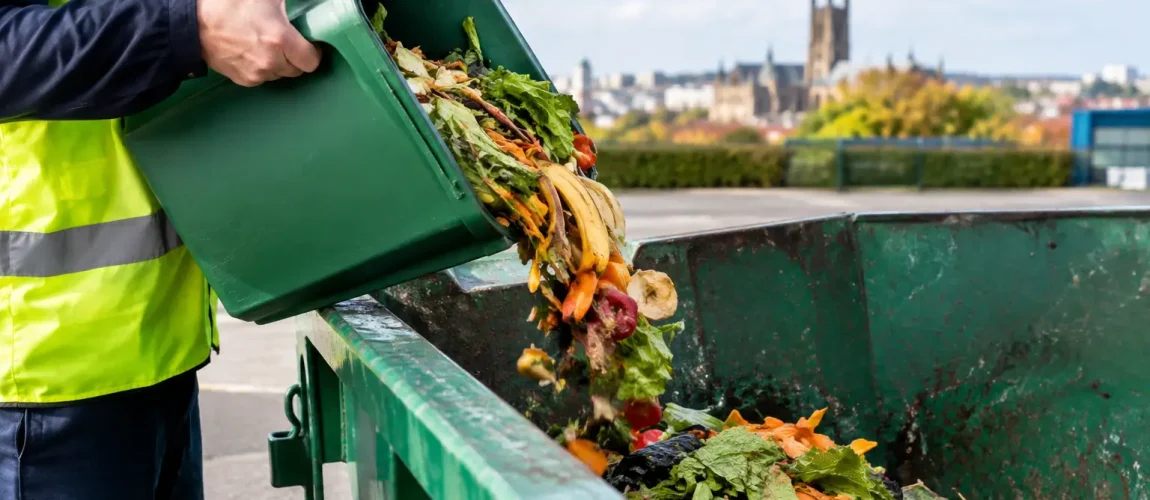
The best option depends on the type and amount of food waste you have. For normal household quantities, use your council food caddy or collection service where available. This is usually the easiest route for peelings, plate scrapings, tea bags, cooked food and other everyday kitchen waste.
If you have a garden and suitable space, home composting can work well for uncooked fruit and vegetable peelings, coffee grounds, eggshells and garden cuttings. Do not assume all food can go on a home compost heap. Meat, fish, dairy products, cooked meals and oily food can attract pests and are better dealt with through an appropriate food waste collection.
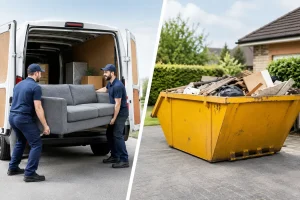
For a one-off kitchen clear-out, separate the job before loading the skip. Put unopened and in-date items aside first, as they may be usable by family, neighbours or local community groups where appropriate. Then place food waste in your normal food collection containers and use the skip for shelves, cupboards, flooring, packaging, broken furniture and other dry clearance materials.
Businesses should arrange a dedicated commercial food waste service if food is produced as part of normal operations. Keeping separate bins for food, cardboard, glass and general waste makes collections cleaner and can reduce the amount of waste sent for disposal.
Clearing a fridge, freezer or kitchen
Fridge and freezer clearances are one of the most common occasions where food ends up in the wrong place. The sensible order is to empty the appliance completely, deal with the food through the correct collection route, then defrost and clean it before arranging disposal.
Do not put a fridge or freezer in a general skip unless your skip provider has specifically agreed it. Appliances containing refrigerant gases require specialist handling, so they are commonly excluded from standard skip loads. The same applies to other electrical items in many cases.
When clearing a kitchen, it helps to create three areas: food waste, recyclable packaging and skip waste. This takes a little longer at the start, but it prevents a contaminated skip and makes the rest of the clearance much quicker to manage.
Food waste on building and renovation sites
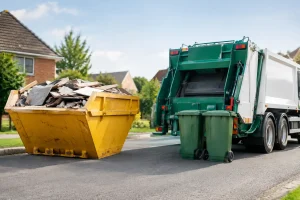
Builders’ skips often collect timber, plasterboard, bricks, tiles, rubble, insulation, packaging and old fittings. Site workers may also generate lunch waste, but it should not be tipped into the skip as a matter of habit.
Provide separate covered bins or bags for staff food waste, then empty them regularly. This is particularly useful on longer projects, where a skip may be exchanged several times. It keeps the site tidier, reduces vermin risks and stops food waste mixing with materials that can be sorted and recycled.
For renovation work at occupied properties, make the arrangement clear from day one. A skip is for project waste, while household rubbish and food continue to go in the usual bins. That simple distinction avoids confusion for tenants, subcontractors and neighbours.
Other items to check before hiring a skip
Food is not the only material that needs checking. General skips usually have restrictions because certain waste needs specialist treatment or creates a safety risk. Before booking, ask about items such as:
- paint, solvents, oils and chemicals
- gas bottles, batteries and fire extinguishers
- tyres and asbestos
- electrical appliances, including fridges and freezers
- clinical waste and sharps
It is always better to ask before loading than to find out later that an item cannot be accepted. A clear description of your job – whether it is a garden clearance, bathroom refit, shop strip-out or house move – helps your skip provider recommend the right size and explain any restrictions.
Choosing the right skip for a clean clearance
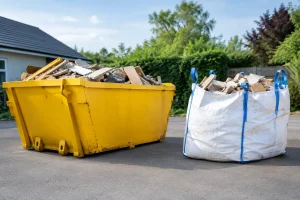
Choosing a skip that is large enough can reduce the temptation to overfill it or mix in unsuitable rubbish. A 2-yard mini skip can suit small domestic jobs and garden tidy-ups, while larger skips are more practical for renovation waste, bulky furniture and builders’ materials. Do not fill above the level of the skip sides, as it may not be safe or legal for the lorry to collect.
For mixed household or trade waste in Wolverhampton, Bushbury Skip Hire can advise on a suitable skip size and explain what should be kept out of the load. As a family-run local operator with its own licensed sorting facility, the focus is on making disposal straightforward while recovering as much material as possible.
If your skip will be on a road rather than private land, allow time to discuss the placement and any permit requirements. Keep the loading area accessible and make sure food bags, wheelie bins and other items are not left beside the skip for collection by mistake.
A quick rule for food and skips
If it can rot, leak, smell or attract pests, keep it out of a general skip unless you have been told otherwise. Dry packaging and ordinary clearance materials are usually much easier to handle, but food itself belongs in a food waste collection or another approved route.
A few minutes spent separating waste before the skip is delivered can save a rejected load, an extra charge and a very unpleasant clean-up. When you are unsure about an item, ask before it goes in – it is the quickest way to keep your clearance moving.