
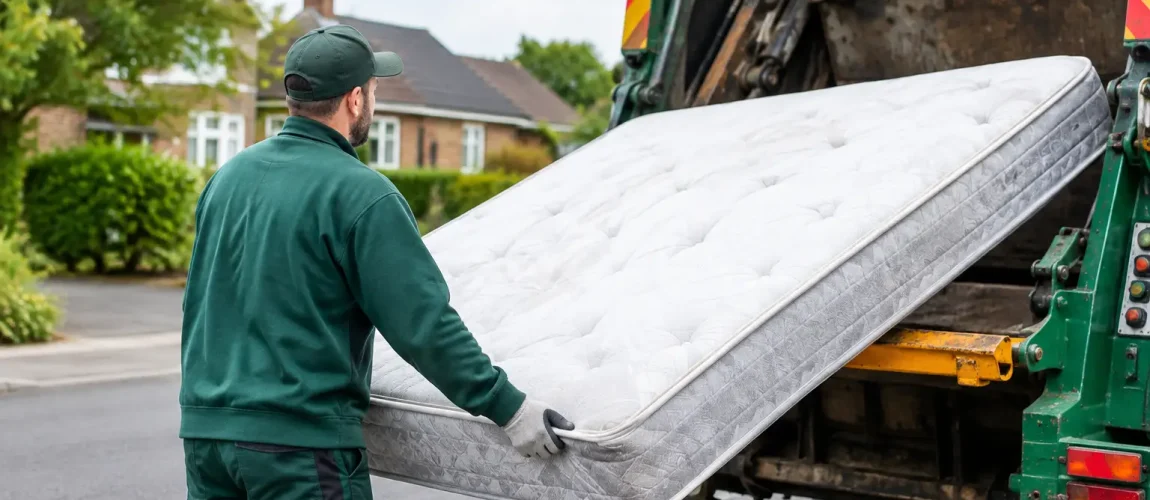
A mattress is one of those items that can sit in a garage, spare room or hallway for far too long because it is awkward to move and difficult to fit in a car. The best ways to dispose mattresses depend on their condition, how quickly you need them gone and how much other waste you are clearing at the same time. The main thing is to use a legal, responsible route rather than leaving it by the roadside or relying on an unregistered collector.
Why mattress disposal needs planning
Mattresses are bulky, flexible and take up far more space than most people expect. Even a single mattress can be difficult to carry downstairs, load safely and transport without a suitable vehicle. They are also made from mixed materials, commonly including fabric, foam, springs, wood and fillings, which means they are not always handled in the same way as ordinary household rubbish.
A mattress is not something to put in your household wheelie bin, and leaving one beside a bin does not mean the council will collect it. In many areas, this can be treated as fly-tipping. Aside from the risk of a fine, it creates a mess for neighbours and can block pavements or shared accessways.
Before choosing a disposal method, think about the whole job. If you are replacing one bed and have no other rubbish, a collection service or retailer take-back may be the simplest option. If you are clearing a property, renovating bedrooms or dealing with old furniture as well, a skip can save repeated journeys and get the job finished in one go.
1. Use a council bulky waste collection
Many local authorities offer a bulky household waste collection service for mattresses and bed bases. This can be a sensible option when you only have one or two large items to remove and can work around a set collection date.
The exact cost, booking process and list of accepted items vary by council. Check the details before placing anything outside, particularly if you are in a flat, have a shared bin store or need collection from a difficult access point. Some services collect from the front boundary only, so you may still need to move the mattress yourself.
This route is often good value, but it may not suit an urgent house clearance or a job with several different waste streams. Collection slots can be limited, and you need to make sure the item is kept dry and accessible until collection day.
2. Take it to a household recycling centre
If you have access to a suitable vehicle, you may be able to take an old mattress to a household waste and recycling centre. This can be a practical choice for a single mattress, especially when you are already making a trip with other household items.
There are a few trade-offs. A double or king-size mattress is difficult to transport safely in a small car, and forcing it into a vehicle can obstruct your view or leave a door unsecured. Some sites also have rules around vans, trailers, commercial vehicles and waste brought in by landlords or tradespeople. Always check what is accepted and whether a booking is required before setting off.
For tenants, it is worth agreeing responsibility with the landlord or managing agent first. An abandoned mattress outside a rental property can quickly become a dispute, particularly at the end of a tenancy.
3. Arrange retailer take-back when buying a new bed
When you are having a replacement mattress delivered, ask the retailer whether they offer an old mattress collection service. It is often the easiest option because the collection can be arranged for the same day as delivery, avoiding the need to store the old one.
It is not always included in the purchase price, and conditions may apply. The mattress may need to be dry, accessible and disconnected from any bed frame or packaging. Check whether the service covers just the mattress or the base and headboard too.
This option works best for a straightforward replacement. It will not help much if you are clearing several rooms, emptying a rental property or disposing of building waste alongside household furniture.
4. Donate it only if it is genuinely suitable
A clean, nearly new mattress may be accepted by a charity, reuse organisation or local community project, but mattresses are usually subject to stricter hygiene and fire-safety checks than other furniture. Many organisations will only take them if they are in excellent condition and have the original fire safety label attached.
Do not assume a mattress is suitable for donation simply because it still feels usable. Stains, tears, strong odours, damp, mould, infestation concerns or damaged springs will normally rule it out. Calling ahead prevents a wasted journey and ensures the organisation has space for it.
Giving a usable item another life is a good outcome, but it should never be used as a way to pass on a worn-out or unhygienic mattress. If there is any doubt, choose responsible disposal instead.
5. Book a licensed waste collection service
A man-and-van or waste removal service can be convenient when you need a mattress removed from inside the property, particularly from an upstairs room or a block of flats. The key point is to use a properly registered waste carrier.
Ask who will be collecting the waste, where it will be taken and whether you will receive paperwork or a receipt. Be cautious of anyone offering an unusually cheap cash-only collection with no details. If waste is later fly-tipped, the person who arranged the collection may still be questioned about where it came from.
A licensed collector is useful when access is tight or lifting is an issue. For a larger clear-out, however, the cost can add up item by item, making a skip the more practical choice.
6. Hire a skip for a full clearance or renovation
Skip hire is one of the best ways to dispose mattresses when the mattress is only part of a bigger job. It is particularly useful for house moves, landlord clearances, bedroom refurbishments, probate clearances and renovation projects where old carpets, furniture, packaging and general household waste are building up.
A mini skip may suit a smaller clear-out, while a larger skip gives more room for bulky furniture and renovation waste. The right size depends on what else is going in it. A mattress can fill a surprising amount of space, so it is better to allow for its volume rather than treating it as a small extra item.
Before booking, confirm that mattresses are accepted in the skip and explain what other waste you expect to include. Some items need separate handling and should not go into a general mixed-waste skip. You should also consider where the skip will sit. If it needs to go on a public road, a permit may be required, while a driveway or private land often keeps the process simpler.
For Wolverhampton households and local trades, Bushbury Skip Hire can help make a larger clearance straightforward, with practical skip sizes and responsible sorting of collected waste. Booking the right container at the start is usually cheaper and less stressful than trying to squeeze a mattress into several car loads.
How to prepare a mattress for collection or disposal
Keep the mattress dry where possible. A soaked mattress is heavier to move, harder to handle and less likely to be suitable for any reuse route. If collection is booked, move it to the agreed location only when required and keep communal areas, fire exits and pavements clear.
Strip off bedding, mattress protectors and plastic covers unless the collector has asked you to leave them on. If you are using a skip, place the mattress flat if possible and avoid balancing it over the top. Waste must stay below the rim so it can be transported safely.
Bed frames, divan bases and headboards may be accepted separately, but they take up space differently. Breaking down a wooden or metal frame can make loading easier, provided you can do so safely and remove any sharp fittings.
Choose the option that fits the job
For one old mattress, retailer take-back, council collection or a recycling centre may be enough. For an urgent removal, difficult access or an item that needs carrying from inside the property, use a licensed collection service. When the mattress comes with a roomful of unwanted furniture, DIY waste or a full property clear-out, a skip is often the clearest and most cost-effective answer.
The right choice is the one that keeps the job legal, manageable and properly finished. Deal with the mattress as part of your wider clear-out plan, and you can get your space back without turning a bulky item into a bigger problem.