
A pile of old tyres can hold up an otherwise straightforward clearance. Whether they have come from a garage tidy-up, a garden project, a rental property or a building site, the answer to “can skips take old tyres” is usually no – not in a standard mixed-waste skip unless this has been agreed in advance.
Tyres need a separate disposal route because they are controlled waste. Putting them in a skip without telling the hire company can lead to extra charges, a rejected collection or delays while the load is sorted. The simplest approach is to identify them before you book, tell your skip provider exactly how many you have, and arrange a suitable disposal option.
Can skips take old tyres in Wolverhampton?
Most general skip hires do not accept tyres as part of the normal waste load. This applies to car tyres, van tyres, motorcycle tyres and larger commercial vehicle tyres. A tyre may look like an ordinary bulky item, but it cannot be processed in the same way as wood, bricks, soil, metal, garden waste or general household rubbish.
There are occasions where a waste company can arrange tyre collection separately or accept tyres for an additional charge. That depends on the type and number of tyres, whether they are on wheel rims, and the disposal facilities available. Never assume they can simply go into the skip because there is space left at the top.
If you are hiring a skip for a house clearance or renovation, keep tyres to one side from the start. A quick conversation before delivery is far easier than discovering the issue when the lorry arrives to collect the skip.
Why old tyres are excluded from standard skips
Tyres are difficult to deal with at waste facilities. Their shape makes them awkward to compact, and they can trap air or water. They are also combustible, which creates a serious fire risk when large quantities are stored or processed incorrectly.
They are not suitable for landfill disposal. Instead, old tyres are normally sent for specialist treatment, where they may be reused, retreaded, shredded into rubber products or processed for recovery. That specialist handling comes with different transport, storage and treatment requirements from ordinary skip waste.
A mixed skip is taken to a sorting facility, where materials are separated for recycling and recovery. Hidden tyres slow that process down and can contaminate a load that was priced and booked as general waste. This is why responsible skip firms ask customers to declare restricted items before the skip is delivered.
For a local operator such as Bushbury Skip Hire, clear information at the booking stage helps keep collections prompt, prices fair and waste handling compliant. It also supports the wider aim of recycling as much material as possible rather than sending usable resources to disposal.
What to do with tyres instead
The right option depends on where the tyres came from and how many you need to get rid of. If they were removed during a tyre change, the garage or tyre fitter may take the old ones as part of the fitting service. Ask before work begins, as there may be a charge.
For a small number of domestic tyres, your local household waste and recycling centre may accept them, although rules, limits and charges can vary. Check the current site requirements before making a trip. Some centres will not take tyres on rims, trade waste or unusually large tyres.
If you are clearing a commercial premises, garage, farm unit or building site, use a registered waste carrier or specialist tyre disposal service. Commercial tyre waste has additional responsibilities, and keeping a record of where it has gone is sensible for businesses, landlords and contractors.
Do not leave tyres at the roadside, beside bins or on vacant land. Fly-tipping is illegal, and tyres left outdoors can collect standing water, create a fire hazard and become an expensive problem for the landowner to remove.
Tyres on wheel rims need extra care
A tyre still fitted to a wheel rim may need a different collection arrangement from a loose tyre. The metal wheel and rubber tyre are separate materials, and some disposal sites require them to be split before they are accepted.
If you have wheels from a vehicle repair, say so when requesting a quote. Give the provider the tyre size if you can, particularly for 4×4, agricultural, plant or commercial vehicle tyres. Larger tyres take up more storage space and may have a different disposal cost.
It is also worth checking whether the tyres are reusable. A tyre professional can advise whether a sound casing is suitable for retreading or whether the tyre has reached the end of its useful life. Never pass on unsafe tyres simply to avoid disposal costs.
Planning a skip hire when you have restricted waste
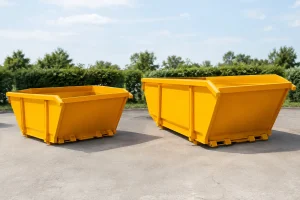
A skip remains one of the most practical ways to deal with the rest of a clearance. For example, a home renovation may produce plasterboard, timber, old kitchen units, packaging, tiles and rubble, while a garden job can create soil, branches, fencing and green waste. The tyres should simply be dealt with separately.
When booking, describe the job rather than just asking for a skip size. Mention whether you are clearing a shed, replacing a driveway, renovating a property or removing builders’ waste. This helps the provider recommend a suitable skip and point out materials that need separate treatment.
There are several items that commonly need to be declared or kept out of a standard skip, including:
- tyres and vehicle parts containing oils or fluids
- gas bottles, fuel cans and other pressurised containers
- paint, solvents, chemicals and hazardous liquids
- batteries, electrical items and fluorescent tubes
- asbestos and suspected asbestos-containing materials
The exact restrictions can differ between providers and waste facilities, so asking first is always the right move. It protects you from unexpected charges and helps ensure your waste is handled through the correct legal route.
Avoid overfilling the skip
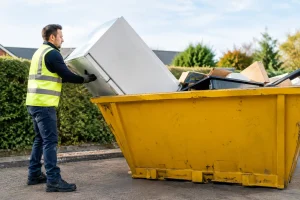
If your clearance includes awkward bulky items as well as tyres being disposed of separately, it can be tempting to pack every last gap. A skip must not be filled above its sides or loaded in a way that makes it unsafe to transport. Overfilled skips may not be collected until the excess waste has been removed.
Break down furniture and cardboard where practical, place heavy waste evenly across the base, and keep lighter items on top. Do not try to force tyres beneath other materials in the hope they will not be noticed. Apart from causing a disposal issue, this can make sorting the load more difficult and creates avoidable delays.
The best question to ask before booking
Rather than asking only whether a skip can take everything, ask which items must be kept separate. Be clear about the number of tyres, their approximate size, whether they are on rims and whether the waste is from a household or business.
That short conversation gives you a clear plan: a skip for the general waste, a proper route for the tyres, and no unwelcome surprises when collection day comes around. Sorting the tyres before the skip arrives keeps your project moving and makes responsible disposal the easy part.