
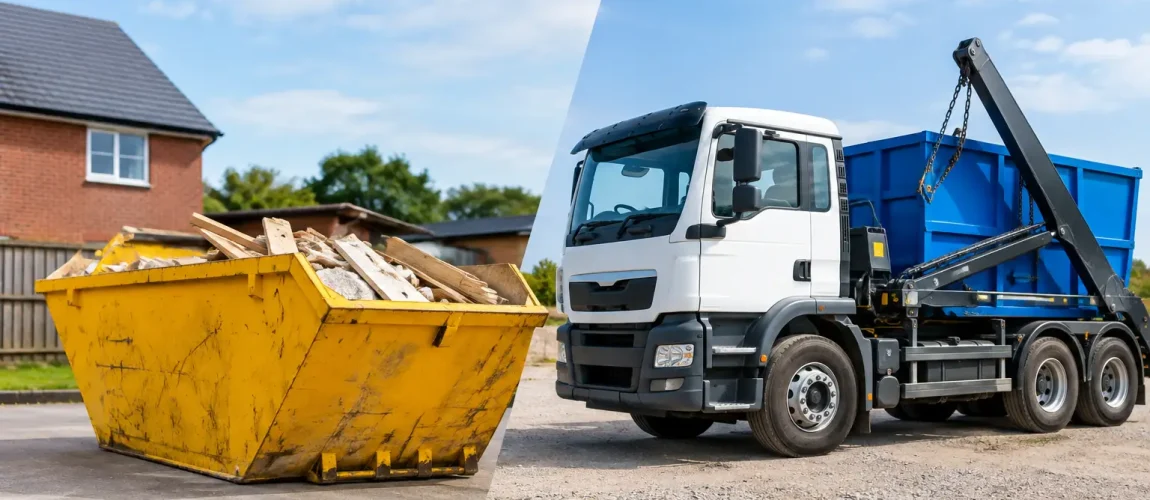
A pile of soil on the drive and a house full of renovation waste can look like the same disposal problem. In practice, they need different solutions. When weighing up skip hire versus grab lorry removal, the right choice usually comes down to the type of waste, how long the job will take, where it is sitting and whether a lorry can safely get to it.
For many Wolverhampton householders and tradespeople, a skip is the practical choice for waste that builds up over several days. A grab lorry is often better for a large pile of loose material that is ready to go now. Knowing the difference before booking helps keep the job moving and avoids paying for a service that does not suit the site.
Skip Hire Versus Grab Lorry: The Main Difference
A skip is delivered to your property or site and left for you to fill. It gives you time to clear a garden, strip out a kitchen, work through a house clearance or manage waste from an ongoing building job. Once it is full, it is collected and taken away for sorting and recycling.
A grab lorry has a hydraulic arm with a grab bucket. The driver loads loose waste directly into the lorry, normally during one visit. It is designed for materials such as soil, rubble, hardcore, green waste and aggregates that have already been gathered into an accessible pile.
Neither option is automatically better. A skip gives you flexibility and controlled loading. A grab lorry offers speed and can shift a high volume of loose material without you needing to load a container by hand.
When Skip Hire Makes More Sense
Skip hire is usually the better option when the waste will be produced gradually. A bathroom refit, loft clearance or landscaping project rarely creates all its waste in one morning. Having a skip on site means you can dispose of materials as you go instead of creating untidy piles around the property.
It is also a strong choice for mixed waste. Household items, timber, plasterboard, packaging, garden cuttings and builders’ waste can be placed into a suitable skip, subject to the provider’s waste rules. For domestic jobs, a 2-yard mini skip can suit a small clear-out, while larger projects may call for a 4-yard, 6-yard or 8-yard skip.
A skip is particularly useful where access is limited. The delivery vehicle still needs room to place it safely, but the skip itself can sit on a driveway, at the front of a property or on a permitted roadside space. You do not need a clear route for a grab arm to reach a pile at the back of the site.
Choose a skip when you need to:
- dispose of waste over several days or weeks
- handle mixed household or construction waste
- keep a work area clear throughout a project
- load waste at your own pace
- remove bulky items that cannot be grabbed easily
For a renovation or clearance, the convenience of having a container ready when you need it often outweighs the extra time it remains on site.
When a Grab Lorry Is the Better Choice
A grab lorry comes into its own when there is a substantial amount of loose waste in one place. Think excavated soil from foundations, broken concrete from a driveway, rubble from demolition or a large heap of green waste following heavy garden work.
The key benefit is speed. The lorry can arrive, load the material and leave in a relatively short time, provided the waste is ready and the driver can position the vehicle close enough. This can be helpful on busy building sites where space is tight and you do not want a skip taking up room for days.
A grab lorry can also reach over walls, fences and gates in some situations. However, reach varies by vehicle and site conditions, so it should never be assumed. Low branches, overhead cables, parked cars and narrow roads can all make a collection unsuitable or unsafe.
Grab lorries work best with clean, loose materials. A pile containing timber, plastic, bags, metal, general household rubbish or other mixed waste may need sorting first. If the waste cannot be safely grabbed, a skip is often the simpler answer.
Access Matters More Than Most People Expect
Before deciding between a skip and a grab lorry, take an honest look at access. A skip delivery needs enough room for the lorry to approach, unload and collect safely. If the skip will sit on the road rather than private land, you may need a council permit. This should be arranged before delivery, not after the skip arrives.
A grab lorry needs more than a place to stop. It requires a safe loading position beside the waste, space for its stabilisers where needed and clear overhead room for the arm to operate. A pile tucked behind a garage, beneath trees or beyond several parked vehicles may be difficult to reach.
It also helps to consider the ground. Soft verges, uneven surfaces and narrow residential streets can affect what is possible. Giving clear details when requesting a quote, including photographs where requested, can prevent wasted journeys and delays.
Cost: Look Beyond the First Price
The cheapest-looking option is not always the best value. Skip hire is commonly priced around the size of the skip, the hire period, the waste type and whether a permit is required. It gives you a known capacity and the freedom to fill it over time, which can reduce repeated trips to the tip.
Grab lorry pricing often reflects the volume and type of material removed, as well as access and travel. It may be excellent value for a large, ready-made pile of soil or hardcore, especially when a skip would need several loads. It can be less suitable for a small amount of mixed rubbish that would take time to sort or gather.
Be clear about what you are disposing of. Heavy materials such as soil, concrete and rubble can quickly fill a skip by weight, even if there appears to be physical room left. Overfilled skips cannot be collected safely, and waste should never be stacked above the top edge.
Waste Types and Responsible Disposal
Whether you choose a skip or a grab lorry, waste must be handled legally and responsibly. Avoid using an unlicensed operator simply because they offer a low cash price. If waste is fly-tipped after collection, the person who produced it can still face problems.
Some materials need separate arrangements or cannot go into a standard skip. These can include asbestos, gas bottles, tyres, paint, chemicals, batteries, electrical items and certain plasterboard loads. Ask before booking if you are unsure. It is far easier to plan for restricted waste than to discover it cannot be collected when the job is finished.
Sorting waste well can also make a difference. Keeping soil and hardcore separate from general mixed waste may make a grab collection more practical. Separating recyclable materials where possible supports responsible disposal too. Bushbury Skip Hire uses its own licensed Wolverhampton sorting facility and aims to recycle at least 90% of collected materials, so waste is managed with more care than simply sending it straight to landfill.
A Simple Way to Choose
Choose a skip if you need time, have mixed waste or want a tidy place to dispose of rubbish throughout the job. It is the familiar, flexible option for house clearances, renovations, garden work and smaller building projects.
Choose a grab lorry if you have a large pile of loose material, it is ready for collection and the vehicle can get close enough to load it safely. It is often the efficient option for groundworks, demolition and large landscaping clearances.
If your project sits somewhere between the two, focus on the waste rather than the name of the service. A few clear details about the material, volume, location and access will usually make the right disposal method clear – and help get the waste off site without unnecessary cost or hold-ups.