
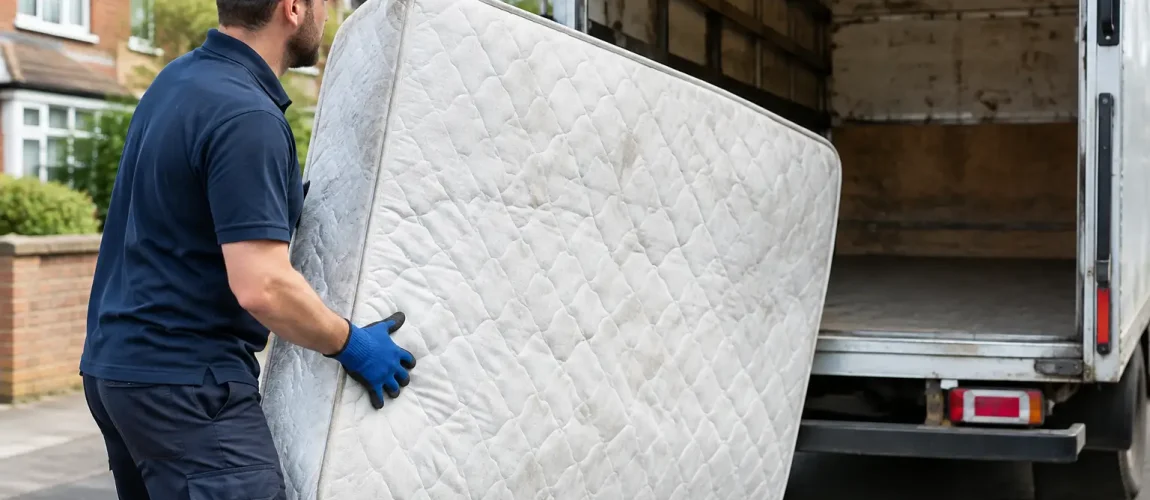
A mattress left beside a wheelie bin can quickly become a problem. It is too large for normal household collections, can get wet and unsafe outside, and may be treated as fly-tipping if it is left on public land. If you are searching for how to dispose of a mattress legally, the right route depends on its condition, where you live and whether you have other waste to clear at the same time.
For homes, landlords, tradespeople and businesses in Wolverhampton, the aim is simple: use a legitimate collection or disposal service, check what it accepts before booking, and keep the mattress dry until it is collected.
How to dispose of a mattress legally
In most cases, you have four legal options: a council bulky-waste collection, a household waste recycling centre, a retailer take-back service, or a licensed waste carrier or skip hire company. The best choice is not always the cheapest on paper. A trip to the tip may suit one mattress and a car with enough room, while a collection or skip can save a great deal of time during a house clearance or renovation.
What you should not do is place a mattress in your household bin, leave it by communal bins without permission, or put it on the pavement hoping somebody will take it. Even a mattress left outside your own property can cause an obstruction or be reported as dumped waste. If someone offers a suspiciously cheap collection with no paperwork or business details, be cautious. You remain responsible for checking that your waste is passed to someone authorised to handle it.
Start with the mattress condition
A clean, dry mattress in good condition may have a second life, but only if the receiving organisation confirms it will take it. Many charities and reuse schemes have strict hygiene rules. They may refuse mattresses with stains, tears, strong odours, pet damage, mould, bed bugs or missing fire-safety labels.
Do not try to donate a mattress simply because it looks presentable from a distance. Contact the organisation first and describe its condition honestly. A refused donation can leave you back at square one, often with a collection deadline to meet.
If the mattress is old, damaged, damp or infested, disposal is normally the sensible option. Wrap or cover it while it is awaiting collection if rain is forecast. A waterlogged mattress is heavier, harder to handle and less likely to be suitable for recycling.
Check the fire label before offering it for reuse
Mattresses sold for domestic use normally carry a permanent fire-safety label. Reuse organisations often need that label to be intact before accepting the item. If it is missing, do not assume the mattress can be donated. Ask first, then arrange legal disposal if it cannot be reused.
Council bulky-waste collection
A council bulky-waste collection can be a straightforward option when you have one or two large household items. Charges, waiting times, item limits and collection instructions vary, so check the current local arrangements before you book. You may be asked to leave the mattress at a specific point on the day of collection, rather than several days beforehand.
This route is usually best when you do not have transport and do not need to clear a whole room or property. It can be less convenient if you are working to a tight moving date, dealing with a tenant changeover or clearing multiple bulky items. In that situation, arranging one collection for everything may make more sense.
Taking a mattress to a recycling centre
A household waste recycling centre can work well if you can transport the mattress safely and the site accepts it. Check before setting off. Some centres have rules on vehicle type, proof of address, booking slots, trailers and commercial waste. A van used for business work may not be allowed under the same conditions as a private car.
Secure the mattress properly during transport. Do not balance it on a roof without suitable restraints or allow it to block your view. Besides being unsafe, an unsecured load can lead to a fine.
A recycling centre is often the low-cost choice for one mattress, but it comes with the time and effort of loading, driving and unloading it yourself. For a single person, a large king-size mattress can be awkward enough to make a collection service better value.
Ask retailers about take-back when buying new
If you are replacing a mattress, ask the retailer whether it offers an old-mattress take-back service with delivery. Some do, usually for an additional charge and subject to conditions. It is convenient because the old and new mattresses are dealt with on the same day, but availability is not guaranteed and may need to be selected when you place the order.
Confirm whether the service covers collection from the room, the doorstep or only ground-floor access. Also ask whether a soiled or damaged mattress is excluded. Getting these details in writing avoids a delivery-day surprise.
When a skip is the practical answer
A skip is particularly useful when the mattress is part of a wider clearance. Think of a bedroom refit, a rental-property turnaround, a house move, a probate clearance or a renovation that has created packaging, old furniture and builders’ waste as well. Instead of making repeated trips, you can keep the job moving and have the waste collected together.
However, never assume a mattress can go into every skip as standard. Mattresses can require separate handling, and some operators apply an additional charge or ask for them to be declared before delivery. Tell the skip provider exactly what you plan to put in the skip, including the number of mattresses. That allows them to quote properly and arrange disposal through the correct route.
Skip size matters too. A 2-yard mini skip may help with a small tidy-up, but a mattress takes up a surprising amount of space. If you are clearing a full bedroom or several bulky items, choosing a larger skip can prevent the cost and inconvenience of a second hire. Do not overfill it, and do not leave items sticking above the rim, as the lorry needs to sheet the load safely for transport.
For customers clearing mixed waste in Wolverhampton, Bushbury Skip Hire can advise on a suitable skip size and whether mattresses need to be handled separately before you book. Clear information at the start helps avoid delays on collection day.
Use a licensed carrier for private collections
If you use a man-and-van service or private waste collector, ask whether they are registered to carry waste. A genuine operator should be able to provide their business details and explain where the mattress will go. Be wary of cash-only offers made through social media with no clear trading name, no receipt and no answer when you ask about licensing.
For domestic customers, a receipt or booking confirmation is sensible evidence that you arranged a legitimate collection. For landlords, builders and businesses, record-keeping matters even more. Waste produced through commercial activity must be transferred through the proper channels, and you may need a waste transfer note. The duty of care does not disappear once the mattress is loaded into somebody else’s vehicle.
Avoid these common mistakes
The most expensive way to get rid of a mattress is often the route that looked easiest at first. Avoid these four problems:
- Leaving it outside before the agreed collection day, where it can get wet, obstruct a path or attract a fly-tipping complaint.
- Booking a skip without declaring the mattress, then finding there is an extra charge or it cannot be accepted.
- Taking it to a recycling centre without checking access rules, especially when using a van or trailer.
- Using an unlicensed collector and discovering later that the waste has been dumped elsewhere.
Plan disposal before the new mattress arrives
Measure doorways, stairs and the vehicle or collection access before moving a bulky mattress. If it needs to come down from an upstairs flat, arrange help rather than dragging it through communal areas or trying to carry it alone. Keep it indoors, dry and out of the way until the agreed date.
A quick call before you move it can save a wasted journey, an unexpected charge or a mattress sitting on the drive for a week. Choose the legal option that matches the size of your job, confirm the provider accepts it, and you can clear the space with confidence.