
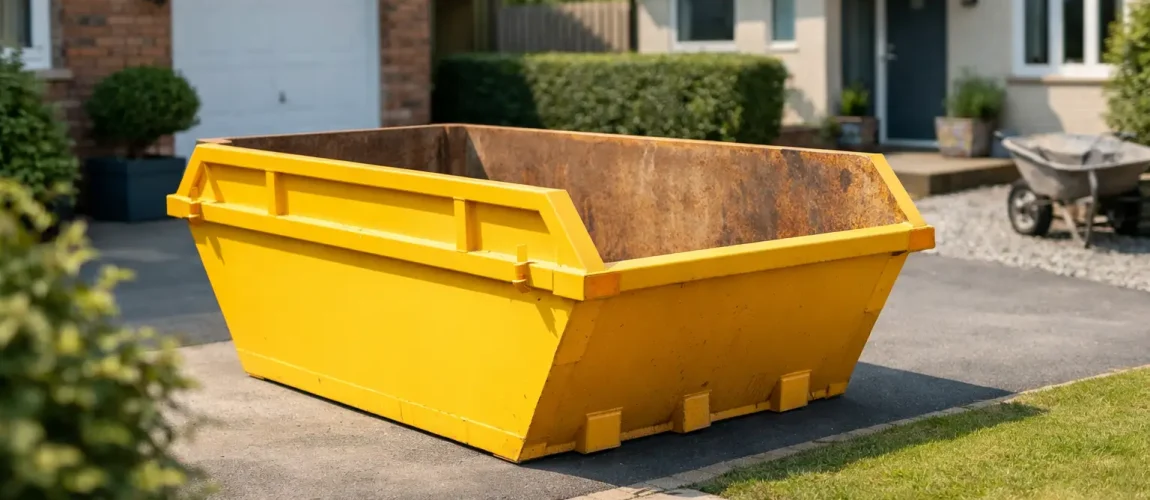
If you are deciding where to place a skip, the best spot is usually the one that makes the job easier without creating problems for access, safety or permits. That sounds obvious, but plenty of people only think about price and skip size, then realise too late that the lorry cannot get close enough, the driveway is too soft, or the skip blocks the very area they need to work in.
A good skip location saves time from day one. It makes loading simpler, keeps the site safer and helps avoid extra costs. Whether you are clearing a garden, renovating a house or managing waste on a small building job, it is worth thinking about placement before the skip arrives.
Where to place a skip for the least hassle
For most domestic jobs, the driveway is the first choice. It is private land, so you normally avoid the need for a road permit, and it keeps the skip close to the property. If you are carrying out old kitchen units, broken fence panels, soil, plasterboard or general household waste, a skip on the drive is usually the most convenient option.
That said, not every driveway is suitable. The surface needs to be solid and level enough to take the weight of both the skip and the lorry delivering it. A skip looks simple enough sitting there, but once it is filled with heavy waste, the load adds up quickly. Block paving, tarmac and concrete can all work well, but weaker surfaces can mark, crack or sink under pressure, particularly in wet weather.
You also need enough room for delivery. It is not just about the skip fitting the space once it is down. The lorry needs space to approach, lift and lower the skip safely. Low branches, parked cars, narrow gates and tight turns can all cause problems. If access is awkward, it is better to flag it early than hope for the best on delivery day.
Placing a skip on a driveway
A driveway is often the easiest answer, but it works best when a few basics are covered. Try to choose a flat section close enough to the work area that you are not dragging waste across the whole property. At the same time, leave enough room to get in and out of the house, open gates if needed, and keep vehicles usable if that matters during the hire period.
If you are worried about surface marks, timber boards under the skip can help spread the load. They are not a miracle fix for a weak surface, but they can reduce scuffing and pressure points. This is especially useful on decorative driveways or newer surfaces that you do not want damaged.
Think about daily use as well. A skip placed right in front of the garage might be fine for a weekend clear-out, but less practical if builders need constant access to tools or materials. The right place is not always the nearest place. It is the one that works for the full hire period.
Can you place a skip on the road?
Yes, but only if the proper permission is in place. If there is no room on private land, a skip can often go on the public highway, subject to local council rules. In practice, that usually means a permit, along with safety requirements such as lights, cones or markings.
This is common for terraced houses, flats, properties with no driveway and some commercial jobs in built-up areas. It can be the only realistic option, but it is usually less straightforward than siting a skip on private land. There may be restrictions on where it can go, how long it can stay there and whether it can block certain parts of the road.
Road placement also needs a bit more common sense. The skip should not obstruct junctions, block visibility, stop pedestrian access or make parking and traffic movement unsafe. If your road is narrow or busy, the exact position matters even more. A skip that technically fits may still be in the wrong place if it causes obvious access issues.
If you are hiring locally, a company with experience in Wolverhampton and surrounding areas will usually be able to advise on what is realistic before booking. That is far better than arranging a skip and then finding out the planned spot is not allowed.
Where to place a skip on a building site
For trade and commercial use, skip placement should support the flow of the job. The skip needs to be close enough that labour is not wasted carrying rubble, timber or packaging across the site, but not so close that it blocks plant, deliveries or walkways.
On smaller building jobs, the best position is often near the main waste point but away from entrances and active work zones. You want a clear route for loading, especially if barrows are being used. If trades are working across different areas, one central location can help, but only if it does not create congestion.
Ground conditions matter even more on sites. Soft ground, recently disturbed surfaces and uneven areas can all cause problems. A level, stable base is the safer choice. If the site changes quickly, think about whether the skip location that works on day one will still work a week later when scaffolding, materials or machinery have moved in.
Places to avoid
Some skip locations look convenient at first glance but cause headaches later. Soft grass is one example. It may seem like spare space, but heavy skips can sink or leave deep damage, especially after rain. Front lawns and verges are rarely the best choice unless there is no practical alternative and the ground is suitable.
Steep slopes are another problem. A skip needs to sit securely, and uneven ground increases the risk of movement and awkward loading. It also makes life harder for anyone throwing waste in, particularly with heavier items.
Avoid placing a skip under overhead cables, too close to walls that could be clipped during delivery, or where it blocks drains, manholes or access covers you may need later. A common mistake is putting the skip in the exact spot where a bathroom refit or extension will need regular material deliveries. Waste removal should make a job easier, not get in the way of it.
It is also worth avoiding positions that encourage other people to use it. A skip left too openly on a road or right at the front edge of a property can attract fly-tipping from passers-by. That is not always preventable, but keeping the skip within your boundary where possible can reduce the risk.
Matching the location to the type of waste
The best answer to where to place a skip can depend on what you are throwing away. Heavy waste such as soil, bricks, concrete and hardcore should be kept as close as possible to the source, because moving it across a property is hard work. If you are digging out a garden or breaking up a patio, place the skip near that area if access allows.
For lighter waste such as cardboard, old furniture, green waste or general household rubbish, the exact position can be a bit more flexible. You may be happy to trade a slightly longer walk for a spot that keeps the drive clear or avoids damage to a surface.
Renovation jobs often create mixed waste over several days, which means convenience matters more than you might think. A skip hidden round the side of the house may look tidier, but if it means every bag of plaster and timber has to be carried through narrow access, it soon becomes a nuisance.
A few checks before delivery day
Before the skip arrives, measure the intended space properly rather than estimating by eye. Include room for the lorry to manoeuvre, not just the skip footprint. Move cars, vans and materials out of the way, and make sure gates are unlocked if access is needed.
If the skip is going on a drive, check the surface condition. If it is going on the road, make sure permits and any required safety measures are arranged. If you live on a busy street, it can also help to think about delivery timing so the area is clearer when the lorry arrives.
For household jobs, it is worth telling everyone in the property where the skip will go and how access will work while it is there. For commercial jobs, make sure the site team know the planned position and keep that area clear. Small checks like these help avoid delays on the day.
Bushbury Skip Hire Ltd deals with these sorts of practical issues every day, and that local experience makes a difference when access is tight or the best spot is not immediately obvious.
The right skip placement is usually the one that keeps loading easy, keeps the site safe and avoids unnecessary complications. If you are unsure, think less about where the skip can fit and more about where it will work best from delivery to collection.