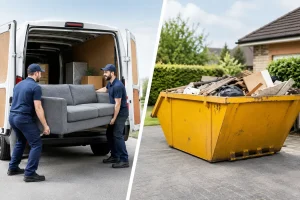

A garage packed to the door, a bathroom refit underway, or a garden full of cuttings all create the same question: skip hire versus man and van – which is the better way to get rid of it? The cheapest-looking option is not always the best value once you consider how much waste you have, how quickly it is being produced and who will do the lifting.
For many Wolverhampton households and tradespeople, a skip is the straightforward answer when waste builds up over several days. A man and van can be ideal for a smaller, ready-to-go load. The right choice comes down to the job, not just the headline price.
Skip hire versus man and van: the main difference
Skip hire gives you a container at your property for an agreed period. You fill it as the work happens, then it is collected and taken for sorting. It suits projects that create waste gradually, such as renovations, clear-outs, landscaping and building work.
A man and van service usually involves a vehicle and one or more people collecting waste in a single visit. They load the vehicle, take the waste away and the job is done. This can be convenient when everything is already bagged, stacked or waiting at ground level.
The practical difference is control. With a skip, you can work at your own pace and add waste as you go. With a man and van, you need the load ready when they arrive and may need to make decisions quickly about what stays and what goes.
When skip hire is usually the better option
A skip is often the most cost-effective choice when the waste is bulky, heavy or spread across more than one day. Hiring one container can be far simpler than arranging several collections or making repeated trips to the tip in a car or small van.
A 2-yard mini skip can suit a modest garden tidy-up or a small bathroom project. Larger skips are better suited to household clearances, kitchen renovations, builders’ waste and ongoing trade work. The useful thing about choosing the right size is that you pay for one organised disposal route rather than repeatedly paying for vehicle space and labour.
Skip hire is particularly practical for rubble, soil, timber, old fittings, garden waste and general mixed waste from a project. If you are knocking down a shed, clearing a rented property between tenants, or stripping out a room, the waste volume can grow faster than expected. Having the skip on site stops bags and broken materials from piling up in the garden, driveway or hallway.
It also saves time. A man and van may complete a collection quickly, but only if the waste is already prepared. During a renovation, that is rarely the case. You may remove old units on Monday, flooring on Wednesday and packaging and offcuts later in the week. A skip is ready for each stage.
A skip is not just for large building jobs
Some people assume skips are only for builders. In reality, smaller skips are a sensible option for domestic jobs where a full van load would be too much for a car but not enough to justify a major clearance team. Garden landscaping, loft clearances, moving house and replacing carpets can all produce a surprising amount of material.
The key is to avoid overfilling. Waste should stay below the top edge of the skip so it can be transported safely. If you expect bulky furniture, awkward timber or lots of bagged rubbish, allow more room than you think you will need.
When a man and van can make more sense
A man and van can be a good fit for a small, one-off collection. Perhaps you have one sofa, a few boxes, a broken wardrobe and several bags waiting in the garage. If it all needs removing in one visit and you do not want to lift it yourself, a collection service may be more convenient.
It can also help where there is nowhere safe or practical to place a skip. Tight access, no driveway, shared parking or a very short job can make a collection easier to arrange. If the waste is inside a flat or upstairs room, confirm exactly what loading service is included before booking. Some operators charge extra for stairs, long carrying distances or dismantling furniture.
The main limitation is capacity. Vans vary, and a load that looks small in a room can take up a lot of space once it is loaded. If the vehicle fills before everything is removed, you could need a second trip or face an additional charge. This is why clear photos and an honest description of the waste matter when requesting a quote.
Compare the full cost, not only the first price
A man and van quote may look cheaper for a small amount of waste, especially if loading is included. But the price can rise where there are heavy materials, extra labour, delays, access issues or more waste than first estimated. A collection can be excellent value, but it depends on the load matching the quote.
Skip hire is generally easier to budget for when you know the likely size of the job. The price normally covers delivery, collection and disposal for the agreed hire period. You do the loading, so there is no charge based on how long a clearance team takes on site.
Think about the hidden costs of doing it yourself, too. Multiple household waste centre trips mean fuel, time, vehicle cleaning and loading. Some sites have rules for vans, trailers or commercial waste. A skip can remove that uncertainty and keep the job moving.
For trade customers, time is often the deciding factor. A builder waiting for a van collection may lose productive hours or leave waste in the way. A skip on site gives a crew somewhere to put waste immediately, helping keep the work area safer and tidier.
Access, permits and timing matter
Before hiring a skip, decide where it will sit. A driveway is usually the simplest location. Measure the available space and make sure the delivery lorry can reach it without low branches, parked cars or narrow access causing a problem.
If the skip needs to go on a public road, pavement or verge, a permit may be required from the local authority. This needs arranging before delivery, so do not leave the booking until the last minute. Requirements and charges can vary, and skips on the road may need safety lights or markings.
A man and van does not normally need a skip permit because the vehicle stays only for the collection. That said, it still needs somewhere to park and load safely. A difficult street can slow the job down and affect the final cost if collection time is charged by the hour.
Timing is another useful test. If you need waste gone today and it is all ready outside, a man and van may be the quicker solution. If work will continue over a week or two, a skip gives you flexibility without booking collection slots for every new pile of waste.
Responsible disposal should be part of the decision
Whichever service you choose, your waste remains your responsibility until it is handled by a legitimate carrier. Avoid anyone offering a suspiciously cheap cash collection with no clear details of where the rubbish will go. Fly-tipped waste can be traced back to the person who arranged its removal.
Ask whether the provider is licensed and how waste is sorted. A proper waste operator will take materials to an authorised facility and recover what can be recycled rather than simply sending everything to landfill. This matters for households, landlords and businesses alike.
There are also items that need separate arrangements. Hazardous materials, including asbestos, chemicals, gas bottles, paint, batteries and electrical items, should never be assumed acceptable in a general skip. Plasterboard may also need to be kept separate. Check first rather than risking a refused collection or extra charge.
Choose the option that keeps the job simple
Choose a man and van when the waste is limited, ready to collect and you want somebody else to load it. Choose a skip when you have a larger volume, heavy materials, a project producing waste over time or a need for predictable disposal on site.
If you are not sure, estimate the waste in terms of rooms, bags, bulky items and building materials rather than guessing from a single photograph. A quick conversation with a local provider can help match the skip size or collection method to the real job. Bushbury Skip Hire can provide practical guidance for Wolverhampton clearances, so you can get the waste sorted without turning the disposal into another project.