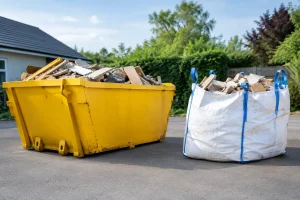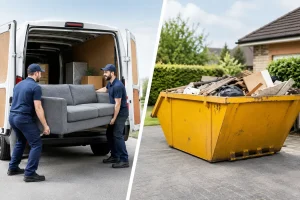

A smashed pane during a renovation, old greenhouse sheets from the garden, or a pile of bottles after clearing a property can all leave you asking: can glass go in skips? The short answer is that it depends on the type of glass and the waste facility handling the load. Glass is recyclable, but it needs to be managed carefully because it can cause injuries and contaminate other materials.
For a straightforward job, the safest approach is to check before loading any glass into your skip. This avoids a collection delay, extra sorting charges or having to remove unsuitable items at the last minute.
Can Glass Go in Skips?
Some skip operators accept certain types of glass in mixed waste skips, particularly small quantities of broken household or window glass that are securely contained. Others ask customers not to place glass in a general skip at all, as it is difficult to separate safely once it has been mixed with timber, plasterboard, soil and general rubbish.
The reason is not simply that glass is sharp. Different types of glass are made differently, melt at different temperatures and cannot always be recycled together. A load containing loose bottles, toughened glass, mirrors and window panes may be harder to process than a load of ordinary builders’ waste.
At Bushbury Skip Hire, waste is taken to a licensed sorting facility in Wolverhampton, where materials are separated for recycling wherever possible. That does not mean every item is suitable for every skip, so it is always worth confirming your glass waste when requesting a quote. A quick conversation before delivery is much easier than dealing with a rejected item afterwards.
The Type of Glass Makes a Difference
Not all glass should be treated as the same material. Before hiring a skip, think about where the glass came from and whether it has coatings, frames, fittings or other materials attached.
Bottles and jars
Empty bottles and jars are usually best kept for your household kerbside recycling collection or taken to a bottle bank. They are generally clean, easy to sort and designed for the glass recycling stream. Putting a few into a skip may be permitted by some providers, but it is rarely the most efficient disposal route.
Remove lids where possible and rinse out food or drink residue. This keeps the material cleaner for recycling and avoids unpleasant smells if the skip is on your drive for several days.
Window glass and glass doors
Old window panes, patio-door panels and broken glazing need more care. Window glass may be float glass, laminated glass, double glazing or toughened safety glass. It can also have sealant, putty, metal spacers, uPVC, timber frames or film attached.
Small amounts may be accepted in a skip if they are broken down safely and wrapped or contained. Larger panes should never be left loose on top of the load. Let the skip hire company know what you have, roughly how much there is, and whether frames are still attached. That information helps them advise on the right disposal method and skip size.
Toughened glass
Toughened glass is commonly used in shower screens, oven doors, garden tables and some internal doors. When it breaks, it shatters into many small pieces. Although the fragments are less likely to form long, sharp shards than ordinary glass, they still present a handling risk and are not always accepted with other glass types.
Keep toughened glass contained in strong bags, boxes or a covered container where advised. Do not sweep loose pieces straight into a skip where they can scatter when other waste is added.
Mirrors, Pyrex and drinking glasses
Mirrors, cookware, ceramics, Pyrex dishes, drinking glasses and crystal are not normally suitable for bottle-bank recycling. Their chemical composition or backing can spoil a load of container glass.
They may be accepted as general waste in a skip, subject to the provider’s rules, but should be wrapped securely first. If you are clearing a house, separate these items from ordinary bottles and jars rather than treating everything as recyclable glass.
How to Load Glass Safely Into a Skip
If your glass has been confirmed as acceptable, loading it properly protects you, anyone helping with the job and the collection team. Never throw panes over the side of a skip. A single impact can create flying fragments, particularly with old window glass.
For larger pieces, wear suitable gloves, long sleeves and sturdy footwear. Remove glass from frames only if you can do so safely. If it is already cracked, lifting the whole frame may be safer than trying to prise out individual sections.
Wrap smaller pieces in cardboard, old carpet offcuts or heavy-duty bags before placing them into the skip. For broken panes, use a solid box or container that will not split under the weight. Mark it clearly if other people are likely to use the skip.
Place contained glass lower down in the skip, rather than balancing it on top. Add lighter non-sharp waste around it where sensible, but do not bury glass beneath heavy rubble that could rupture bags or boxes. Keep all waste below the top edge of the skip. An overloaded skip cannot be transported safely on the lorry.
When a Skip Is Not the Best Option
A skip is ideal for a mixed renovation clearance, a property refurbishment or a garden project with several waste types. It may not be the best choice if the job only involves a few bottles, one broken mirror or a single small pane of glass.
For a small amount of container glass, use your normal recycling service if it accepts it. For one-off household items, your local household waste recycling centre may have separate guidance. This can be a better option for keeping recyclable glass clean and avoiding the cost of a skip for a very small load.
On the other hand, a skip can save considerable time where glass is part of a larger project. Replacing windows, clearing a conservatory, stripping out a kitchen or emptying a rental property often produces timber, packaging, fittings, old furniture and general waste alongside the glass. In that situation, having one local collection point is far more practical than making repeated trips to the tip.
Glass Items That Need Separate Advice
Some items should not go into a normal skip without specific permission. This includes vehicle windscreens, fluorescent tubes, light bulbs, TVs and computer monitors. These can contain laminated materials, gases, mercury, electrical components or other substances that need specialist treatment.
Fridges, freezers, batteries, paint, gas cylinders, asbestos and chemicals also require separate disposal arrangements. It is tempting to put awkward items in with a general clearance, especially when the skip is nearly full, but doing so can create legal, safety and environmental problems.
If you are unsure about an item, describe it before booking. A reliable skip hire company would rather give you clear advice at the start than find prohibited waste in the skip at collection.
Choose the Right Skip for Your Clearance
The amount of glass is only one part of choosing a skip. A 2-yard mini skip can suit a small domestic clear-out, while larger 4-yard, 6-yard or 8-yard skips are often more suitable for renovation waste, bulky household items and trade jobs. Glass is heavy, so a skip that looks half-empty can still become difficult to load if it contains lots of panes, tiles, rubble or soil.
Think about access as well. Make sure there is enough room for delivery, loading and collection, and tell the provider if the skip needs to go on the road rather than private land. A permit may be required for a roadside placement.
The practical rule is simple: do not assume that all glass can go in a skip, and do not leave sharp material loose. Confirm the type of glass before you book, contain it securely and choose a skip that suits the whole job. That keeps your clearance moving, protects everyone on site and gives recyclable materials the best chance of being recovered properly.