
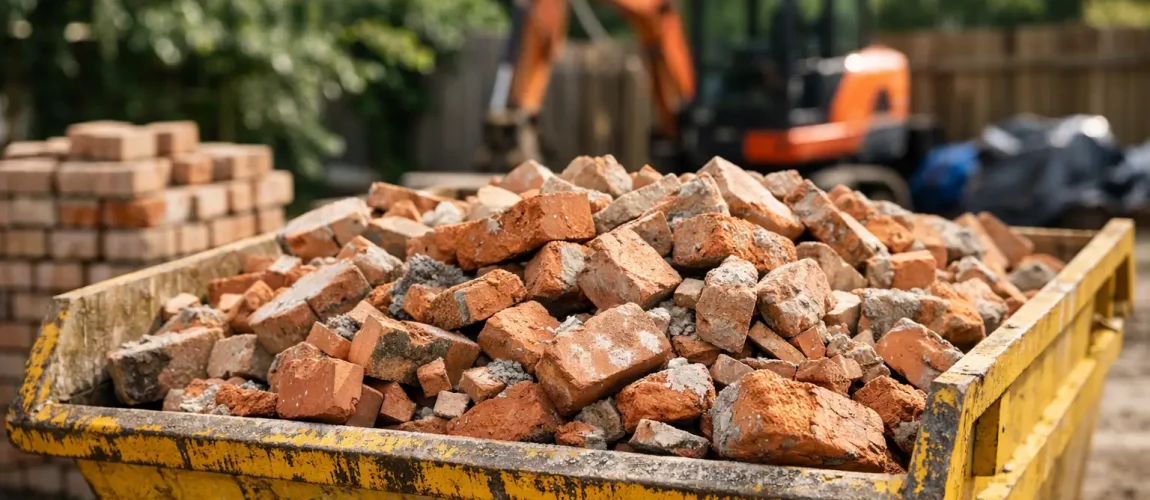
A pile of old bricks can build up quickly once a wall comes down, a patio is lifted or a garden project gets underway. If you are asking, “can bricks go in skip hire?”, the short answer is usually yes. Bricks are commonly accepted in skips, but their weight means a little planning can save you from extra costs, an overfilled skip or the wrong size booking.
For domestic jobs and building work across Wolverhampton, a skip is often the easiest way to deal with bricks, rubble and other heavy waste in one collection. The key is to tell your skip provider what you are throwing away before delivery, especially if the load is mostly brick, soil or concrete.
Can Bricks Go in a Skip?
Yes, clean bricks can usually go in a skip. This includes loose red bricks, engineering bricks, broken bricks, blockwork and masonry from demolition or renovation work. They are classed as inert construction waste, meaning they do not rot, leak or create the same handling issues as household rubbish.
However, bricks are much heavier than they look. A small pile from a knocked-down garden wall can weigh far more than several bags of general household waste. That matters because skips have safe loading limits, and the lorry collecting the skip must stay within legal road weight limits.
If your skip will contain mainly bricks and rubble, say so when requesting a quote. It allows the right skip and collection arrangement to be recommended from the start. A smaller skip is often more practical for dense, heavy materials than ordering the biggest available size and filling it completely.
Bricks that are usually fine
Ordinary clean building bricks, paving bricks, concrete blocks and broken masonry are generally suitable. It does not matter if the bricks are intact or smashed up. In fact, broken bricks can sit more compactly in the skip, provided they are loaded safely and do not rise above the fill line.
Bricks with a little mortar attached are normally not a problem either. Waste from taking down a fireplace, garden wall, old shed base or internal partition is a familiar type of skip load.
When bricks need checking first
Not every material that looks like brickwork should be treated in the same way. Older renovation waste can contain materials that need separate handling. If you are clearing an older property and are unsure about insulation, pipework, painted surfaces or boards mixed into the rubble, check before loading.
Plasterboard must be kept separate from general mixed waste because it requires a different disposal route. The same applies to asbestos-containing materials, which must never go into a standard skip. If there is any chance that old garage roofing, insulation board, ceiling material or pipe lagging contains asbestos, stop and arrange specialist advice rather than breaking it up or putting it in the skip.
Paint tins, chemicals, gas bottles, tyres, electrical items and batteries are also unsuitable for a standard bricks-and-rubble load. Keeping prohibited waste out avoids delays at the sorting facility and prevents extra charges.
Why Brick Weight Changes the Skip You Need
A skip is measured by volume, but bricks are governed by weight. That difference catches people out. A 2-yard mini skip full of bricks may be manageable for a small repair or garden project, while an 8-yard skip filled to the top with brick and concrete could be too heavy to transport safely.
For a modest job, such as removing a short wall, a few paving slabs or a damaged brick barbecue, a mini skip can be a sensible choice. It keeps the job tidy without paying for unused space. For larger work, such as stripping out an extension, lifting a patio or clearing a substantial area of hardstanding, the best option may be more than one collection rather than one overloaded skip.
There is no one-size-fits-all answer because brick weight varies. Solid clay bricks, concrete blocks, wet soil and slabs are especially heavy. A skip containing a mix of bricks, timber, packaging and light household items can take up more space but may weigh less overall. Be clear about the mix when booking.
How to Load Bricks Safely
Load bricks evenly across the base of the skip rather than creating one heavy pile at the front or back. This helps the skip remain stable for collection and makes better use of the available space.
Put the larger, flatter pieces in first where possible. Broken bricks and smaller rubble can then fill the gaps. Avoid dropping heavy bricks from height, particularly into an empty metal skip, as this can cause sharp fragments to fly up. Gloves and sturdy footwear are sensible when handling demolition waste.
Do not fill above the top edge of the skip. This is not just a rule for appearance. Waste sticking out of the skip can fall during transport, and a loaded skip cannot be sheeted safely if material is over the level line. The driver may be unable to collect an overfilled skip until the excess has been removed.
Keep access clear too. The collection lorry needs a safe route to lift the skip, so avoid parking vehicles directly in front of it and do not leave loose piles of rubble around the collection point.
Can You Mix Bricks With Other Waste?
You can often mix bricks with general builders’ waste, such as untreated timber, metal, tiles, plastic, cardboard and non-hazardous renovation debris. This can be useful when a project creates a little of everything.
The trade-off is cost and recycling. A clean load of brick, soil and rubble can be sorted and recovered more easily than a mixed skip full of general waste. Mixing in too many unsuitable items may also affect the price or mean parts of the load need different treatment.
If you have a large amount of clean bricks alongside a separate pile of household rubbish, it may be worth discussing the two waste streams when booking. A straightforward conversation before delivery is much easier than finding out later that the skip has been loaded in the wrong way.
Reusing Bricks Before Hiring a Skip
Before you throw old bricks away, have a quick look at their condition. Clean, whole bricks can sometimes be reused for raised beds, edging, small garden walls or repairs. Reclaimed bricks may also be useful to a neighbour, local builder or landscaping project.
That said, not every stack of old bricks is worth keeping. Mortar-covered, damaged or mismatched bricks can take up valuable space and become an obstacle while work is underway. If they are not suitable for reuse, placing them in a properly booked skip is a practical and responsible option.
At Bushbury Skip Hire, collected waste is taken to a licensed Wolverhampton sorting facility, where materials are separated for recycling wherever possible. This gives bricks and other recoverable construction waste a better route than an unlicensed clearance or fly-tipping risk.
Parking the Skip on a Drive or Road
A driveway is usually the simplest place for a skip full of bricks because the lorry can access it without needing a road permit. Check that the surface is suitable, though. Heavy loads can mark soft tarmac, block paving or poorly supported ground. Timber boards under the skip can help spread the load and protect the surface.
If the skip needs to go on a public road, pavement or verge, a permit may be required from the local council. This should be arranged before the skip is delivered. The exact requirements depend on the location, so do not assume a roadside space can be used at short notice.
For tight streets, terraced properties or shared access, measure the available space and think about where the collection lorry will stop. A quick check beforehand prevents problems on delivery day.
Get the Right Advice Before You Fill It
Bricks can go in a skip, and hiring one is usually far easier than making repeated trips to the tip with a car full of rubble. The important part is matching the skip to the amount and type of waste, rather than simply choosing the largest container available.
When you book, explain whether you have a few bags of bricks, a demolished wall, a patio removal or a full renovation load. With the right size skip, honest details about the waste and safe loading below the fill line, your brick disposal can be collected without unnecessary hassle.