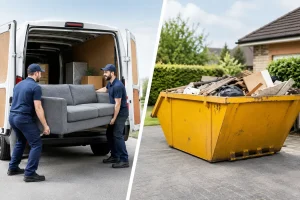

A pile of waste at the back of a unit tends to grow quietly until it starts getting in the way of work. For many firms, skip hire for small businesses is less about tidying up and more about keeping jobs moving, staying compliant and avoiding time wasted on repeated tip runs.
If you run a shop fit-out, a small building firm, a workshop, a landlord portfolio or a local trade business in Wolverhampton, the right skip can save more than space. It can save labour hours, reduce disruption and make waste disposal far easier to manage.
Why skip hire for small businesses makes sense
Small businesses rarely have the time or spare staff to deal with waste in bits and pieces. A van load here and a tip run there might seem manageable at first, but it soon becomes expensive once you factor in fuel, wages and lost working time.
A skip keeps everything in one place and on one schedule. Waste goes straight from the job into the container, then it is collected and processed properly. That matters if your business produces bulky waste, renovation debris, packaging, timber, plasterboard, rubble or mixed site waste on a regular basis.
There is also the compliance side. Business waste is not something to handle casually. You need to know it is being taken away by a licensed operator and dealt with responsibly. For trade customers, that reassurance is just as important as price.
Choosing the right skip size for the job
Getting the size right is where most businesses either save money or create avoidable hassle. Too small and you may need a second skip or an early exchange. Too large and you could end up paying for capacity you never use.
For smaller commercial jobs, a 2-yard or 3-yard skip can work well for heavier waste such as bricks, soil or concrete from limited works. These compact sizes are often a practical choice where space is tight.
A 4-yard or 5-yard skip suits many day-to-day business needs. If you are clearing a small unit, stripping out a kitchen in a rental property, or managing waste from routine building work, this is often the point where capacity and cost balance out well.
A 6-yard skip is a common option for larger refurbishments and regular site waste. It gives enough room for mixed materials without taking up as much space as a bigger builder’s skip. An 8-yard skip is often suitable when bulkier but lighter materials are involved, though what you can put in it depends on the waste type and weight.
The key point is simple: skip size is not just about volume. Weight matters too. Heavy materials can reach tonnage limits quickly, even when the skip does not look full.
What type of waste are you getting rid of?
This is the question that speeds everything up. When you ask for a quote, being clear about the waste type helps avoid delays and makes sure the right skip is supplied.
General mixed waste from shop refits, office clearances or property maintenance is different from inert waste such as soil, clay, bricks and hardcore. Timber, metal, green waste and plasterboard may also need to be handled separately depending on the load.
If your business is working on building or landscaping projects, it is worth checking this before booking. Heavy waste can affect skip choice, price and collection arrangements. It is far better to get that sorted at the start than find out on collection day that the skip has been overloaded or filled with the wrong material.
There are also some materials that should not go into a standard skip at all, such as asbestos, chemicals, paint, tyres, fridges and certain electrical items. If you are unsure, ask before you load.
Skip hire for small businesses and day-to-day operations
The best commercial skip hire is the kind that does not slow your team down. Delivery needs to be on time, collection needs to happen when promised and the process should be straightforward from quote to invoice.
For a small business, reliability usually matters more than fancy promises. If the skip turns up late, your site can back up. If it is not collected when agreed, it can block access, create safety issues or leave the wrong impression in front of customers.
This is where using a local operator can make a real difference. Local operational control usually means better visibility on schedules, clearer communication and fewer hand-offs. It also means you are dealing with a company that understands the area, local access issues and the pace that trade customers expect.
Cost matters, but so does value
Every business wants a competitive price, and rightly so. But the cheapest quote is not always the cheapest job overall.
If poor service leads to missed collections, permit problems or wasted labour waiting around, your real cost goes up quickly. The better question is whether the skip hire gives you dependable service at a fair price.
Value usually comes from three things: choosing the right size first time, using a company that sticks to agreed timings, and knowing the waste is being handled properly. That last point matters more than many small firms realise. If your waste ends up in the wrong hands, it can become your problem.
A straightforward quote, clear guidance on what can go in the skip and no confusion about size or waste type all help keep costs under control.
Permits, licences and staying on the right side of the rules
If the skip is going on private land, such as a yard, forecourt or work site, the process is usually simpler. If it needs to go on a public road, a permit may be required.
That is one reason to book with a company that understands the local process and can guide you properly. For a busy business owner or site manager, the aim is simple: get the skip where it needs to be without added admin.
It is also worth checking that the provider holds the right waste carrier licence and operates legally. This is not a box-ticking exercise. It is part of making sure your business waste is collected, transported and processed in line with regulations.
A provider with its own licensed waste sorting facility offers another level of reassurance. It shows the operation is set up to manage waste properly rather than simply move it on.
Responsible waste handling is good business
Many small businesses are under more pressure than ever to show they dispose of waste responsibly. Sometimes that comes from clients, sometimes from contracts, and sometimes from wanting to run a better business.
A strong recycling rate is not just a marketing line when it is backed by proper sorting and processing. It means more of your waste is diverted from landfill and handled in a way that reflects well on your business.
For builders, trades and property managers, this can be especially useful when clients ask how site waste is being managed. For retail, hospitality and service businesses, it supports day-to-day housekeeping without adding complexity.
When a smaller skip is the smarter choice
Bigger is not always better. For many small businesses, a compact skip is easier to place, quicker to fill and cheaper to hire. If you are working behind a shop, outside a small unit or on a residential rental property, access can be the deciding factor.
A smaller skip can also help keep waste streams clearer. If you are dealing with one specific material, such as hardcore or soil, a compact dedicated skip may be more practical than one large mixed load.
That said, if your job is likely to expand as work goes on, it may be worth sizing up early. Many commercial projects produce more waste than expected, especially once strip-out starts.
A simpler way to book and get on with work
For most firms, the best booking process is a quick one. Choose the skip size, confirm the waste type, set the delivery date and arrange collection. That is all most customers want.
If you are based in Wolverhampton or nearby, Bushbury Skip Hire Ltd keeps that process practical and local, with a clear range of skip sizes, straightforward quoting and waste handled through its own licensed sorting facility. That means less back-and-forth and more confidence that the job will be done properly.
Whether you need a one-off skip for a clear-out or regular support for trade waste, the same rule applies: book the right size, be clear on the material and use a reliable licensed operator. It keeps your site cleaner, your team more productive and your waste where it should be – dealt with properly.