
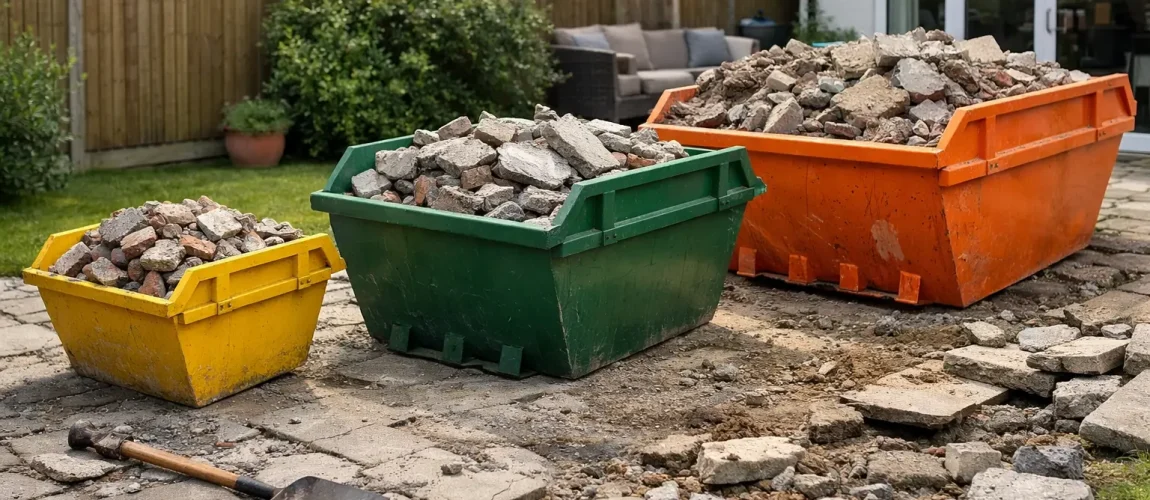
A patio can look like a straightforward weekend job until the first slabs come up. Concrete flags, mortar beds, edging blocks and compacted sub-base are far heavier than most people expect. Choosing one of the best skips for patio removal is less about finding the biggest container available and more about matching the skip to the weight, volume and access at your property.
For most Wolverhampton patio projects, a 4-yard or 6-yard skip is the sensible starting point. Larger patios, mixed renovation waste and jobs involving old decking or fencing may call for an 8-yard skip, but heavy materials need careful planning. Here is how to get it right before the lorry arrives.
Why patio waste needs the right skip
Patio removal produces dense waste. A few square metres of paving slabs can fill a skip quickly, while the sand, crushed stone and concrete underneath add considerable weight. This is why judging the job by how much space the slabs take up in your garden can lead to hiring a skip that is too small or unsuitable for the load.
The best approach is to think about what is actually coming out. A simple lifted patio may consist mainly of slabs and a thin bedding layer. A full replacement project may also include concrete, brick edging, old timber sleepers, turf, soil, drainage materials and packaging from the new patio. Those extra materials affect both the skip size and how it should be loaded.
A skip also saves repeated trips to the tip in a car or van. That means less lifting, less mess left around the drive and a clearer work area for the new patio installation.
Best skips for patio removal: choosing a size
2-yard mini skip for a very small paved area
A 2-yard mini skip can suit a small path, a few damaged slabs, or a compact seating area where access is tight. It is a practical choice when you are removing only a limited amount of paving and not digging out a deep base.
It is not usually the right option for a complete patio. Slabs are bulky and heavy, so a mini skip can reach its limit sooner than expected. If there is any doubt, moving up a size is often more cost-effective than arranging a second collection.
4-yard skip for small to medium patios
For many domestic jobs, a 4-yard skip is one of the best skips for patio removal. It works well for a modest garden patio, particularly when the waste is mostly paving slabs, bricks, concrete and a manageable amount of bedding material.
This size is easier to position than a large builders’ skip and is often a good fit for driveways with limited space. It is also a sensible option when you are tackling the work yourself over a day or two rather than carrying out a full garden overhaul.
Be realistic about the base. If you are lifting 20 square metres of slabs and removing several inches of compacted hardcore beneath them, a 4-yard skip may be tight. The material is dense even when it does not look like much.
6-yard skip for most full patio replacements
A 6-yard skip is a reliable choice for a standard patio replacement. It gives more room for flags, concrete, edging, sub-base and a reasonable amount of associated garden waste without taking up as much room as an 8-yard skip.
This is often the best balance for homeowners removing an average-sized patio and preparing the area for new paving. It also gives you some breathing room for old planters, broken fence panels or packaging, provided the waste type is agreed when booking.
For tradespeople working on landscaping or small renovation jobs, a 6-yard skip is a useful all-round size. However, it still needs loading properly, with heavy materials spread evenly and nothing piled above the rim.
8-yard skip for larger or mixed projects
An 8-yard skip is suited to larger patios, substantial garden alterations and jobs where patio removal is only one part of the work. For example, it may be appropriate if you are taking out a large paved area alongside raised beds, timber features, fencing and general builders’ waste.
The trade-off is access and weight. An 8-yard skip needs more space on the drive or roadside, and a load made entirely of heavy rubble can become difficult to manage. Tell the skip provider that the main waste will be slabs, concrete or hardcore so the right option can be recommended.
Estimate your patio waste before booking
You do not need perfect measurements, but a quick estimate helps avoid problems. Measure the patio length and width, then consider whether you are removing only the slabs or the full construction beneath. A patio that is 4 metres by 3 metres may not sound large, but its flags, mortar and sub-base can create a substantial load.
Look around the area as well. Are there brick borders to remove? Is the old patio set on concrete? Will you be clearing soil, turf or shrubs to extend the space? These are the details that turn a small paving job into a larger waste disposal project.
When booking, explain the patio dimensions, the materials involved and whether you expect mixed waste. A local operator can then advise on the most practical skip size rather than leaving you to guess from photographs alone.
What can go in a patio removal skip?
Most patio projects create inert or construction-type materials such as paving slabs, concrete, bricks, rubble, ceramics and hardcore. These are common skip contents, but it is always worth confirming your specific load before work begins.
Mixed loads can be accepted in many cases, although materials such as soil, green waste, timber and plastics may affect how the waste is sorted and recycled. Keep recyclable materials separate where practical, and do not use the skip as a place for every unwanted item from the shed or garage unless that has been agreed.
Some items must not go into a general skip. These include asbestos, paint, solvents, fuel, gas bottles, batteries, tyres, electrical items, plasterboard and hazardous chemicals. If you uncover suspicious corrugated sheets, old insulation or anything that could contain asbestos, stop work and arrange specialist advice. Do not break it up or place it in the skip.
Bushbury Skip Hire Ltd sorts collected waste at its licenced Wolverhampton facility, with a strong focus on recycling as much material as possible. Loading the right waste into the skip helps that process and keeps disposal legal and straightforward.
Where should the skip go?
A private driveway is usually the easiest place for a patio removal skip. Check the width of the entrance, the turning space for the lorry and any low branches or overhead cables. Avoid placing a loaded skip on soft ground, a weak drain cover or an area where it could block access to the house.
If the skip has to go on a public road, pavement or verge, a permit may be required from the local authority. This needs arranging before delivery, so mention the proposed location when you request a quote. Do not assume a roadside space is fine just because neighbours have used one previously.
Think about the route from patio to skip too. The closer it is to the work area, the less time you will spend carrying heavy slabs across the garden. At the same time, leave enough room for wheelbarrows and keep the path clear for anyone entering or leaving the property.
Load paving and rubble safely
Heavy patio waste should be distributed across the base of the skip rather than dropped in one corner. Start with the largest, flattest slabs, then add smaller pieces of concrete and rubble around them. Breaking oversized slabs only if it is safe to do so can reduce awkward gaps and make better use of the space.
Do not fill above the top edge. An overloaded skip is unsafe to transport and may need waste removing before collection. Keep lightweight materials for the top where possible, and never place items beside the skip in the hope they will be taken away with it.
If the patio is being broken out with power tools, wear suitable eye protection, gloves, safety footwear and hearing protection. Dust can also be significant when cutting concrete or slabs, so control it properly and keep children and pets away from the work area.
A practical choice saves time on the job
For a small patio, a 4-yard skip may be enough. For most complete domestic replacements, a 6-yard skip offers useful capacity without overcommitting on space. If the project includes a large area of paving or a wider garden clearance, an 8-yard skip can make the work far more manageable.
The key is to book based on the waste beneath the patio as well as the slabs you can see. A quick, honest description of the job will help you get a skip that keeps the work moving and lets you focus on building the garden space you actually want.