
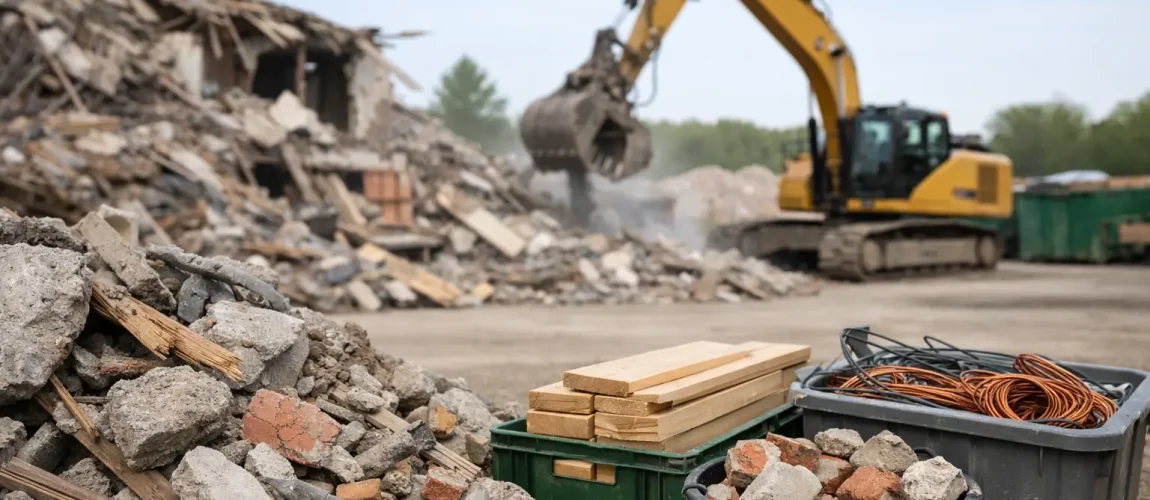
A demolition job can create more waste than most people expect. A small garage, old kitchen extension or commercial strip-out can quickly produce piles of brick, timber, plasterboard, metal and mixed rubbish. This demolition waste recycling guide explains how to deal with that material sensibly, keep your site safer and avoid paying for disposal that could have been prevented.
For homeowners, landlords and tradespeople around Wolverhampton, the key is to plan waste handling before work starts. Once different materials have been thrown into one heap, they are harder to recycle, slower to load and more expensive to manage.
Start With a Clear Demolition Waste Plan
Before the first wall comes down, walk around the property and identify what is likely to come out. This is particularly useful for renovations and partial demolitions, where reusable fittings and recyclable materials are often mixed with general waste.
Look separately at masonry, timber, metals, plasterboard, soil, green waste, glass, plastics and general mixed waste. You do not need a complicated spreadsheet for a domestic project, but you do need a realistic idea of volume and material type. A builder clearing a single room may need one mixed waste skip. A larger demolition may need separate containers or staged collections.
This early check also helps you choose the right skip size. Hiring a skip that is too small can mean a second booking and unnecessary disruption. Hiring one that is far too large can cost more than needed. For typical local work, a mini skip can suit a small clearance, while larger skips are more practical for renovation debris, builders’ waste and heavier loads. Heavy rubble is a special case, as weight limits may affect how much can be loaded safely.
What Can Be Recycled From Demolition Waste?
A large share of demolition material has a route beyond landfill when it is kept reasonably clean and separated. Recycling is not only about doing the right thing environmentally. It can also reduce the amount of costly mixed waste on a job.
Bricks, Concrete and Rubble
Clean brick, concrete, blocks, paving slabs and hardcore can often be crushed and processed for use as aggregate or fill material. These are some of the heaviest materials on site, so separating them from lighter rubbish makes practical sense.
Do not assume every piece of rubble is suitable for the same waste stream. Soil, clay, turf, insulation, plastic and timber mixed through hardcore can affect where it can go. If you are demolishing an older structure, keep an eye out for materials that need specialist handling rather than putting them straight into a standard skip.
Metal
Metal is one of the simplest and most valuable materials to recover. Steel beams, copper pipe, radiators, cable, aluminium frames, lead flashing and cast iron can all be separated from general demolition waste.
A quick sort before loading pays off. Metal tangled up with timber, plasterboard and insulation takes longer to process later. Tradespeople working on strip-outs should keep metal in a dedicated pile where space allows, especially on larger jobs.
Timber and Joinery
Timber from doors, floorboards, roof timbers, kitchen units and fencing may be recycled depending on its condition and treatment. Clean, untreated wood is easier to recover than painted, rotten or heavily contaminated timber.
Some items may be worth reusing before they become waste. Solid internal doors, usable kitchen units, architectural ironmongery and good-quality timber can sometimes be passed on or salvaged. It depends on their condition, the time available and whether removal can be done safely without slowing the job down.
Plasterboard
Plasterboard needs particular care. It should be kept separate from biodegradable waste because gypsum can create harmful gases when disposed of incorrectly. Bag or stack plasterboard separately where possible, keep it dry and tell your waste provider that it is included.
This is one area where a little organisation saves trouble. Throwing plasterboard into a skip with food waste, garden waste or damp mixed rubbish can limit recycling options.
Fixtures, Fittings and Site Materials
Windows, UPVC frames, glass, plastic pipe, wiring, sanitaryware and old appliances may all have separate recycling routes. Soft-strip work often produces a surprising amount of these materials before structural demolition even begins.
Remove fittings in a sensible order. Take out reusable items first, then metals and obvious recyclables, followed by bulky mixed materials. This makes the main demolition stage cleaner and reduces the chance of valuable recyclable material being buried under rubble.
Demolition Waste Recycling Guide: Sort at Source
The most effective recycling happens on site, not after everything has been loaded together. Sorting at source simply means making separate piles or containers as the work progresses.
For a small domestic project, that may be as straightforward as one pile for rubble, one for timber and metal, and one for general waste. On a larger commercial site, labelled bays, cages or skips can make the process clearer for everyone working there.
Keep the layout practical. Put the container for the heaviest waste close to where it is being produced, but leave safe access for wheelbarrows and the collection lorry. Do not create piles that block exits, footpaths or neighbours’ driveways. Good waste segregation should make the job easier, not turn the site into an obstacle course.
Mixed skips are still useful when materials cannot reasonably be separated. They are often the right choice for house clearances, small refurbishments and jobs with varied waste in modest quantities. The trade-off is that heavily mixed loads can be harder to recycle and may cost more to process than clean, separated material.
Keep Unsafe and Restricted Materials Out of General Skips
Some demolition materials must never be treated as ordinary waste. Asbestos is the best-known example. If you suspect asbestos in garage roofs, pipe lagging, textured coatings, insulation boards or old floor tiles, stop work and arrange for a competent inspection and specialist removal.
Other items that need separate arrangements include paint, oils, fuel, gas bottles, batteries, chemicals, fluorescent tubes, fire extinguishers and electrical equipment. Fridges and freezers also need appropriate handling because of the gases and components they contain.
Older properties need extra caution. Lead paint, contaminated soil and hazardous insulation are not always obvious. Trying to save money by hiding restricted materials in a skip can lead to rejected loads, extra charges and serious legal problems. If you are unsure, ask before loading.
Use a Licensed Waste Service
Whether you are clearing a house, managing a building project or arranging demolition for a commercial unit, your waste must be handled by a properly licensed carrier. This protects you from the risk of fly-tipping and gives you confidence that the material is being sorted and processed lawfully.
If a skip needs to sit on a public road, you may also need a permit from the local authority. Leave enough time for this before work begins. If there is room on private land, placing the skip on a driveway or site can avoid permit requirements, but check that the ground is suitable for the weight.
Bushbury Skip Hire operates its own licensed sorting facility in Wolverhampton, helping local customers keep demolition and construction waste moving without the hassle of repeated trips to the tip. Booking the right service early means collections can be planned around your job rather than becoming a last-minute problem.
Load the Skip Safely and Efficiently
Load heavy materials first and spread them evenly across the base. Break down bulky items where it is safe to do so, and place lighter waste on top. This uses the available space properly and helps keep the load stable for transport.
Never overfill a skip. Waste should not stick above the rim, as an overloaded skip cannot be transported safely. Keep loose materials contained, particularly in wet or windy weather, and do not leave valuable metal or reusable materials accessible overnight if site security is a concern.
For recurring building work, regular collections can be better value than letting one skip become overfilled and unmanageable. The right approach depends on how quickly waste is generated, access for the lorry and the space available on site.
A cleaner demolition site is usually a quicker, safer and less wasteful one. Separate what you can, ask about anything you are unsure of and arrange disposal before the rubble starts building up.