If you have a pile of old fence panels, broken floorboards or bits of timber left after a refit, it is fair to ask: can wood go in skips? In many cases, yes. But not every type of wood should be treated the same, and getting it wrong can affect disposal, recycling and the cost of the job.
For most customers, the simple answer is that ordinary wood waste is usually accepted in a skip. The detail matters, though. Clean timber, treated timber, painted wood, MDF and mixed builders’ waste can all be handled differently once the skip reaches a licensed waste facility. If you are hiring a skip in Wolverhampton for a house clearance, garden job or building project, it helps to know what counts as straightforward wood waste and what may need checking first.
Can wood go in skips for most jobs?
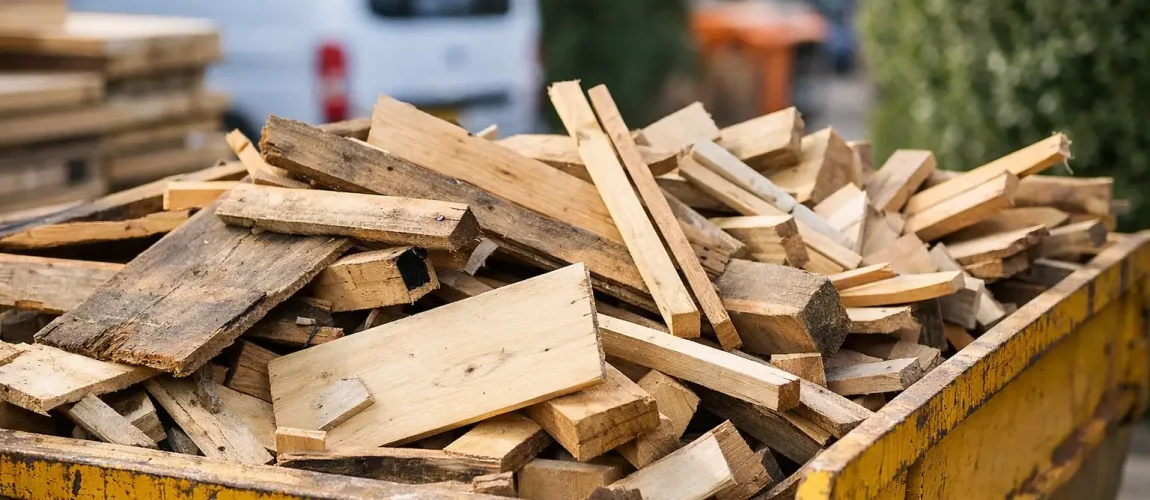
Yes – wood can usually go in skips used for domestic and commercial clear-outs. That includes common items such as timber offcuts, old doors, skirting boards, chipboard, broken pallets, shelving, fence panels and wooden furniture that is beyond reuse.
That said, wood is not always just wood. Some items are painted, laminated, pressure-treated or mixed with metal, glass, fabric or plastic. A rotten shed panel is different from a stack of clean timber offcuts. A kitchen unit with hinges, worktop coating and bonded materials is different again. These differences matter because waste has to be sorted properly and, wherever possible, recycled.
For customers, the practical point is simple: if your skip will contain a fair amount of wood, say so when booking. It helps make sure you get the right advice and the right skip for the job.
What kinds of wood can go in skips?
Most non-hazardous wood from everyday jobs is fine. This commonly includes timber from DIY work, old furniture, floorboards, chipboard, plywood, skirting, doors, frames and fencing. Garden timber and general renovation timber are among the most common materials placed in skips.
Clean, untreated wood is the most straightforward because it is easier to sort and recycle. Painted or treated wood is also often accepted, but it may need handling differently at the waste facility. Manufactured boards such as MDF, chipboard and laminate-covered timber can usually go in too, though they are not processed in the same way as plain timber.
If the wood is attached to other materials, use a bit of judgement. A few screws or hinges are not usually a problem. A whole item made from several bonded materials, such as upholstered furniture or fitted units with glass and plastic sections, is less clear-cut. In those cases, it is better to ask before the skip arrives than find out later that some of the load needs separating.
Wood from garden clearances
Garden jobs often produce a mix of green waste and timber. Fence panels, old trellis, broken planters and timber edging can usually go in a skip. Tree branches, leaves and soil are separate waste streams, so if you are clearing a whole garden, the load may be mixed rather than purely wooden.
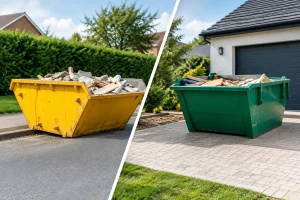
That does not mean it cannot go in the same skip, but the type of waste affects how it is sorted and priced. Heavy materials such as soil and rubble also change what size skip is sensible. A mini skip may suit a small fence replacement, while a larger job with timber, hedge cuttings and hard landscaping waste may need more space.
Wood from renovations and building work
Renovation timber is another common category. Stud walls, floorboards, door frames, kitchen carcasses and joinery offcuts are usually accepted. Builders and trades often have a mixture of wood, plasterboard, metal and packaging, so it is worth being clear whether the skip is for mixed builders’ waste or a cleaner timber load.
The cleaner the wood, the easier it is to recover. Mixed loads are still manageable, but there is more sorting involved. If you are doing a strip-out or refit, that is the sort of thing to mention when arranging the hire.
When wood may not be suitable for a skip
This is where the answer becomes a bit more conditional. Some wood waste may be restricted if it is contaminated, hazardous or part of a larger banned item.
Railway sleepers that have been heavily treated, timber contaminated with oils or chemicals, and wood from certain industrial settings may need specialist disposal. The same applies if the material has asbestos contamination nearby or has been damaged by fire, chemicals or heavy spills. These are not normal household cases, but they do come up on older sites and trade jobs.
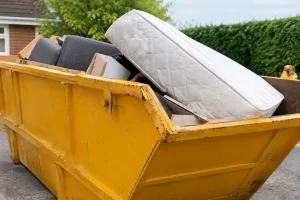
You should also be cautious with items that are not really wood waste in the ordinary sense. Upholstered furniture, for example, may have a timber frame but cannot be judged simply as wood. Some mattresses, sofas and seating are subject to tighter disposal rules and should always be checked separately.
If you are unsure whether an item counts as standard wood waste, ask before loading it. It saves delays, extra charges and the hassle of unloading something that cannot be taken away.
Can wood go in skips if it is painted or treated?
Often yes, but this is one of the main reasons to check first if you have a lot of it. Painted, stained, varnished or pressure-treated wood is common in sheds, fencing, decking and interior fittings. It can still usually go into a general skip, but it may not be recycled in the same way as clean timber.
That is the key difference. Customers usually focus on whether the waste can be collected. Waste operators also have to think about how it will be separated and processed afterwards. A load of untreated offcuts is simple. A load of painted decking boards with screws, weed membrane and plastic trim attached is more involved.
For a standard home job, there is rarely a need to overthink every plank. Just be open about what the waste is. A local, licensed operator can tell you quickly whether your load is fine as general skip waste or whether it needs a different arrangement.
Why it helps to separate wood where possible
If you can keep wood reasonably separate from other rubbish, it makes disposal easier. That does not mean you need a perfect timber-only skip for every DIY project. It simply means avoiding obvious mixing with food waste, liquids, electrical items or materials that should never go in a skip.
Separating wood where practical can improve recycling rates and make the whole load easier to process. For trade customers and larger renovation jobs, that can be especially useful. For household customers, it is mostly about keeping the skip sensible and safe to sort.
Bushbury Skip Hire uses its own licensed sorting facility in Wolverhampton, which matters because wood and mixed waste do not just disappear after collection. They still need to be handled properly. The better the load is prepared, the smoother that process tends to be.
Choosing the right skip for wood waste
Wood waste can be bulky without always being especially heavy. Old wardrobes, fence panels and doors take up room quickly, even if they do not weigh as much as hardcore. That is why skip size matters.
A small clear-out of timber offcuts or a few broken garden items may suit a 2-yard or 4-yard skip. A shed removal, kitchen rip-out or larger refit often needs more capacity. The mistake many people make is thinking only about weight when timber jobs are often more about volume.
The shape of the waste matters too. Long boards and awkward panels can waste space if they are thrown in loosely. Breaking items down safely before loading can help you use the skip more efficiently. Just do not overfill it. Waste must stay level with the top of the skip so it can be transported legally.
A few common mistakes to avoid
The biggest issue is assuming every wooden item is automatically fine. Most are, but some are mixed materials or contaminated and need checking. Another is hiding restricted waste under a visible layer of timber, which only causes problems when the skip is collected or sorted.
It is also worth avoiding loose nails, protruding screws and badly stacked panels that could create a safety risk. If the skip is on a driveway or near a work area, loading it neatly is not just tidier – it is safer for everyone using the site.
Finally, do not wait until collection day to ask questions. If your waste includes treated timber, fitted units, sleepers or anything unusual, mention it when you book.
So, can wood go in skips?
Most of the time, yes. Standard wood from gardens, DIY jobs, refurbishments and clear-outs can usually go in a skip without any issue. The main exceptions are wood that is hazardous, heavily contaminated or part of another restricted waste type.
If you are not sure, the best approach is the simplest one: describe the job clearly, say what kind of wood you have, and get advice before the skip is delivered. That way you get the right size, the right pricing and the confidence that your waste will be handled properly from start to finish.
A quick phone call now is usually easier than sorting out the wrong skip later.