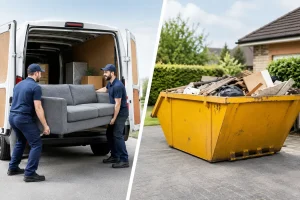

A cleared office should not leave your business with a car park full of unwanted desks, broken chairs and bags of mixed waste. The best options for office clearances depend on how much you have, what it is made of, how quickly the space must be handed back and whether any items need specialist handling. For Wolverhampton businesses, the right choice is usually the one that keeps the job moving without creating unnecessary cost, disruption or disposal risk.
An office clearance can be a small job after a refresh, a one-off clean-out before a move, or a full strip-out following a lease ending. Treating every job the same is where time and money are often lost. A clear plan helps you separate reusable furniture, recyclable materials, confidential paperwork and genuine rubbish before collection day.
The best options for office clearances
Skip hire for larger, self-managed clearances
Skip hire is often the most practical answer when your team, building contractor or maintenance firm can load the waste as the work progresses. It suits office refurbishments, storage-room clear-outs, landlord work and premises moves where there is a steady volume of bulky material.
A skip gives you a fixed place to put unwanted desks, shelving, chairs, packaging, general rubbish and non-hazardous renovation waste. Rather than filling staff cars or making repeated trips to the tip, the waste is contained on site until it is collected. That is particularly useful where contractors are removing partitions, flooring or old fittings over several days.
For smaller offices, a 2-yard or 4-yard skip can be enough for a focused clear-out. A 6-yard or 8-yard skip is generally better for larger volumes of furniture, mixed office waste or a refurbishment project. The best size depends on the amount of waste and its weight. Heavy materials can quickly use up a skip’s weight allowance, while lightweight furniture may take up space long before the skip is full.
Skip hire is not always the best fit. If access is tight, there is nowhere safe to place a skip, or the office is on an upper floor with no practical route for moving items outside, a collection service may save more time. You may also need a permit if the skip has to sit on a public road. It is worth checking this before booking, rather than arranging a delivery and finding the location is unsuitable.
Licensed waste collection for a hands-off job
A licensed waste collection is a sensible option when you need labour as well as disposal. This works well for serviced offices, shops, small units and businesses with a deadline to vacate. A clearance team can remove items from inside the building, load them and take them away, leaving your staff free to deal with the move, customers or day-to-day work.
This route can be more expensive than hiring a skip because you are paying for collection labour, loading time and transport. In return, it removes the need to organise staff to shift heavy furniture or keep a skip on site. It can also be the better value choice where the waste volume is modest but awkward, such as filing cabinets, desks from several rooms and a few damaged appliances.
Always use a properly licensed carrier and ask for paperwork showing where the waste has gone. Cheap, unlicensed collections can turn into fly-tipping, and the business that produced the waste may still face questions if it is found dumped. A written quote, a waste transfer note and clear agreement about what will be collected are basic protections, not extras.
Reuse, donation and resale for usable furniture
Not everything in an office clearance belongs in a skip. Desks, meeting tables, filing cabinets and chairs may still have value if they are clean, safe and in usable condition. Businesses sometimes sell items to staff, offer them to local groups or arrange collection through a furniture reuse organisation.
This can reduce the amount of waste you pay to remove, but it takes organisation. Photograph items early, decide what can leave the building and set a collection deadline. Do not hold up a handover waiting for a buyer who may not arrive. If an item has not been collected by the agreed date, it needs to move into the disposal plan.
Reuse is most effective when it is built into the clearance from the beginning. Once furniture is piled together with damaged items, packaging and general rubbish, it becomes harder to separate and less likely to be accepted.
Separate recycling for electrical items and materials
Old monitors, printers, computers, phones and other electrical equipment should not be treated like ordinary office rubbish. Electrical items can contain materials that require separate handling, and devices may hold business or personal information even after they appear to have been wiped.
Arrange suitable recycling for waste electrical and electronic equipment, often referred to as WEEE. Before anything leaves the office, make sure company data has been removed securely. For laptops, desktop computers, hard drives and network equipment, a simple factory reset may not be enough for sensitive information. Your IT provider or a specialist data destruction company can advise on the right process and provide records where needed.
Paper, cardboard, metal and some plastics can also be separated from general waste. This is easier when staff have a clear area for recyclables during the move-out period. Mixing everything together may be quicker at first, but it can raise disposal costs and reduce the chance of useful materials being recovered.
Choose the clearance method around the job
The most suitable option comes down to four practical questions: volume, access, timescale and waste type. A ground-floor office with a rear yard and a large amount of mixed, non-hazardous waste is a good candidate for a skip. A town-centre office with limited parking, stairs and a short lease-end deadline may be better served by a collection team.
For a refurbishment, it may make sense to combine methods. A skip can handle general builders’ waste and bulky furniture, while electrical equipment and confidential documents are dealt with separately. This avoids putting items into the wrong waste stream simply because they are inconvenient to store.
Think about access before the day of delivery or collection. Measure gates, check for low branches, parked vehicles and narrow service roads, and speak to the building manager if lifts, loading bays or timed access are involved. A lorry needs room to deliver and collect safely. A few minutes spent checking the route can prevent delays and extra labour charges.
It is also sensible to check what cannot go into a general skip. Hazardous materials, paint, chemicals, gas bottles, asbestos and certain electrical items require different arrangements. If you are unsure about an item, ask before loading it. Sorting it out after collection can be more difficult and more costly.
Keep the office clearance controlled
Office clearances run better when one person is responsible for decisions. That person should confirm what stays, what is being reused, what needs secure disposal and what can go as general waste. Without this, useful equipment can be thrown away and important files can be left in drawers.
Label items or areas clearly during the final days in the building. Keep confidential documents and IT equipment separate from the main clearance pile. Ask staff to empty drawers and cupboards, then carry out a final room-by-room check once the furniture has gone. Kitchen cupboards, comms rooms, loft storage and under-desk pedestals are often where forgotten items turn up.
For businesses in and around Wolverhampton, Bushbury Skip Hire can provide practical skip sizes for office waste that can be loaded on site. Using a local operator with a licensed waste sorting facility also gives you confidence that materials are handled responsibly, with recycling kept in mind rather than sending everything straight to landfill.
Book the collection or skip for the point when the waste will actually be ready. A skip delivered too early can block access and invite unwanted dumping; one booked too late can leave contractors waiting. If the job is likely to change, discuss the likely timing and waste volume upfront so there is a workable plan if more material appears.
A well-managed clearance is not about making the office empty as fast as possible. It is about leaving on time, protecting your business information and sending each item down the right route. Start by separating what can be kept or reused, then choose a skip or collection service that matches the space, the waste and the deadline in front of you.