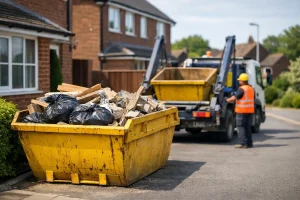
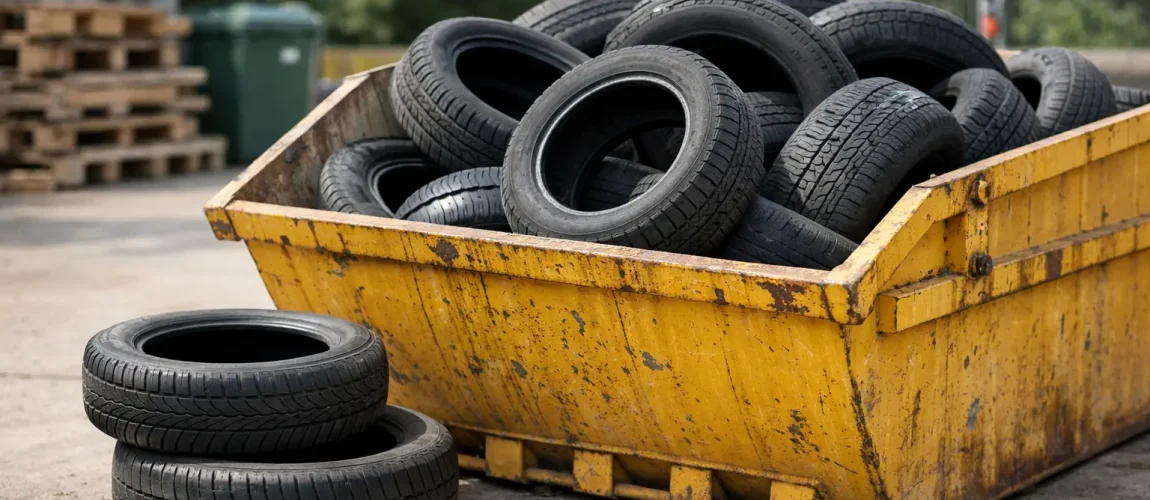
A lot of people only find out at the point of loading – they have cleared the garage, dragged the old car tyres out, and then stop to ask: can you put tyres in a skip? In most cases, no. Tyres are usually classed as a restricted waste item, which means they cannot go in with general mixed waste in a standard skip.
That catches out both household customers and trades. It is not about making disposal difficult. It is about how waste is processed after collection, what recycling facilities can accept, and what the law allows skip companies to handle in a general load. If you put tyres into a skip without checking first, the skip may not be collected until they are removed, or extra charges may apply.
Why tyres usually cannot go in a skip
Tyres need separate handling. They are not the same as wood, plasterboard, hardcore or general household waste. Once a skip reaches a licensed waste facility, tyres have to be separated and sent through a different disposal or recycling route.
That matters because tyres are made from tough mixed materials including rubber, steel and textile fibres. They do not break down like ordinary rubbish, and they cannot simply be buried with general waste. In the UK, whole tyres have long been restricted from landfill, which is why skip operators and waste facilities treat them as a specific waste stream.
For the customer, the practical point is simple: a skip is not a catch-all container for every type of waste. Some items need their own collection route, and tyres are one of them.
Can you put tyres in a skip if you tell the hire company first?
Sometimes, but only by prior arrangement.
If you tell the skip hire company in advance that you need to dispose of tyres, they may be able to advise on the right route. In some cases, they can arrange a separate charge or a different collection method. In others, they may tell you clearly that tyres cannot be accepted at all in the skip you have booked.
This is why it always pays to declare the waste type properly when booking. A small domestic clear-out can easily include awkward items such as tyres, paint, mattresses, fridges or petrol bottles. Each one has its own rules. Being upfront saves delays on collection day and avoids having to unload items later.
Why skip companies charge extra for tyres
People often assume this is just an added fee for the sake of it. It is not. Tyres cost more to process because they need specialist handling after collection.
Once removed from general waste, they are usually sent to facilities that can recycle or recover the materials properly. That might involve shredding, rubber recovery or treatment for reuse in other products and surfaces. The disposal route is more controlled, and the cost reflects that.
For local skip hire firms, compliance matters as much as convenience. A licensed operator has to account for what is collected, where it goes and how it is processed. That is one reason restricted items are separated from standard skip waste rather than mixed in and dealt with later.
What happens if you put tyres in a skip anyway?
It depends on when they are spotted and how many there are.
If the driver sees tyres in the skip at the point of collection, you may be asked to remove them before the skip can be taken away. If the skip reaches the waste facility and tyres are found during sorting, the load may attract additional charges. If there are several tyres or other prohibited items mixed in, it can create delays and complicate the disposal of the whole load.
For trade customers, this is more than a minor inconvenience. A delayed collection can hold up site clearance, affect access and disrupt the next stage of work. For household customers, it usually means extra time, extra cost and avoidable hassle.
The better way to dispose of old tyres
If you have old tyres to get rid of, the best option is to keep them out of the skip and arrange disposal through the correct route.
That may mean taking them to a local site that accepts tyres, returning them through a tyre fitter when buying replacements, or checking whether your waste provider can organise separate collection. The right option depends on whether the tyres are from a car, van, trailer or larger commercial vehicle, because acceptance rules and pricing can vary.
If you are already hiring a skip for a garage clear-out, garden project or renovation, mention the tyres when you request your quote. That gives the hire company a chance to advise you properly before delivery. It is much easier to plan this at the start than fix it once the skip is full.
What you can usually put in a skip instead
While tyres are generally not allowed, most standard skips are suitable for a wide range of common waste. That includes things like bricks, soil, rubble, wood, metal, old furniture, garden waste and general non-hazardous household or building materials, depending on the skip type booked.
The main thing is to match the waste to the skip and declare anything unusual. A mixed skip for a house clearance is different from a hardcore skip for a building job. Overloading a skip with the wrong material can cause collection issues even when the waste itself is permitted.
For example, a few broken paving slabs and bits of timber are straightforward. Add tyres, paint tins, asbestos sheets or electrical items without checking, and the job becomes more complicated. Good skip hire is not just about size. It is also about waste type.
Can you put tyres in a skip with other garage waste?
This is one of the most common situations. Someone is clearing a shed, garage or outbuilding and wants to throw everything in one place. Old tyres are often sitting alongside cardboard boxes, scrap wood, bike parts and broken tools, so it feels natural to load them all together.
But tyres still need to be kept separate. Even if the rest of the garage waste is fine for the skip, the tyres can still make the load non-compliant. The same goes for mixed workshop waste from small commercial units.
If you are clearing this type of space, it helps to sort into three groups before the skip arrives: waste that can go in the skip, waste that needs special disposal, and anything you may be able to recycle separately. That quick bit of sorting often saves money because you avoid paying skip space for items that should not be there in the first place.
Household jobs and trade jobs have the same rule
Whether you are a homeowner replacing tyres stored in the garden or a builder clearing a site compound, the answer is broadly the same. Tyres should not go into a standard skip unless the hire company has agreed it in advance.
The only difference is volume. A domestic customer might have two or four tyres from an old vehicle. A trade customer could have a larger number from ongoing work, in which case separate disposal becomes even more important. The more tyres involved, the less suitable a general skip becomes.
That is why clear communication matters. At Bushbury Skip Hire Ltd, we always recommend telling us exactly what waste you need to dispose of when booking so we can point you towards the most practical and compliant option for your job.
A quick word on compliance and responsible disposal
Most customers are not trying to bend the rules. They just want a straightforward way to get rid of bulky waste. Fair enough. But restricted items exist for a reason, and tyres are one of the clearer examples.
A reliable skip hire service should make this simple by being clear about what can and cannot go in the skip, collecting on time, and handling waste through the proper licensed route. That protects the customer as much as the operator. If waste is not declared properly at the start, the problem usually appears later when it is least convenient.
So, can you put tyres in a skip? As a rule, no – not in a standard skip with general waste. If you need to dispose of tyres as part of a larger clear-out, say so when you book. You will get the right advice, avoid collection problems, and keep the whole job moving without last-minute surprises.
If you are not sure whether an item counts as restricted waste, ask before the skip arrives. It is the quickest way to keep your project simple.