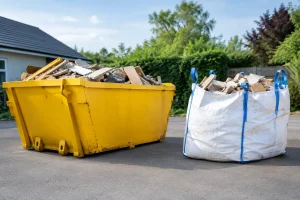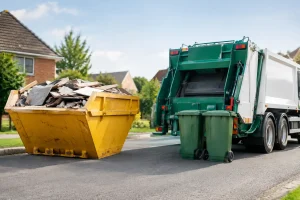
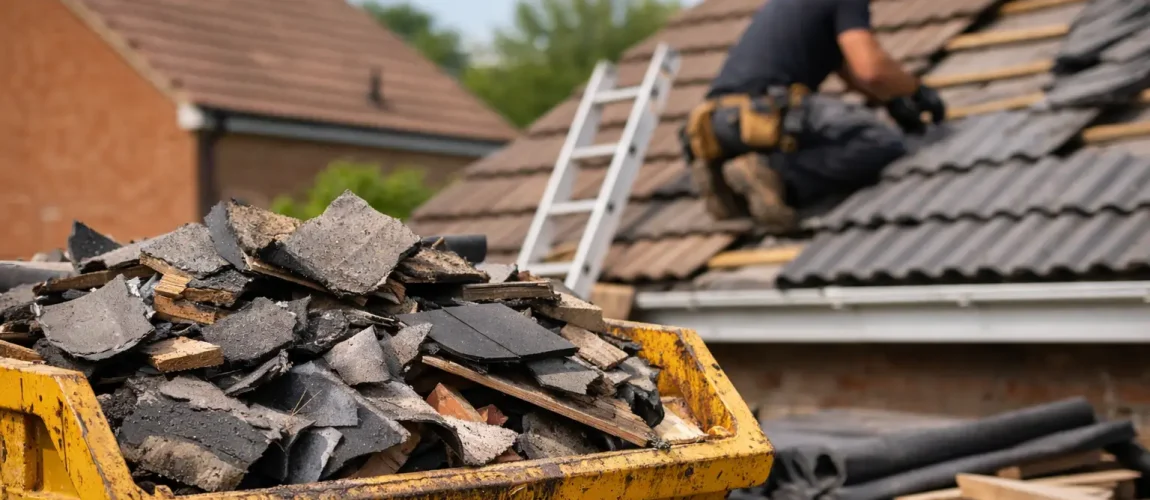
A roofing job gets messy quickly. Strip a garage roof or replace tiles on a house and you can go from a tidy driveway to a pile of broken tiles, felt, battens and packaging in a matter of hours. That is why arranging skip hire for roofing waste before work starts usually saves time, keeps the site safer and stops waste building up where you need to work.
Roofing waste is not all the same, though. The right skip depends on what is coming off the roof, how much of it there is, and where the skip will sit. If you are a homeowner planning repairs or a roofer trying to keep a job on schedule, it helps to get the basics right first time.
When skip hire for roofing waste makes sense
For most roofing work, a skip is the simplest option because waste is bulky, awkward and often heavier than people expect. Broken concrete tiles, ridge tiles, slates and old mortar soon add up. Even lighter materials such as underlay, felt and timber battens take up more room than most vans or trailers can sensibly carry once the job is underway.
A skip also keeps the site under control. Instead of piling waste in the garden or across the front drive, materials can go straight into one container as the roof is stripped. That matters on domestic jobs where access is tight, and on trade jobs where delays and double handling cost money.
There is also the compliance side. Roofing waste needs to be handled properly, especially when it includes mixed construction materials. Using a licensed skip hire company means the waste is collected, taken to a permitted facility and sorted responsibly rather than becoming a problem later.
What usually counts as roofing waste
Most standard roofing jobs produce a mix of inert and general building waste. That often includes concrete roof tiles, slate, clay tiles, timber battens, felt, insulation, lead flashing, nails, plastic wrapping and offcuts from repairs. Gutters and fascia boards may be part of the load too if they are being replaced at the same time.
The exact mix matters because weight changes everything. A skip full of old felt and timber is very different from a skip full of concrete tiles. Two jobs that look similar from the ground can need different skip sizes once you consider the material coming off.
If the roof is older, stop and check whether any specialist waste may be involved. Asbestos cement sheets are the main example on garages, sheds and some outbuildings. That cannot go into a standard mixed skip. It needs separate handling and the right disposal route, so it is always worth flagging this before booking.
Choosing the right skip size for roofing waste
The best size comes down to volume, weight and access. For a small repair, a smaller skip may do the job neatly without taking up more space than necessary. For a full strip and re-roof, going too small often creates more hassle than it saves.
A 2 or 3-yard skip can work for minor patch repairs, a small porch roof or a limited amount of broken tiles and felt. If you are replacing part of a garage roof or carrying out a tidy-up after a roofing job, these sizes are often enough.
A 4 or 5-yard skip is usually a sensible middle ground for domestic roofing work. If you are replacing a typical house roof section, removing old tiles from an extension, or dealing with mixed roofing waste plus packaging, this is often the range that gives you enough room without over-ordering.
A 6 or 8-yard skip is better suited to larger projects, but there is a catch. Roofing materials can be very heavy, so the issue is not just fitting everything in. It is also staying within safe loading limits. A bigger skip is useful when the waste is mixed and lighter overall, but for dense materials like tiles or hardcore, it may need to be filled only part way. That is why it helps to describe the waste properly when you ask for a quote.
If you are not sure, it is usually better to explain the job than guess the size. A local operator can tell you whether the material is likely to be limited by weight rather than space.
Heavy materials change the booking
Concrete tiles and slates catch people out all the time. They do not look excessive when stacked on the ground, but once loaded into a skip they become a heavy load very quickly. That can affect which size is suitable and how full it can be filled.
This is one of those jobs where cheaper is not always cheaper. Booking a large skip because it sounds safer can backfire if the waste is too dense for a full load. In many cases, a smaller skip or a planned exchange works better and keeps collection straightforward.
For builders and roofers, this is mainly about keeping the programme moving. For homeowners, it means avoiding the frustration of ordering the wrong thing and then needing a second collection at short notice.
Where the skip will go
Before you book, think about placement. Off-road positioning on a private drive is usually the simplest option because it avoids permit issues and makes delivery easier. It also helps keep access open if the roofing team needs ladders, scaffold or materials delivered at the same time.
If the skip has to go on the road, a permit may be required depending on the location. That needs arranging in advance, so leaving the booking until the day before the roofer arrives is risky. The same applies if access is narrow, there are parked cars nearby, or the property sits on a busy residential street.
A little planning here saves time. Measure the available space, think about where the lorry will approach from, and avoid placing the skip where it blocks access to the scaffolding or materials.
What you can and cannot put in the skip
Most non-hazardous roofing waste can go into a general builders’ skip, but it is still worth checking the load before it is collected. Tiles, slate, timber, felt, UPVC trims and general strip-out waste are commonly accepted. The issue is usually with restricted or specialist items mixed into the load.
Asbestos is the big one and should never be put into a standard skip unless it has been agreed as a specialist collection. Paints, solvents, chemicals, petrol bottles and some electrical items are also usually excluded. If the roofing job includes insulation boards, sealants or other site materials, mention them when booking so there is no confusion later.
Keeping the skip to the agreed waste type helps with responsible sorting and avoids delays or extra charges.
Booking skip hire for roofing waste in Wolverhampton
If your job is in Wolverhampton or the surrounding area, speed matters as much as price. Roofers work to weather windows, scaffold bookings and customer deadlines, so waste collection needs to fit around the job rather than slow it down.
A local provider such as Bushbury Skip Hire Ltd has the advantage of local operational control, straightforward scheduling and a licensed waste sorting facility in Wolverhampton. That means the process is simple – choose the skip size, confirm the waste type, set the delivery date and arrange collection once the work is done. For customers, the practical benefit is less chasing around and more confidence that waste will be handled properly.
It is also worth asking about recycling and licensing, especially on building waste. A company with the right waste carrier registration and permit-backed operations offers reassurance that the load is going through the correct channels.
A few practical tips before the roof comes off
Try to get the skip delivered before stripping starts, not halfway through the job. Roofing waste spreads fast, and loading as you go is easier than moving it twice. If scaffolding is being erected, make sure the skip placement still leaves safe working room.
Break down awkward items where possible, but do not overfill the skip above the sides. Collections need to be safe for transport, and overloaded skips can delay removal. If you expect more waste than planned, ask early about an exchange rather than trying to squeeze everything into one load.
For trade customers managing repeat roofing work, it often pays to build collection timing into the programme from the start. For domestic customers, the simplest route is usually to explain the roof type, the property size and what materials are coming off, then let the skip hire team point you in the right direction.
The best roofing jobs are the ones where waste never becomes a separate problem. Get the skip size, waste type and placement sorted early, and the rest of the job tends to run far more smoothly.