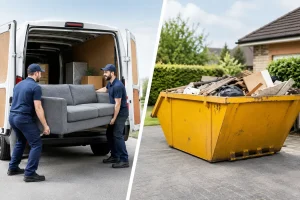
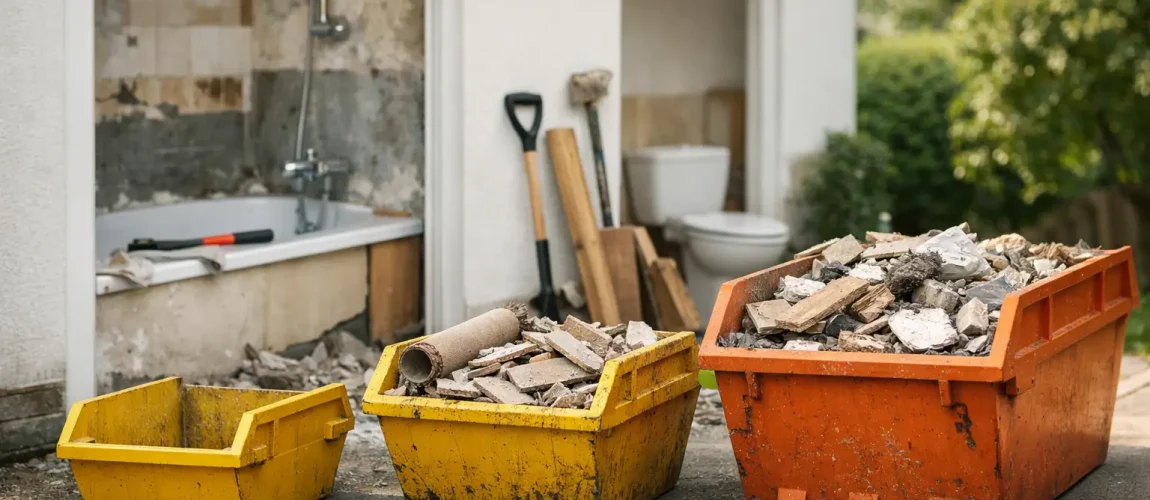
A bathroom rip-out creates more waste than most people expect. Once the old suite is out, you are usually left with broken tiles, plasterboard, timber, packaging, damaged flooring, old pipework and plenty of awkward rubble. That is why arranging skip hire for bathroom renovation work early can save time, keep the job tidy and stop waste building up in the drive or garden.
If you are renovating a small en suite, the amount of waste may stay fairly modest. If you are stripping out a family bathroom back to brick, replacing flooring and reboarding walls, it adds up quickly. The right skip depends less on the room itself and more on what you are removing, how far back you are taking it, and whether other jobs are being done at the same time.
Why skip hire for bathroom renovation makes sense
Bathroom waste is heavy, messy and rarely easy to stack neatly. Ceramic toilets and basins are awkward. Tiles and adhesive are dense. Timber battens, old boxing-in and plasterboard fill space faster than expected. Add packaging from the new suite, shower screen, vanity unit and fittings, and a few runs to the tip soon become a poor use of time.
A skip keeps the site cleaner and safer. That matters if you are living in the property during the work, or if trades need clear access. Instead of piling waste in rooms, hallways or outside walls, everything goes straight into one container and is collected when the job is done.
For landlords and builders, it is also the more practical option when turnaround matters. A delayed clear-out can slow the next trade. Having a skip on site means the strip-out can move quickly and the waste is dealt with properly.
What size skip for a bathroom renovation?
For most bathroom jobs, a 2-yard, 3-yard or 4-yard skip is the usual starting point. The best fit depends on the scale of the work.
Small bathroom or en suite
If you are replacing a few sanitary items, removing limited tiling and keeping most of the existing structure, a 2-yard skip may be enough. This suits smaller spaces where waste is mainly old fittings, tiles and packaging.
Standard bathroom refit
A 3-yard or 4-yard skip is often the sensible choice for a full bathroom renovation. If you are taking out the bath, toilet, sink, tiles, flooring and some wall materials, these sizes usually give enough room without paying for space you do not need.
Larger rip-out or combined jobs
If the bathroom is being renovated alongside a cloakroom, en suite or nearby room, stepping up to a 5-yard or 6-yard skip may be more cost-effective. The same applies if the project includes stud walls, more substantial flooring removal or a lot of boxed-in pipework.
The main mistake people make is choosing purely by room size. A small bathroom with floor-to-ceiling tiles and a solid floor can create heavier waste than a larger room with lighter materials. When in doubt, it is better to describe the job clearly when booking than guess from square footage alone.
What can go in a bathroom renovation skip?
In most cases, a bathroom renovation skip can take common non-hazardous building and household waste from the project. That typically includes ceramic sinks and toilets, baths, shower trays, tiles, wood, flooring, plastics, packaging, old units and general renovation debris.
Metal pipework and fittings are usually straightforward as well. Broken plasterboard, timber frames and non-electrical fixtures are common skip waste on this type of job.
There are limits, though, and they matter. Some items need separate handling because of waste regulations or safety requirements.
Items that may need special handling
Paints, solvents, chemicals, asbestos, electricals and certain hazardous materials should not be mixed into a standard skip. If your property is older, be cautious with anything suspicious around wall linings, insulation or textured coatings. A bathroom refit in a newer property is usually simpler, but older homes can throw up surprises.
If the renovation includes lighting, extractor fans or electrical components, ask before loading them. The same goes for any leftover adhesives, sealants or treatment chemicals.
The safest approach is simple: tell the skip provider what the job includes before delivery. That avoids rejected loads, wasted time and extra charges later.
Heavy waste changes the decision
Bathroom waste is not just bulky. It is often very heavy. Tiles, rubble, mortar, cement-based boards and ceramics can reach weight limits long before a skip looks full. That is one reason a smaller skip is often suitable for a bathroom renovation – especially where much of the waste is dense material.
This is also why overloading is a problem. A skip must be level loaded so it can be collected safely. If heavy waste is piled above the sides, the lorry may not be able to remove it until material is taken out. That creates delays you do not want when a project is on a tight schedule.
For trade customers, this matters even more. If a bathroom strip-out is one part of a wider refurb, mixing heavy inert waste with lighter packaging and timber can fill weight allowance quickly. Sometimes it is better to separate materials or book with the waste type in mind rather than treat everything as one mixed load.
Do you need a permit?
If the skip can sit on a private drive, permit requirements are usually more straightforward. If it needs to go on a public road, you will normally need a permit from the local council.
That is worth sorting before the bathroom is stripped out, not halfway through. Delays with road placement can leave waste sitting where nobody wants it. If access is tight, mention that when booking. Narrow drives, shared access and terraced streets often need a bit more planning.
For homeowners in Wolverhampton and nearby areas, this is one of the reasons using a local firm makes life easier. Local operators know the area, the access issues that come up and how to organise delivery and collection with less back-and-forth.
Timing matters more than people think
The best time to book skip hire for bathroom renovation work is usually just before the rip-out starts. Too early, and the skip sits there empty while you are waiting for trades or materials. Too late, and waste starts piling up indoors or outside the property.
A typical bathroom project creates most of its waste in two bursts. The first is the strip-out. The second is the packaging and offcuts that come with installation. If the whole job will move quickly, one skip at the start often works well. If works are staggered, speak to your provider about the most practical delivery window.
Reliable collection matters too. Once the old bathroom is out, nobody wants a full skip blocking the drive for longer than needed. Fast turnaround helps keep the site usable and stops the project dragging on around a pile of debris.
Cost versus convenience
People often compare the cost of a skip against doing a few trips to the household waste site. On paper, the trips can seem cheaper. In reality, time, fuel, queuing, loading and unloading soon add up. That is before you factor in restrictions on certain materials or the inconvenience of trying to transport broken ceramics and rubble in a family car or van.
For a straightforward bathroom renovation, the better question is usually not whether a skip is cheaper in the narrowest sense, but whether it keeps the job moving and avoids hassle. In many cases, it does.
The cheapest option is not always the best fit either. If a skip is too small and you need another one, the overall cost can rise. If it is far too big, you may be paying for capacity you do not need. Good value comes from matching the skip to the waste, not from choosing the lowest number available.
Choosing a local, licensed provider
Skip hire is one of those services where reliability shows up in the basics. Does the skip arrive when promised? Is the waste handled properly? Can you get clear advice on size, permits and what can go in? Those details matter more than flashy claims.
A licensed waste carrier with its own sorting facility gives customers more confidence that waste is processed responsibly. That is particularly relevant for renovation work, where mixed materials are common and proper downstream handling matters.
Bushbury Skip Hire Ltd works across Wolverhampton and surrounding areas, with a straightforward range of skip sizes for domestic and trade jobs. For bathroom projects, that local service can make booking simpler, especially when access, timing and waste type need a quick practical answer rather than a sales pitch.
If you are planning a bathroom renovation, think about the waste before the first tile comes off the wall. A well-timed skip keeps the job cleaner, safer and easier to manage from day one.