
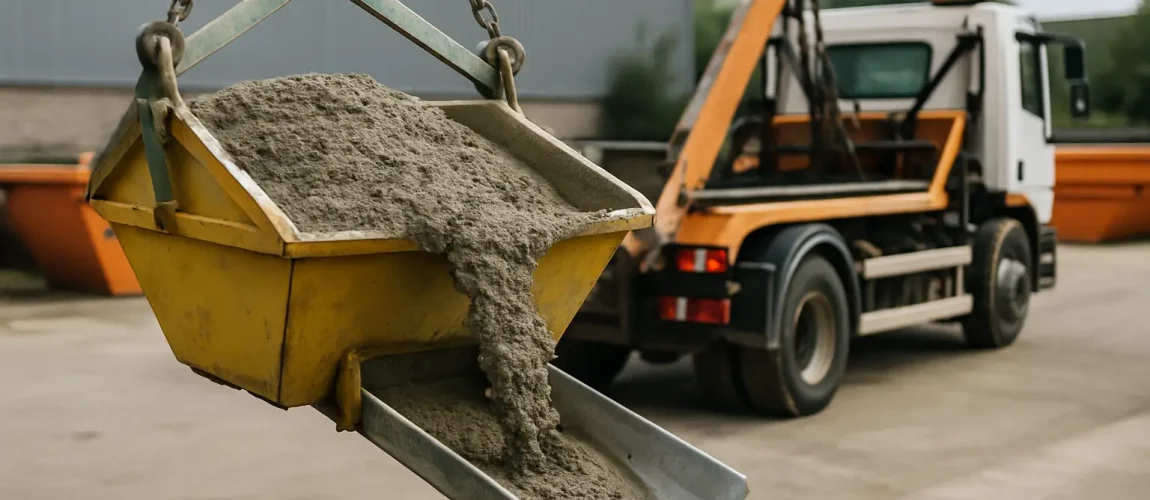
A few barrow-loads of broken concrete look harmless until you realise two things: it is heavy far quicker than it is bulky, and it is the one waste type that gets expensive when it is mixed or overfilled.
If you are breaking out a path, lifting a patio, removing a concrete base or clearing hardcore from a small building job, concrete skip hire is usually the cleanest way to keep the site moving. The key is choosing a sensible size, keeping the load to the correct waste type, and planning the placement so delivery and collection are straightforward.
What “concrete skip hire” really means
When people ask for concrete skip hire, what they normally need is a skip specifically for inert, heavy waste. That usually includes concrete and hardcore, and often also things like bricks, blocks, tiles, rubble and similar materials. It is different to a general mixed waste skip because the weight adds up quickly, and because clean inert loads can be processed differently at a licensed facility.
The practical bit for you is simple: if the waste is mostly heavy rubble, book for that waste type from the start. If you book a mixed skip and then fill it with concrete, you are likely to run into weight limits, collection issues and unexpected charges.
Why concrete needs a different approach
Concrete is dense. A skip that looks half full can already be at (or over) its safe lifting weight for the lorry. That is why smaller skips are often the right choice for concrete, even on bigger jobs.
There is also the issue of contamination. A clean load of concrete and hardcore is easy to handle and sort. Once it has wood, plasterboard, bags of soil, plastic, insulation or general rubbish mixed through it, it becomes slower to process and can be treated as mixed waste rather than inert. That affects cost and can delay collection if the load is not what was booked.
If you are working to a schedule, reliability matters. The simplest way to avoid problems is to keep your “heavy skip” genuinely heavy-only.
Choosing the right skip size for concrete and hardcore
Skip size for concrete is less about how much you can fit, and more about what the lorry can legally and safely lift. For most domestic and small trade jobs, you will usually be looking at a 2, 3, 4 or 5-yard skip for concrete. Larger skips exist, but with concrete they can become too heavy long before they look full.
2-yard skip
A 2-yard skip is a good fit for small, dense jobs: a short run of path, a few broken slabs, or a small concrete pad. It is also a sensible choice if access is tight and you want to keep the load very controlled.
3-yard skip
A 3-yard skip gives you a bit more breathing room and is popular for patio break-outs where you are lifting slabs and the concrete bed underneath. If you are unsure whether a 2-yard will be enough, moving up one size can prevent you needing a second hire.
4-yard skip
A 4-yard skip is often the “safe middle” for concrete: big enough to be useful, but still realistic to keep within weight limits if you do not overfill. It suits small renovation works and groundwork where you have rubble, blocks and broken concrete coming up steadily over a few days.
5-yard skip
A 5-yard skip can work well for trade jobs that generate a consistent amount of hardcore, but it depends on what is going in. If it is pure broken concrete, you will need to be disciplined about fill level. If it is a blend of lighter rubble, brick and small amounts of concrete, it can be a good option.
6 and 8-yard skips (and when they do not suit concrete)
A 6 or 8-yard skip is excellent for bulky, lighter waste like mixed building waste, timber, packaging and general clearance material. For concrete-only loads, these bigger sizes can be a false economy. You will hit the weight limit long before you fill the skip, and an overweight skip risks refused collection or additional charges.
If your project generates both heavy rubble and lighter renovation waste, it can be more cost-effective to separate it into two hires: one smaller skip for concrete and hardcore, and another for mixed waste. It sounds like more effort, but it usually keeps each load compliant and easier to price accurately.
Keep it clean: what you can and cannot mix with concrete
Most people get caught out not by the amount of concrete, but by what gets thrown in “just to tidy up”. If you are booking a concrete or hardcore skip, keep it strictly inert.
Concrete and hardcore loads are typically suitable for clean rubble like concrete, bricks, blocks and similar materials. Where people run into trouble is adding soil, green waste, plasterboard, wood, metal, cardboard, food waste or bagged household rubbish. Those items can change how the load must be handled.
If you are not sure whether something counts as hardcore, ask before you load it. It is much easier to book the right waste stream than to deal with a contaminated skip at collection.
Fill level and weight: the rule that saves most problems
With concrete skip hire, the safest rule is simple: do not overfill. Even if you think you are “only” putting rubble in, the skip must be level-filled so it can be sheeted and lifted safely.
If you heap concrete above the sides, it is not just a policy issue. It can be a safety issue on the road and a lifting issue on site. In practice, a level load protects you from refused collection and protects your job from delays.
If you are breaking up larger pieces, it also helps to lay them evenly rather than stacking heavy chunks on one side. A balanced load makes collection smoother.
Where the skip will sit: driveway vs road
The easiest placement is always private land such as a driveway. It avoids the need for a council permit and reduces the risk of cars blocking access.
If the skip needs to go on the road, you may need a permit depending on the location. Permit rules vary by council and street, so it is worth raising this at the point of booking so the delivery date is realistic.
Access matters as much as permits. If you have a narrow entry, low wall, parked cars or restricted turning space, mention it. Concrete skips are heavy even when empty, and the lorry needs safe access to drop and collect without risking damage.
How long you should hire the skip for
Concrete work is often done in stages: break-out one day, load and tidy the next. A realistic hire period stops you rushing and overfilling.
That said, you do not want a heavy skip sitting around longer than necessary if you need the space back or if you are working on a live driveway. If you can time delivery for when the break-out starts, and book collection shortly after loading, the whole job stays neat and predictable.
Pricing: what changes the cost of concrete skip hire
Concrete skip hire pricing is mainly driven by three things: the skip size, the waste type, and the expected weight. Clean inert loads are generally straightforward, but the price can change if the load is contaminated or overweight.
If you are comparing quotes, make sure you are comparing like-for-like: the same size, the same waste type, and a clear allowance for heavy material. The cheapest price on a mixed skip is not a saving if you are filling it with concrete.
A local operator with their own licensed waste sorting facility can usually give clearer guidance on what happens to the waste and how it is processed, because the load is not just being passed around. Bushbury Skip Hire Ltd operates locally across Wolverhampton and surrounding areas and handles collection and sorting through its Wolverhampton facility, which helps keep service reliable and waste processing accountable.
A simple booking checklist that avoids delays
Concrete skip hire is at its best when it is boring: drop it, fill it, collect it. To keep it that way, be ready with a few details when you book.
You will want the delivery postcode and any access notes, the waste type (concrete/hardcore), the skip size you think you need, and whether it will be on private land or the road. If you can also give a preferred delivery day and a rough idea of when it will be ready for collection, scheduling becomes much easier.
If you are mid-job and unsure on size, describe the work rather than guessing yardage. “Breaking up a 4m x 3m patio base” is more useful than “maybe a medium skip”.
Trade-offs and “it depends” scenarios
Sometimes a single concrete skip is not the right answer. If you are lifting a patio that has a lot of soil under it, soil can quickly become its own heavy waste stream. If you are doing an internal rip-out at the same time, plasterboard and timber should not be mixed into hardcore. In those cases, separating waste can feel like overkill, but it often reduces overall cost and stops the job stalling when a load is rejected.
There is also the question of space. If you only have room for one skip, you may need to prioritise. Many customers choose to clear the heavy concrete first, get that collected, then bring in a second skip for lighter renovation waste. It is not as convenient as having two on site, but it works well on tight driveways.
Closing thought
Concrete is one of those materials that rewards planning: pick the right size, keep the load clean and level, and your skip hire becomes the easiest part of the job rather than the thing that slows it down.