
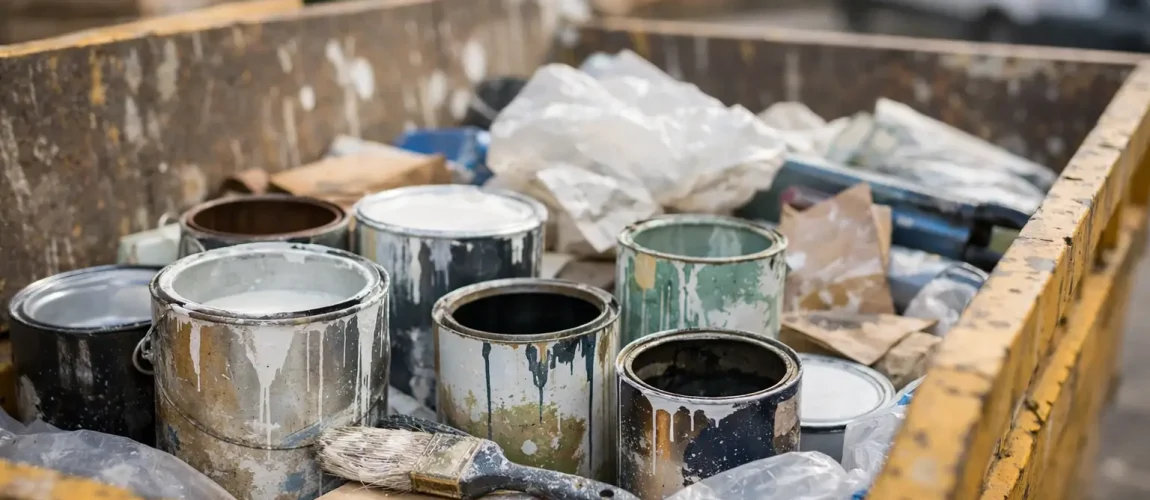
A half-used tin of paint seems like a small thing when you are clearing a house or renovating a room, but it can cause a big problem in a skip. So, can paint be put in skips? In most cases, wet or liquid paint should not be placed in a skip. Dried-out paint tins may be acceptable, but you should always check with your skip provider before loading them.
The reason is straightforward. Liquid paint can leak into the skip, contaminate other waste and make sorting far more difficult at the waste facility. It can also create issues during transport. A few minutes spent dealing with paint properly can prevent a rejected collection, an extra charge or a messy skip full of material that cannot be recycled as planned.
Why wet paint is usually not allowed in a skip
Skips are designed for solid waste: timber, bricks, soil, garden waste, old furniture, plasterboard and general household or builders’ waste, depending on the service booked. Wet paint is different because it is a liquid product, even when the lid is firmly on.
If a tin tips over, rusts through or is crushed beneath heavier items, paint can escape. That contamination can spread through wood, cardboard, rubble and other materials that might otherwise have been separated for recycling. Oil-based paints, varnishes, wood stains, thinners and solvents need particularly careful handling because they may contain flammable or hazardous substances.
Water-based emulsion is generally less hazardous than solvent-based paint, but it still should not be poured into a skip. It may leak, and no responsible waste operator wants unknown liquids mixing with a load. Never pour leftover paint down a drain, onto the ground or into a watercourse either. It can damage pipes and harm the local environment.
Can paint be put in skips once it is dry?
It depends on the type and amount of paint, as well as the rules set by the skip hire company and the receiving waste facility. A completely empty tin with a small amount of hardened residue is often easier to handle than a full or partly full tin of wet paint. However, acceptance is not automatic.
Before putting dried paint tins in your skip, let your provider know what you have. This is especially worthwhile if you are clearing a garage, workshop, rental property or commercial unit where there may be several old tins with unclear labels. A quick check before delivery is much simpler than finding out at collection that the load contains prohibited waste.
For one or two tins of ordinary, fully hardened household paint, the best route may vary. For larger quantities, such as surplus decorating materials from a refurbishment or site clearance, you may need a separate disposal arrangement. Tradespeople should take extra care, as mixed paint waste from a job can include primers, sealers, adhesives and solvent products as well as standard wall paint.
Do not assume a closed tin is safe for a skip
A lid on the tin does not make wet paint suitable for disposal in a mixed waste skip. Lids can come loose when waste is moved, and tins may be punctured by sharp materials. If you have paint that is still usable, keeping it for touch-ups, giving it to someone who can use it or taking it to an appropriate reuse point can be a better option than disposing of it.
How to deal with leftover paint safely
Start by separating the tins into usable paint, dried paint and liquid paint. Read the label where possible. It should tell you whether the product is water-based or solvent-based and may include disposal guidance from the manufacturer.
Usable paint should be stored upright with the lid tightly secured, somewhere cool, dry and out of reach of children. If you no longer need it, a neighbour, family member, community group or local reuse project may be able to make use of it. This can be particularly helpful with neutral colours, white emulsion and masonry paint.
For small amounts of water-based paint, it may be possible to allow it to dry out completely before disposal. Leave the lid off in a well-ventilated area away from children, pets and flames. You can add an appropriate absorbent material, such as paint hardener or cat litter, to help small leftover amounts solidify. Do not try this with large volumes, and do not mix different chemicals together.
Solvent-based paint, thinners, white spirit, varnish and similar products should be kept in their original containers and taken to a suitable household waste recycling centre or hazardous waste service. Check the local site’s current rules before travelling, as what it accepts can change and some sites have restrictions for trade waste.
Paint waste during a house clearance or renovation
Paint often turns up late in a project. You have filled the skip with old kitchen units, flooring, bags of rubbish and garden cuttings, then find a shelf of tins in the shed. That is why it helps to check garages, cupboards, lofts and outbuildings before ordering a skip.
Set paint aside from the rest of your waste and tell the skip hire company about it when booking. Be clear about roughly how many tins you have, whether they are full, and whether any are labelled as oil-based, solvent-based or industrial coatings. Honest information means you can be given the right advice from the start.
For most domestic clearances, a 2-yard, 4-yard or 6-yard skip can make short work of solid household and renovation waste. An 8-yard skip is often a practical choice for larger refurbishment jobs and builders’ waste. The right size depends on the volume of solid material you have, not on whether you are trying to dispose of paint. Paint should be dealt with separately unless you have been told in advance that specific dried tins can be included.
Keep the skip load safe and collectable
Even acceptable waste needs loading properly. Keep heavy materials low down, spread the load evenly and do not overfill above the skip’s rim. Overfilled skips may be unsafe for the lorry to transport. Bag loose light waste where practical, and keep prohibited items out of the skip from the outset.
Common restricted items can include gas bottles, tyres, fridges and freezers, batteries, asbestos, electrical items, chemicals and liquids. Rules can differ according to the waste stream and disposal facility, so asking before you book is always the sensible approach. It protects you from delays and helps ensure the waste can be handled legally.
A practical approach for Wolverhampton customers
If you are hiring a skip in Wolverhampton or the surrounding area, make paint part of your disposal plan rather than an afterthought. Take a look at what is in the tin, decide whether it can be used, dried safely or taken to a recycling centre, and keep it separate from the skip until you have received clear advice.
Bushbury Skip Hire can help customers choose a skip size for the solid waste from house clearances, garden work, renovations and building jobs. Being upfront about anything unusual in the load is the quickest way to keep the booking straightforward and avoid problems on collection day.
A skip saves repeated tip runs and keeps a job moving, but it works best when the waste inside is suitable for it. Put the bricks, timber, furniture and general clearance waste in the skip, and give paint the separate, careful disposal it needs.