
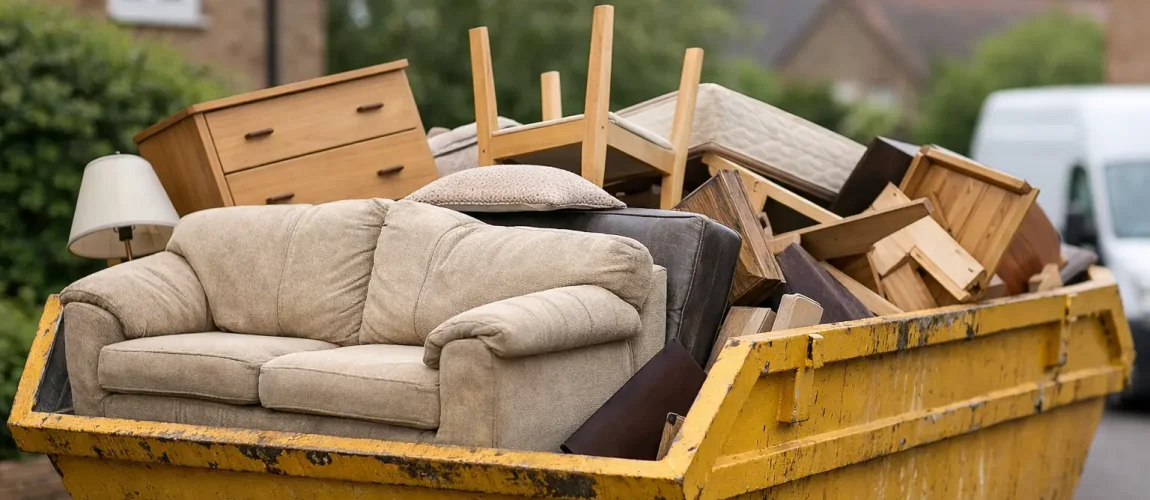
That old sofa in the garage, the broken wardrobe from the spare room, the dining chairs nobody wants – this is usually the point people ask, can you put furniture in a skip? In most cases, yes. But it depends on what the furniture is made from, whether it contains restricted parts, and how much space it will take up compared with the size of skip you have booked.
For household clear-outs, landlord jobs, refits and renovation work, furniture is one of the most common types of bulky waste. The key is making sure it is the right kind of furniture for general skip disposal and that you are not mixing in anything that falls under separate disposal rules. A wooden chest of drawers is very different from a fridge-freezer, and a simple bed frame is not the same as a recliner with electrical parts.
Can you put furniture in a skip? What usually goes in
Most everyday furniture can go in a skip without a problem. That includes wood, metal and mixed-material items such as tables, desks, wardrobes, cabinets, shelving units, bed frames and garden furniture, provided they do not contain prohibited components.
If you are clearing a house, flat or rental property, items like broken drawers, sideboards, coffee tables and standard dining furniture are generally acceptable. The same applies on many commercial jobs where offices or site cabins are being stripped out and old desks, shelving and seating need removing.
The main practical issue is not usually whether the item counts as furniture. It is whether the item contains something that needs separate handling. Upholstered items, electrical parts and hazardous materials are where people can come unstuck.
Furniture items that may need checking first
Some furniture is straightforward. Some is not. If an item has fabric, foam, springs, batteries, electrics or petrol parts, it is worth checking before it goes in.
Sofas and upholstered seating
Sofas, armchairs, padded dining chairs and other upholstered furniture may be accepted, but they often need specific confirmation. Waste rules around upholstered domestic seating have tightened in recent years because some items may contain persistent organic pollutants in the foam. That does not mean they can never be taken away in a skip, but it does mean you should not assume they are treated the same as a plain wooden table.
If you are disposing of upholstered furniture, the safest approach is to say so when you book. That way the correct advice is given from the start and there are no delays when the skip is collected.
Electrical furniture
Anything with plugs, wiring, motors or built-in lighting should be treated separately unless you have been told otherwise. A rise-and-recline chair, an illuminated bathroom cabinet, or office furniture with electrical fittings may fall into a different waste stream.
The same goes for furniture that includes battery packs or charging points. These parts can affect how the waste must be processed.
Refrigerated and petrol-assisted items
Appliances are not furniture, but they often get mixed in during clear-outs. Fridges, freezers and anything containing refrigerants should never be dropped into a general mixed waste skip unless specifically agreed. Petrol lift storage beds or chairs with pressurised components can also need checking.
If you are clearing a property quickly, it helps to separate true furniture from white goods and restricted items before the skip arrives.
What cannot go in with furniture
A skip used for furniture should still follow the usual waste restrictions. The most common banned or restricted items include asbestos, paint and solvents, tyres, petrol bottles, batteries, plasterboard in mixed loads, and many electrical goods. Mattresses can also be subject to separate charges or handling requirements depending on the load.
This catches people out during full house clearances. They throw in furniture, then add leftover tins from the shed, a few old car tyres, a broken microwave and a mattress on top. At that point, the issue is not the wardrobe or table. It is the non-compliant extras mixed around them.
If you are unsure, ask before loading. It is quicker than repacking a skip later.
How to load furniture into a skip properly
Furniture fills space quickly, especially bulky items that trap air. A skip that looks large enough on paper can disappear fast once sofas, cupboards and bed bases go in whole.
Breaking larger items down makes a big difference. Remove table legs, dismantle wardrobes, flatten bed frames where possible and take doors off cabinets. This helps you use the skip space more efficiently and can reduce the risk of overfilling.
Try to load the heaviest and flattest items first. Keep everything below the fill line. Skips cannot be collected safely if waste is sticking up above the top, even if it seems stable from the ground. A collection may have to be delayed until the load is levelled off, and that creates extra time and cost nobody wants.
Furniture can also be heavier than expected, especially solid wood items. A few flat-pack units are one thing. A full load of oak wardrobes and desks is another. Skip size and weight allowance both matter.
Choosing the right skip for furniture waste
For a small clear-out with a few chairs, a bedside unit and a dismantled chest of drawers, a mini skip may be enough. Once you are dealing with multiple rooms of old furniture, landlord strip-outs or renovation waste mixed with household contents, you usually need more room.
As a rough guide, smaller skips suit light domestic clearances and single-room jobs. Mid-size skips are often the practical option for mixed furniture and general waste from a house clear-out. Larger skips can work well for substantial refits, site clearances and bulky loads, but the waste type still needs to be right.
There is always a balance between volume and weight. Furniture tends to be bulky first and heavy second, unless it is made from dense timber or includes metal frames. Hardcore and soil are weight-led. Furniture is more often a space problem. That is why describing the load properly when booking matters.
If you are in Wolverhampton or the surrounding area and need a straightforward answer on what size to order, giving a simple list of what is going – for example one sofa, two wardrobes, a dining table and six chairs – is far more useful than guessing by eye.
House clear-outs, landlord jobs and trade work
The answer to can you put furniture in a skip also depends on the job type.
For domestic customers, the most common scenario is a loft, garage or whole-house clear-out. In these cases, furniture is often mixed with general rubbish, old toys, broken shelving, carpets and garden waste. That mix can usually be managed, but only if the restricted items are kept out.
For landlords, end-of-tenancy clearances often involve damaged furniture left behind by tenants. Speed matters here, but compliance still matters as well. Upholstered items, mattresses and electrical furniture are the usual points to flag early.
For builders and trades, furniture disposal often comes up on strip-outs, office refits and shopfitting work. Bespoke counters, fitted storage and old workstations may look like simple timber waste, but laminate finishes, wiring and mixed materials can affect how the load should be handled. If the waste is coming from a commercial site, it is worth being precise from the outset.
Why asking first saves time
Most skip problems are not caused by people trying to do the wrong thing. They happen because someone assumes all bulky waste is the same. It is not. A broken bookcase is simple. A recliner chair with electrics is not. A timber bed frame is straightforward. A mattress and divan base may not be.
Getting clear advice before delivery saves hassle on collection day. It also means the waste can be processed properly through a licensed facility rather than being rejected because prohibited items have been mixed in.
At Bushbury Skip Hire, loads are handled through our own licensed waste sorting facility in Wolverhampton, with a recycling target of at least 90%. That only works well when the waste has been described accurately in the first place. If you tell us what furniture you are getting rid of, we can point you towards the right skip and let you know if anything needs separate handling.
If you are staring at a pile of old furniture and wondering whether it can all go together, the short answer is usually yes for standard items, but not always for everything around them. A quick check before you load is the easiest way to keep the job moving.