
A skip that is too small usually costs more than a skip that is slightly too big. That catches people out all the time. When customers look for the top ways to reduce skip costs, they often focus on the hire price alone, but the real savings usually come from getting the size, waste type and timing right from the start.
If you are clearing a garden in Wolverhampton, stripping out a kitchen, or managing waste from a building job, a cheaper quote on paper can quickly become expensive if you need a second skip, go over weight limits, or load the wrong material. The aim is not just to find a low headline price. It is to avoid the extra charges and delays that make the job cost more overall.
Top ways to reduce skip costs before you book
The first and most effective step is choosing the correct skip size. Hiring too small to save money often backfires because one extra collection or a second skip costs more than sizing up at the beginning. A 2-yard or 3-yard skip can be ideal for small clear-outs and garden jobs, while 4, 5 and 6-yard skips suit most domestic renovation work. For larger house clearances or bulky mixed waste, an 8-yard skip is often better value than trying to squeeze everything into something smaller.
This is where honest volume estimates matter. If you are unsure, describe the job properly when requesting a quote. Saying “a bit of rubble” is not the same as “half a patio and six fence panels”. The more accurate the description, the easier it is to match the right skip without paying twice.
It also helps to think in terms of waste type, not just space. Heavy materials such as soil, bricks, concrete and hardcore fill weight limits far faster than they fill the skip. Lighter mixed waste from a garage or loft clear-out takes up more room but may stay within weight allowances. The cheapest option depends on what you are throwing away.
Separate heavy waste from general waste
One of the best ways to reduce skip costs is to avoid mixing everything together if the job includes dense materials. If you put soil, rubble, plasterboard, timber, packaging and household junk into one skip, you can end up paying more because the waste is harder to process and more likely to hit weight restrictions.
For many jobs, separating waste streams keeps the price under control. A smaller skip for hardcore or soil and another for lighter mixed waste can work out better than one overloaded mixed skip. It depends on the job, but the key point is simple: heavy waste is where costs can rise quickly.
This matters even more on trade jobs. Builders and landscapers usually know that muck-away style waste, concrete and brick need a different approach from general site clearance. Domestic customers doing driveways, garden levelling or wall removals can save money by following the same logic.
Do not pay for a permit if you can avoid one
If the skip can go on a private drive or other suitable private land, that usually helps keep costs down. Putting a skip on the public highway often means a council permit is needed, and that adds both time and money.
Not every property has space for off-road placement, so this is not always possible. But if you can move a car, clear a section of driveway, or make room on private land, it is worth doing. It can reduce the overall price and make delivery easier as well.
There is also a practical benefit. A skip on your own property is easier to keep an eye on. That lowers the chance of neighbours or passers-by dropping in extra waste, which is another common reason a skip fills up too fast.
Keep the hire period sensible
Hiring a skip for longer than you need can increase costs, especially on busy schedules where turnaround matters. A lot of customers book early “just in case” and then leave the skip sitting half-empty for days before the work begins.
A better approach is to line the skip up with the stage of the job when waste will actually be produced. For a bathroom refit, that might be the strip-out day. For a garden clearance, it could be the weekend when labour is available and the weather looks reasonable. For building work, plan it around demolition or waste-heavy phases rather than the whole project.
Shorter, better-timed hire often works out cheaper than a long booking that drifts. It also helps avoid another issue: if a skip sits out too long, other people may add their rubbish to it.
Load the skip properly
Bad loading wastes space. Good loading saves money. That sounds basic, but it makes a real difference.
Break down bulky items where safe to do so. Flat-pack units, fence panels, old sheds and cardboard boxes take up far less room when dismantled. Put flat items at the bottom and load evenly across the skip rather than creating one high pile in the middle. If the skip is filled with awkward gaps and air pockets, you are paying to transport empty space.
At the same time, do not overload it. Material should not be stacked above the sides because an overfilled skip may not be collected until it is made safe, which can mean delay and extra hassle. Saving money is about using the available space well, not forcing in more than the skip can legally carry.
Know what cannot go in
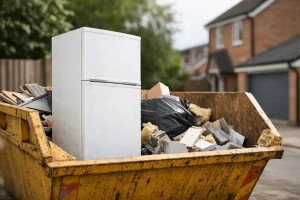
A simple way to avoid surprise charges is to check restricted items before the skip arrives. Certain materials need separate disposal routes because of environmental rules or handling requirements. That can include items such as tyres, fridges, mattresses, electricals, paint, gas bottles and hazardous waste.
If those items are mixed into the load without saying so, collection or sorting becomes more complicated and costs may rise. Compliance is part of keeping the job affordable. Legitimate operators have to process waste properly, and there is a cost attached when prohibited or specialist items turn up unexpectedly.
If you are not sure about a material, ask before booking. That five-minute check can stop a much more expensive problem later.
Compare value, not just the headline price
Cheap skip hire is not always cheap in practice. The lowest quote can end up costing more if it excludes key details such as permit handling, delivery area, collection terms, weight limits or waste restrictions.
When comparing prices, look at what is actually included. A straightforward quote with clear guidance is often better value than a lower starting figure that leaves room for add-ons. This is especially important for landlords, builders and businesses booking regularly. Reliable scheduling and compliant waste handling matter because delays on site cost money too.
Local service can help here. A genuine local operator with control over delivery and waste handling is usually in a better position to give practical advice and stick to agreed timings than a broker passing the job elsewhere. Bushbury Skip Hire Ltd handles waste through its own licensed sorting facility in Wolverhampton, which helps keep service reliable and disposal responsible.
Share a skip only if the waste is compatible
People sometimes ask whether sharing a skip with a neighbour reduces costs. It can, but only when the waste types and timing make sense. If both households have light mixed waste from clear-outs and the skip will be filled at the same time, the numbers can work well.
If one side has soil and rubble and the other has furniture, timber and general rubbish, the plan gets messier. Weight, loading order and responsibility for prohibited items all become harder to manage. Shared skips save money when they are planned properly. Without that, they can create arguments and extra charges instead.
Get the waste ready before delivery
Preparation saves money because it shortens the job and helps you book the right size. If you sort waste into piles before the skip arrives, you can see more clearly how much space you actually need and whether any items need separate disposal.
This is useful for homeowners and trades alike. Clear out the obvious non-skip items first, stack waste neatly, and decide what is definitely going. That avoids paying for a larger skip because the job looked bigger in a rush than it really was.
It also means the skip can be filled quickly once delivered, which is useful if access is tight or the work needs to move on without delay.
Ask for advice instead of guessing
A skip is one of those services where a quick phone call can save more than bargain hunting. If you explain the job clearly, a good provider can usually tell you where customers tend to overspend. Sometimes the answer is a smaller skip. Sometimes it is a larger one to avoid needing two. Sometimes it is separating heavy waste. It depends on the material, access and how fast the work is moving.
That practical advice is often where the best savings are found. Not in cutting corners, but in avoiding the common mistakes that push the bill up.
If you want to keep skip hire affordable, think beyond the base price. The real savings come from matching the skip to the waste, loading it properly, and booking with enough guidance to get it right first time.