
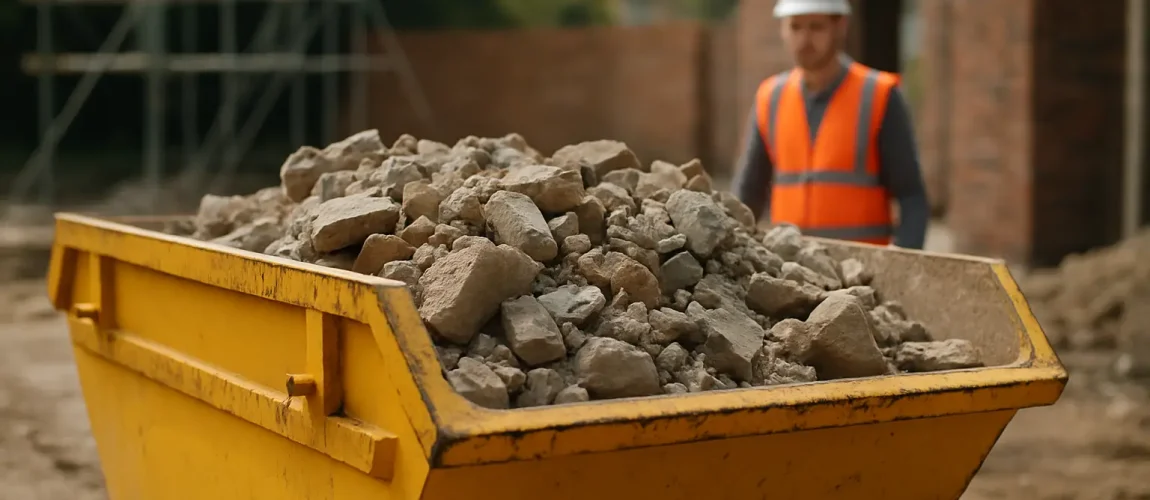
If you have got rubble piling up after knocking through a wall, lifting a patio, or stripping out a kitchen, the tidy-up stage can stall the whole job. Builder’s waste is bulky, heavy, and awkward to move in car loads. That is exactly where a builder’s skip comes in – it is the “workhorse” skip size that suits most renovation and building projects without taking over your drive.
What is a builders skip?
A builder’s skip is a mid-to-large skip designed for building and renovation waste – think bricks, blocks, hardcore, tiles, broken slabs, timber, plasterboard and mixed construction debris. In the UK, when people say “builder’s skip” they are usually referring to a 6-yard skip, and sometimes an 8-yard skip depending on the job.
It sits in the sweet spot between small domestic skips (great for light waste and small clear-outs) and the bigger enclosed skips used for high-volume, lighter waste. Most trade jobs and serious DIY projects produce waste that is both bulky and heavy, so the builder’s skip is sized to take a worthwhile amount without breaching sensible weight limits.
Why builder’s skips are so common on jobs in Wolverhampton
On local building jobs, the waste mix is rarely neat. One day it is old plaster and timber. The next it is bricks and broken concrete. A builder’s skip gives you enough capacity to keep the site moving, but it is still manageable to place on a drive or outside a property.
It also cuts down on repeated trips to the tip. That matters if you are working to a deadline, or you are trying to keep neighbours happy by reducing traffic and mess.
Typical builder’s skip sizes (and what they suit)
Although “builder’s skip” often means a 6-yard, the right size depends on how much space you have and the type of waste.
6-yard skip – the classic builder’s skip
A 6-yard skip is the most common choice for renovations and general building work. It suits projects like:
- Kitchen or bathroom rip-outs
- Removing internal walls (non-structural waste)
- Small-to-medium extensions once you are past the excavation stage
- Patio or driveway removal in sections
- General site waste for a small building team
It is big enough to be useful, but not so big that it encourages overloading with heavy rubble.
8-yard skip – when the job is bigger
An 8-yard skip gives you extra volume for bulkier waste. It is often chosen for larger renovations, bigger clearances, and jobs where you know you will have a lot of mixed waste.
It can be a good fit if the waste is a mix of lighter materials (timber, packaging, insulation) with some heavier items. If it is mostly bricks, soil, clay or concrete, the weight becomes the limiting factor long before the skip looks full.
What about 10-yard skips?
A 10-yard skip is sometimes referenced during booking because it can be useful for high-volume, lighter waste. It is not always the right choice for builder’s rubble-heavy waste, simply because the weight can exceed what is safe and compliant to transport. If you are unsure, it is better to describe the waste honestly and match the skip to the job.
Weight limits – the part most people only learn the hard way
With builder’s skips, the key issue is not just “how much fits”, it is “how heavy it is once it is in”. Hardcore, bricks, concrete, soil and clay add up very quickly.
A skip can look only half full and still be overweight if it is loaded with dense material. Overweight skips can cause problems at collection time, including the need to remove material or rebook. It is also a safety issue for the lorry and the road.
If your project involves a lot of excavated spoil or rubble, the most cost-effective approach is often a dedicated rubble skip (or more frequent collections) rather than trying to cram everything into one large skip.
What can go in a builder’s skip?
Most construction and renovation waste is fine, as long as it is declared correctly and loaded safely. Typical accepted waste includes:
- Bricks, blocks and broken concrete
- Rubble and hardcore
- Tiles, ceramics and bathroom suites (broken down sensibly)
- Timber, old units and fitted furniture
- Plaster and plasterboard (often needs to be separated or charged differently)
- Bagged general building waste
The main rule is simple: if it comes from building, renovating, repairing or stripping out, it is usually suitable – but the waste type still matters for pricing and for compliant handling.
What should not go in a builder’s skip?
Some items need separate disposal because they are hazardous, regulated, or cause issues in the waste sorting process. The most common problem items are:
- Asbestos and anything suspected to contain it
- Paints, solvents, oils and chemicals
- Petrol bottles and pressurised canisters
- Tyres and batteries
- Fridges, freezers and some electrical items
If you come across something questionable mid-job, do not bury it in the skip and hope for the best. Ring your skip provider and you will get a clear answer on the correct route.
How to load a builder’s skip properly (so it gets collected first time)
A builder’s skip is only helpful if it can be collected safely and legally. Most collection issues come down to loading.
Start with the heaviest items at the bottom and spread them out. That keeps the load stable and stops one side becoming too heavy for the lorry to lift. Break down awkward items where you can – old cabinets, doors and long lengths of timber waste a surprising amount of space if they are thrown in whole.
Keep everything level with the top edge of the skip. If waste is sticking up above the sides, it may need to be removed before collection. That is not nit-picking – it is about road safety. Loose material can fall during transport, and an uneven load can be dangerous when the skip is lifted.
If you are disposing of rubble and soil, consider loading it in stages and checking how quickly the skip is “weighting up”. The aim is to use the capacity efficiently without pushing it past transport limits.
Do you need a permit for a builder’s skip?
If the skip will sit on private land (a driveway or yard), you usually do not need a permit. If it needs to go on the road, verge, or pavement, you will normally need a council permit.
Permits are not just a box-ticking exercise. They are there to manage placement, lighting, and public safety. If you are not sure whether your placement counts as “on road”, describe the location clearly when booking.
Space also matters. A builder’s skip needs clear access for a lorry to drop it off and collect it. Tight streets, parked cars, or low branches can affect where it can go, so it is worth thinking about access before delivery day.
Choosing the right skip size for your job
If you are deciding between a 6-yard and an 8-yard, the waste type is your best guide.
If the job is rubble-heavy (brickwork, concrete, soil), a 6-yard is often the safer, more practical option because it reduces the risk of overloading. If the job is bulky but lighter (timber studwork, old wardrobes, packaging from new materials), the 8-yard can make sense because you will fill it by volume rather than weight.
For house renovations, it also depends on how you want to work. Some people prefer one skip swapped as they go, keeping the site tidy throughout. Others prefer to stack waste and book one larger skip at the end. The first approach can cost a little more in collections, but it usually keeps the job moving and the property safer.
One local point that makes a difference: what happens after collection
It is easy to treat skip hire as “out of sight, out of mind”, but how the waste is handled matters. A licensed operator should be able to explain where your waste goes and how it is processed.
At Bushbury Skip Hire Ltd, waste is handled through a licensed sorting facility in Wolverhampton, with a recycling target of at least 90% where the material allows. That facility-backed setup is one of the reasons local customers value reliability – it is not just a skip dropped on a drive, it is a managed disposal route backed by permits and proper sorting. If you need a builder’s skip locally, you can book or request a quote at https://www.bushburyskiphire.co.uk.
The trade-offs to be aware of
A builder’s skip is a solid default, but it is not always the cheapest or easiest option in every scenario.
If your waste is almost entirely soil, clay or concrete, you may be better off with a smaller skip collected more frequently. It can work out simpler and avoids delays caused by overloading. On the other hand, if you have a lot of mixed waste and limited time, a larger builder’s skip can reduce disruption, especially on a busy site.
There is also the placement question. A larger skip can be convenient, but if it forces you onto the road (and into a permit), the overall cost and hassle can increase. Sometimes the right answer is the biggest skip you can fit on private land.
Choosing well is mostly about being honest about the waste and thinking one step ahead: how the skip will be filled, where it will sit, and whether you will need a second collection.
If you are staring at a growing pile of rubble and thinking “this is getting out of hand”, that is usually the moment to book – not when the waste has already blocked access and slowed the job down.