
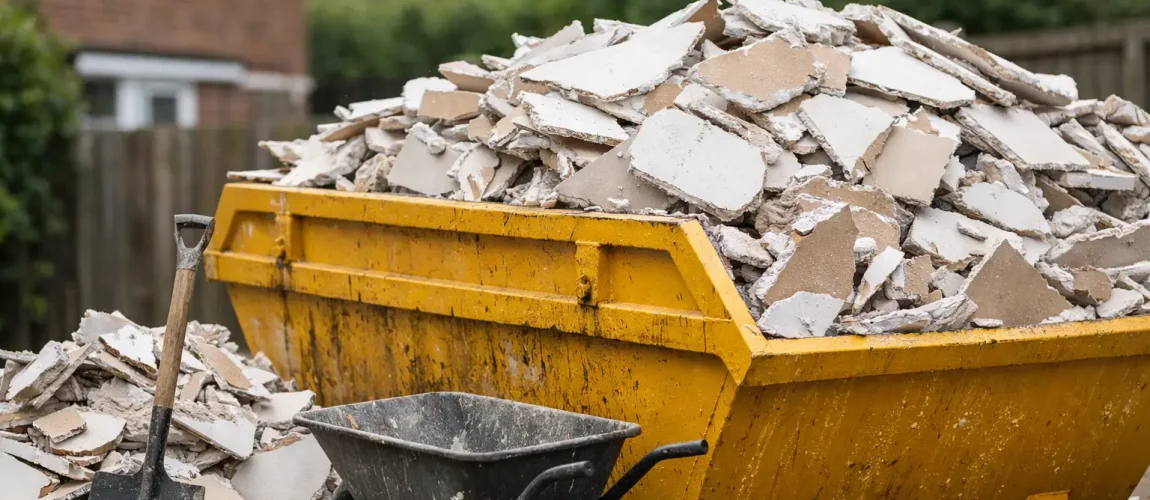
If you are stripping out a room, taking down stud walls or clearing up after a refurbishment, plasterboard can build up quickly. Booking the right skip for plasterboard disposal matters because this is not a waste type you can just mix in with general rubble and forget about. It needs to be handled properly, both for compliance and to avoid delays or extra charges when your waste is collected.
For homeowners, landlords and trades, the main issue is simple – plasterboard disposal has different rules from many other building materials. If you know that before the skip arrives, the job runs smoothly. If you do not, you can end up with a contaminated load that cannot be processed in the right way.
Why plasterboard needs separate disposal
Plasterboard is not treated like standard mixed builders’ waste. When it breaks down in landfill, it can create gases that make disposal more tightly controlled. That is why it is usually collected separately or kept segregated from other waste streams.
On site, this means one practical thing: if your waste includes plasterboard, say so when you book. It is far easier to arrange the correct skip or disposal method upfront than to sort out a rejected load later.
This catches out plenty of people on domestic jobs. A kitchen refit or garage conversion might only produce a modest amount of board, so it is tempting to throw it in with timber, packaging and broken fittings. The problem is that mixed loads containing plasterboard may need different handling at the waste facility. Being clear from the start saves time and keeps the job compliant.
When you need a skip for plasterboard disposal
A skip for plasterboard disposal is commonly needed on refurbishments, office strip-outs, bathroom and kitchen removals, loft works and partition wall dismantling. Even relatively small projects can create more board than expected, especially once you include offcuts and damaged sheets.
For domestic customers, the choice often comes down to how much plasterboard you have compared with the rest of the waste. If it is a small amount, you should still mention it when booking, as there may be a specific way it needs to be contained or separated. If plasterboard is one of the main waste types on the job, a dedicated solution is usually the safer option.
For builders and trades, the calculation is slightly different. If you are running a site with repeated plasterboard waste, keeping it separate is normally the simplest route. It helps avoid contamination, keeps collections straightforward and makes life easier when you need regular turnaround.
What can and cannot go in the skip
This is where a lot of confusion starts. Plasterboard itself is accepted when arranged correctly, but it should not be assumed that every related material goes with it in the same way.
Clean plasterboard sheets, broken sections, offcuts and standard drylining waste are usually the core material. Heavily contaminated board, or board mixed in with food waste, liquids or unsuitable materials, is more of a problem. If the board has insulation bonded to it, or if it has been mixed in with large volumes of general rubbish, that can affect how it needs to be processed.
The best approach is not to guess. Tell the skip company what the waste includes. A reliable local operator would rather know in advance than arrive to find a load that has been filled incorrectly.
Choosing the right skip size
The right size depends less on the room count and more on the amount of stripped-out material. Plasterboard looks flat and manageable when stacked, but once broken and loaded it takes up more room than many people expect.
A smaller skip can suit a minor domestic job, such as removing a small stud partition or clearing the waste from one room. Mid-sized skips are more common for full room renovations, kitchen refits or multi-room updates. Larger skips tend to make more sense on trade jobs, office refurbishments and wider site clearances.
There is a trade-off here. If you book too small, you risk needing a second collection or leaving waste behind. If you book too large, you may pay for capacity you do not need and take up more space on the drive or roadside than necessary. That is why it helps to describe the job rather than simply naming a skip size.
For many customers in Wolverhampton, a quick conversation is the fastest way to narrow it down. Explain whether the plasterboard is the main waste stream, whether there is other building waste involved and how much space you have for delivery. That usually gives a clearer answer than trying to estimate yardage from photos online.
Do not mix plasterboard with everything else
If there is one point worth getting right, it is this. A skip for plasterboard disposal should not be treated like a catch-all for every waste type on site unless you have been told that is acceptable.
Mixing plasterboard with hardcore, soil, bricks and concrete is especially unhelpful because those materials are handled very differently. The same applies to mixed household waste, mattresses, electrical items or anything hazardous. Once waste streams are combined, sorting becomes harder and disposal costs can rise.
That does not mean every job needs multiple skips. Sometimes the answer is simply to keep the plasterboard separate within the job plan and book the right collection arrangement. It depends on volume, site space and the other materials you are removing.
What to tell the skip company when booking
A good booking process is straightforward, but details matter. Say that you need plasterboard disposal, where the skip is going, and roughly how much board you expect. If there are other materials involved, mention those too.
It also helps to say whether the job is a one-off domestic clear-out or part of an ongoing trade project. A homeowner clearing one bedroom has different needs from a builder doing repeated strip-outs across several properties. Timing matters as well. If the waste will be generated over a few days, one collection may be enough. If the job is moving quickly, you may need a tighter turnaround.
If the skip needs to go on the road rather than private land, ask about permits early. Leaving that until the last minute can slow the job down.
Compliance matters more than people think
Most customers are not looking for a lesson in waste regulation. They just want the waste gone quickly and at a fair price. That is reasonable, but plasterboard is one of those materials where compliance is not just a box-ticking exercise.
Using a licensed waste carrier and a company with proper facilities behind the service gives you more confidence that the waste will be processed responsibly. That matters for trade customers who need dependable paperwork and for domestic customers who simply do not want the risk of waste being mishandled.
This is where a local operator with its own waste sorting facility can make a real difference. It gives you a clearer chain from collection to processing, rather than relying on vague promises. Bushbury Skip Hire works with a licensed facility in Wolverhampton and aims to recycle at least 90% of collected materials, which is the sort of practical proof many customers want to see.
Cost, value and avoiding extra charges
Price matters, but the cheapest quote is not always the cheapest job in the end. If plasterboard has not been declared and the load turns out to need different handling, extra charges can follow. The same goes for overfilled skips or the wrong waste type being put in.
The better value option is usually the one that gets the waste type right first time. Clear advice, the correct skip size and reliable collection reduce the chances of disruption. For builders, that protects the schedule. For homeowners, it avoids the irritation of a skip sitting full on the drive while the job stalls.
If you want an accurate quote, be specific. Say it is plasterboard, give an honest estimate of the amount and mention any mixed materials. That gives you a more realistic price from the start.
A simpler way to keep the job moving
Plasterboard disposal does not need to be complicated, but it does need to be planned properly. If you are clear about the waste type, choose a suitable skip size and use a company that handles waste responsibly, the process is straightforward.
If you are not sure what size or service you need, ask before booking rather than after loading. A few minutes spent getting the right advice usually saves a lot more time once the work starts.