Hardcore waste has a way of multiplying. One minute it is a few broken slabs, then you lift a patio and suddenly you have a small quarry in your garden. That is exactly when “hardcore skip hire” starts to make sense – but only if you book the right skip, load it correctly, and keep it within the weight limits.
This is the heavy end of skip hire: bricks, concrete, rubble, tiles, blocks, old mortar, stone, clay and soil. It is not difficult, but it is specific. The wrong choice can mean an overweight charge, a failed collection, or a pile of waste left where you do not want it.
What counts as “hardcore” waste?
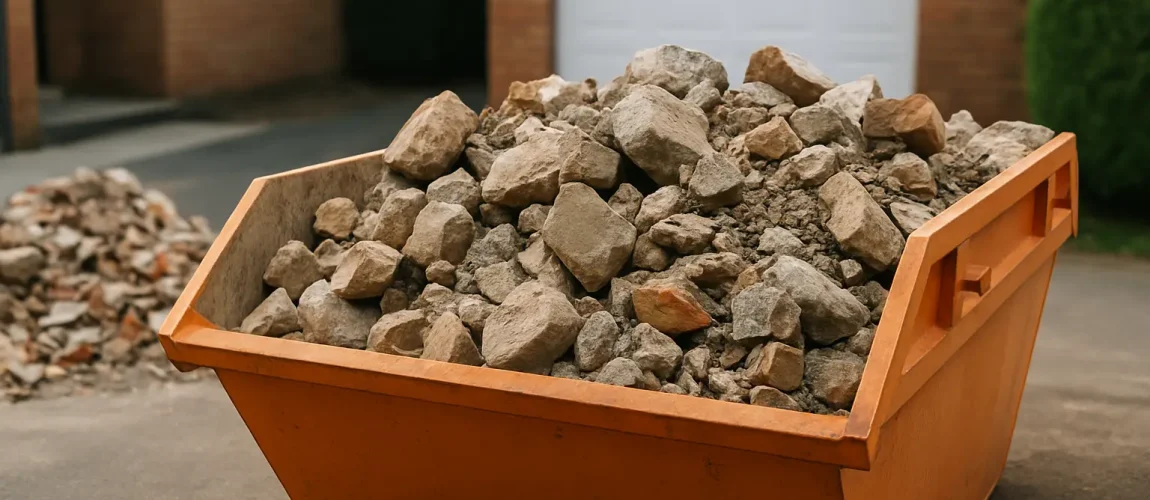
Hardcore is generally clean, inert construction material. Think of the things that do not compress, do not bag up neatly, and definitely do not belong in a standard wheelie bin. If you are breaking out a path, digging foundations, taking down a wall, or doing a driveway, you are probably dealing with hardcore.
Typical hardcore loads include broken concrete, bricks, paving slabs, ceramic tiles, stone and rubble. Clay and soil often sit in the same category for disposal purposes, but they are worth calling out separately because they are deceptively heavy and can tip a skip over its limit quickly.
Where it depends is mixed waste. A bit of wood, plasterboard, insulation, plastic, carpet or general rubbish thrown in with hardcore changes what the load is classed as. Mixed loads take longer to sort and can require different handling. If your waste is a genuine mix from a renovation, say so at booking rather than trying to “hide” it under a hardcore label.
Why hardcore skip hire is different to general skip hire
Hardcore is all about weight, not volume. With lighter waste (garden clippings, household junk, timber), you usually fill the skip because it is bulky. With rubble and concrete, you can hit the maximum weight when the skip is only half full.
That is why a smaller skip is often the right call for hardcore. It feels counter-intuitive because you can see empty space, but the lorry, lifting gear and road limits do not care about the empty space. They care about tonnes.
Another difference is the cost structure behind the scenes. Inert waste can be straightforward to process when it is kept clean, which helps pricing stay competitive. Mix in general rubbish and the disposal route changes, and so can the price.
Choosing the right skip size for hardcore
If you are deciding purely on “how much rubble is on the ground”, you can easily over-order. A better approach is to match the skip size to the type of hardcore and how you are loading it.
A 2 yard skip is often the sensible choice for a small patio lift, a short garden wall, or a bathroom rip-out where the main weight is tiles and mortar. It is small enough to stay within limits while still taking a solid amount of heavy material.
A 3 or 4 yard skip suits bigger jobs like a full patio replacement, a driveway edge rebuild, or multiple areas of broken slabs. It is also a practical size for trades if you are producing hardcore steadily across a few days and want a skip that fits more sites without taking up too much room.
A 5 or 6 yard skip can work for hardcore, but you need to be realistic about how full it will be. These sizes are commonly used for mixed construction waste because the volume is handy. For clean rubble, they can become overweight quickly if you fill them to the top.
An 8 yard skip is usually better kept for lighter waste streams – house clear-outs, bulky renovation waste, packaging and timber. If you book an 8 yarder for hardcore because you want the biggest option, you may end up paying for capacity you cannot use.
If you are unsure, do not guess. Describe the job: “lifting 20 square metres of slabs”, “breaking up a 4m x 3m concrete base”, or “demolishing a single-skin brick garage”. A good local operator will steer you to the right yardage and waste type so you are not paying for the wrong thing.
Loading a hardcore skip properly (and avoiding problems)
The quickest route to hassle is overfilling. Skips need to be level-loaded, meaning nothing should stick up above the sides. This is not a picky rule – it is about safe transport on public roads. If a skip is heaped, it may not be collected until it is made safe.
With hardcore, even a level load can be too heavy. Spread material evenly across the base rather than dumping it all at one end. If you have big lumps of concrete, break them down so they sit flatter and do not create voids that tempt you to pile higher.
If you are mixing soil with rubble, keep an eye on moisture. Wet soil is significantly heavier than dry soil, and after rain it can push a skip over the limit faster than you expect. If your dig is producing a lot of spoil, it can be smarter to schedule collections in stages rather than trying to do it all in one go.
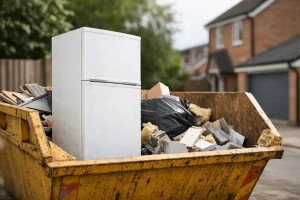
Finally, keep prohibited items out. Hardcore skips are not the place for paint, solvents, petrol bottles, batteries, tyres or electrical items. If something is “probably not allowed”, flag it at booking and you will be told the correct disposal route.
Do you need a skip permit in Wolverhampton?
If the skip is going on a private drive, front garden or site compound, you typically do not need a permit. If it needs to sit on the road or pavement, a permit is usually required and there are rules about lighting, placement and timing.
This is one of those areas where a local firm helps. They know the streets, the practical constraints, and what tends to be approved. What matters from your side is being clear about where the skip is going and whether you have space off-road. If you can keep it on your property, it is often simpler and quicker.
What happens to the hardcore after collection?
People often ask whether hardcore is actually recycled. The honest answer is: it depends on how clean the load is.
Clean, inert hardcore is commonly processed for recycling – crushed and graded for reuse as aggregate in appropriate applications. Loads that are contaminated with general waste, plasterboard, insulation or lots of bagged rubbish are harder to recover and may need more intensive sorting.
Using a licensed operator matters here. Waste handling is regulated for a reason, and you want to know your waste is going through the proper channels, not being tipped where it should not be. A company with controlled operations and proper permits is also more likely to be consistent on timings and collections, because they are not outsourcing everything.
Hardcore skip hire for trades: keep the site moving
If you are a builder or tradesperson, the best skip setup is the one that stops labour being wasted. Waiting on a collection or having a skip rejected for being overloaded costs more than the skip itself.
For groundwork and structural jobs, a smaller skip swapped more often can be the most reliable option. It keeps weight manageable, reduces the chance of a failed lift, and means the waste stream stays consistent. For renovation work with a mix of materials, it is usually better to book for mixed construction waste from the start and keep the hardcore proportion sensible.
Scheduling also matters. If you know you are breaking out concrete on Tuesday and starting blockwork Thursday, book with that rhythm in mind. You want the skip on site before the mess starts, and you want the collection lined up before the skip becomes an obstacle.
Pricing, “from” prices, and what affects the final cost
Hardcore skip hire is often good value when the waste is clean and the size is right. The price can change when any of the following apply: the skip size jumps up, the waste type is mixed rather than inert, access is tight and requires careful placement, or the load is overweight.
Overweight is the big one with hardcore. It is not a penalty for the sake of it – it reflects real transport and processing limits. The simplest way to avoid it is to size down and accept that you might need an extra collection if the job produces more waste than expected.
If you want a quick, straightforward booking route with clear skip sizes and compliant handling, you can arrange hardcore skip hire through Bushbury Skip Hire Ltd for Wolverhampton and surrounding areas. The key is to tell the team what the waste actually is, so the skip and pricing match the job.
A quick reality check before you book
If you have not used a skip for hardcore before, ask yourself two practical questions. First: is my waste mostly clean rubble, or is it a renovation mix? Second: can I place the skip on private land, or will it need to go roadside?
Those two answers shape everything that follows – the size you should choose, whether a permit is needed, and how likely you are to run into weight issues. Get them right and the whole job becomes simpler: the waste goes in, the site stays safe, and the collection happens when it should.
Leave yourself a bit of slack in the plan, especially with heavy waste. Hardcore projects have a habit of revealing “just one more layer” once you start breaking ground, and it is far easier to deal with that calmly when your skip hire is set up for reality rather than best-case guesses.